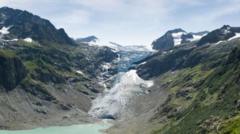
The remains of two Belgian hikers who went missing in 1992 have been discovered in Switzerland, thanks to the receding Trift Glacier. Swiss authorities announced the discovery after a local mountain guide spotted human remains and belongings exposed by the glacier's retreat. DNA testing confirmed the identities of the hikers, bringing closure to a mystery that spanned over three decades. This finding highlights the accelerating impact of climate change on glaciers and its unintended role in uncovering long-lost tragedies.
Key takeaways
- Bodies of two Belgian hikers missing since 1992 found on Switzerland's Trift Glacier.
- Disappearance solved after glacier receded due to climate change.
- Human remains identified through DNA testing by Swiss authorities.
- Discovery underscores climate change’s impact on glaciers and human history.
Background
The hikers, both Belgian nationals, disappeared in August 1992 during an expedition in the Alps. Despite extensive search efforts at the time, their whereabouts remained unknown for decades. The Trift Glacier, located in the canton of Valais, has since undergone significant melting, a phenomenon widely attributed to global warming.
Swiss glaciers have been retreating at an alarming rate, losing over half their volume since the early 20th century according to scientific studies. The discovery of the missing hikers adds to a growing list of similar revelations as glaciers worldwide continue to melt.
What happened
In late July 2023, a mountain guide traversing the Trift Glacier stumbled upon human remains, along with personal belongings like hiking boots and backpacks. Authorities were immediately alerted, and the remains were recovered for further examination. DNA analysis ultimately confirmed the remains belonged to the two Belgian hikers who vanished in 1992.
The Valais police stated that melting glaciers have uncovered several bodies and artifacts in recent years, making this case part of an unsettling yet increasingly common trend. Objects found alongside the remains were well-preserved, owing to the glacier’s icy conditions.
Why it matters
This discovery not only brings long-awaited answers to the families of the victims but also serves as a stark reminder of the urgent impact of climate change. Glaciers, often referred to as "nature’s time capsules," are melting at unprecedented rates, exposing both historical artifacts and human remains.
The case also underscores the importance of ongoing climate research and preservation efforts. As glaciers recede, they reshape our understanding of both the environment and human history. According to experts, cases like this could become more frequent as global temperatures continue to rise.
What happens next
The remains have been returned to the families of the deceased for proper burial, marking the end of a 31-year-long mystery. Meanwhile, Swiss authorities are urging hikers and climbers to report any unusual findings in glacier zones, as more such discoveries are expected in the coming years.
Efforts to monitor and document the impact of glacier retreat in regions like Valais will continue. Scientists warn that the rapid melting of glaciers worldwide could reveal more human remains and relics, but also contribute significantly to rising sea levels and other environmental challenges.
Frequently asked questions
What caused the discovery of the hikers’ remains?
The remains were uncovered due to the significant retreat of the Trift Glacier, caused by climate change. Melting glaciers have increasingly revealed long-buried human remains and artifacts worldwide.
How were the hikers identified?
Swiss authorities used DNA testing to confirm the identities of the two Belgian hikers. Personal belongings found near the remains also helped corroborate the findings.
Are similar discoveries happening elsewhere?
Yes, as glaciers melt globally, other remains and artifacts have been uncovered. For example, in the Alps and Himalayas, numerous cases have emerged, adding to ongoing concerns about climate change’s impact.
Bottom line
The discovery of two Belgian hikers' remains after 31 years highlights the human toll of climate change and the unsettling revelations of melting glaciers. This reporting was sourced from BBC News.
Related reading
- 'We are devastated' - Nigerian villagers bury bodies after overloaded boat capsizes
- Pakistan ex-PM Imran Khan back in jail after hospital examination
- El Niño set to be 'strongest in living memory', says Met Office
- West Ham's Wan‑Bissaka joins Aston Villa on loan
- King penguin chick hatches in UK heatwave