Doctors remove 3.1 kg stone from man's bladder and claim record – Surgeons at a UK hospital successfully extracted a bladder stone weighing 3.1 kg, roughly the mass of a full‑term newborn. The 56‑year‑old patient had endured months of pain before the unprecedented operation on 12 April 2024. Medical experts say the stone is likely the largest ever documented, raising awareness of rare urological conditions. The case landed on the front page of the world news feed and sparked debate about early diagnosis.
Key takeaways
- 3.1 kg bladder stone removed, possibly the largest on record.
- Patient endured several months of severe urinary pain before surgery.
- Surgeons used a combination of endoscopic and open techniques to extract it.
- Record‑setting case may prompt earlier screening for urinary tract anomalies.
Background
Bladder stones are uncommon in developed nations, typically forming in patients with chronic urinary retention or infection. In this instance, doctors traced the stone’s growth to an untreated urethral stricture that went undiagnosed for years. The rarity of a stone this size has prompted comparison with historic medical curiosities documented by the Royal College of Surgeons. For broader context on unusual health stories, see the coverage on Chronicle News.
What happened
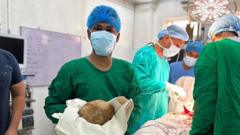
On 12 April, a multidisciplinary team led by urologist Dr Sarah Patel performed a two‑stage procedure at St Mary’s Hospital. First, a cystoscope was inserted to assess the stone’s position; imaging confirmed it occupied nearly the entire bladder cavity. The team then made a small lower‑abdominal incision, fragmenting the stone with ultrasonic lithotripsy before gently extracting the pieces. The operation lasted 4 hours, and the patient was discharged after a brief intensive‑care stay.
The stone, measured 12 cm in diameter, weighed as much as a newborn baby and was composed primarily of calcium oxalate. Pathology reports indicate the stone formed over a decade, growing steadily as mineral deposits accumulated. According to the surgical team, the case surpasses the previous UK record of a 2.2 kg bladder stone reported in 2011.
Why it matters
A bladder stone of this magnitude challenges existing assumptions about the limits of human pathology. It underscores the importance of early detection of urinary tract obstruction, especially in patients with persistent lower‑abdominal discomfort. Health‑policy analysts have linked delayed diagnosis to increased NHS costs, a theme explored in recent pieces such as Job vacancies at five‑year low as smaller firms scale back recruitment.
Moreover, the successful removal demonstrates advances in urological surgery, blending minimally invasive tools with traditional open techniques. The case may inform future guidelines on managing giant bladder calculi, prompting urologists worldwide to revisit treatment protocols. For a look at how extraordinary medical feats capture public interest, compare this story with the record‑breaking football transfer covered in Newcastle complete £30m move for Benfica's Dedic.
What happens next
The patient will undergo a six‑month follow‑up program, including periodic ultrasounds to ensure no residual fragments remain. Urologists plan to monitor his urinary function closely, offering physiotherapy and possible corrective surgery for the underlying stricture.
The hospital intends to publish a detailed case study in a peer‑reviewed journal, contributing valuable data to the limited literature on giant bladder stones. Meanwhile, the NHS England board has announced a review of diagnostic pathways for chronic urinary symptoms, aiming to prevent similar cases from slipping through the net.
Frequently asked questions
How did the stone grow so large?
Long‑standing urinary blockage allowed mineral salts to crystallise and accumulate, eventually forming a massive stone over many years.
Could this have been prevented?
Early investigation of persistent pelvic pain and routine imaging could have identified the stricture before the stone reached this size.
What are the risks of such surgery?
Potential