Ecuador intelligence chief and five Americans killed in Kenya helicopter crash
A private helicopter went down in Kenya on Tuesday, killing seven people, including Ecuador’s top intelligence official Michele Sensi‑Contugi, his wife Stephany Hollihan, and five American citizens. The crash occurred while the aircraft was en route to a diplomatic engagement, prompting immediate investigations by Kenyan authorities and foreign ministries. The loss of a senior security figure has sparked concerns across the world intelligence community and raised questions about the safety of high‑profile travel in East Africa.
Key takeaways
- Ecuador’s intelligence chief and his spouse were among seven dead in the Kenya crash.
- Five U.S. nationals also perished, prompting a U.S. State Department response.
- Kenyan investigators have opened a formal probe; cause remains unknown.
- The incident may affect bilateral security cooperation between Ecuador, the U.S., and Kenya.
Background
Michele Sensi‑Contugi served as the head of Ecuador’s intelligence agency, overseeing counter‑terrorism and cyber‑security initiatives. His wife, Stephany Hollihan, often accompanied him on official trips. The delegation was traveling to discuss regional security partnerships, a routine part of Ecuador’s outreach to African nations. Kenya, a frequent stop for diplomatic missions, hosts several foreign embassies and is a hub for international flights. The presence of five American passengers—identified by U.S. officials as private contractors—highlights the mixed nature of the travel party.
What happened
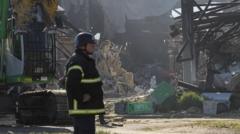
According to the Kenyan Ministry of Transport, the helicopter took off from a private airstrip in the early afternoon and vanished from radar shortly thereafter. Witnesses near the crash site reported a loud explosion and a plume of smoke rising from a rural area outside Nairobi. Emergency crews arrived within minutes, but the wreckage was heavily damaged, and all seven occupants were pronounced dead at the scene. Kenyan authorities have secured the site and are working with Ecuadorian and U.S. officials to retrieve flight data recorders for analysis.
Why it matters
The death of a senior intelligence chief creates a leadership vacuum in Ecuador’s security apparatus, potentially delaying ongoing anti‑drug and cyber‑crime operations. It also underscores the vulnerability of high‑profile officials traveling in regions with limited aviation infrastructure. The incident arrives at a time when cyber‑threats are increasingly linked to physical security, as seen in recent reports on the AI data giant Alation confirms cyberattack and the US says hackers are targeting vulnerable water systems with the help of AI. Policymakers may reassess risk assessments for diplomatic travel and consider additional protective measures.
What happens next
Kenyan investigators will conduct a full forensic examination of the wreckage, interview local witnesses, and request the flight data recorder from the aircraft’s operator. Ecuador’s Ministry of Foreign Affairs has announced a period of mourning and will appoint an interim head for its intelligence service. The U.S. State Department is expected to issue a formal statement, coordinate with Kenyan authorities, and provide assistance to the families of the American victims. Ongoing diplomatic talks between the three nations may be postponed until a clearer picture of the crash emerges.
Frequently asked questions
Who was Michele Sensi‑Contugi?
He was the chief of Ecuador’s intelligence agency, responsible for national security, counter‑terrorism, and cyber‑defense strategies.
What is known about the cause of the crash?
Investigators have not released a definitive cause; they are examining weather conditions, mechanical failure, and possible human error.
How will the deaths affect Ecuador‑U.S. relations?
While the tragedy is a humanitarian loss, both governments have expressed condolences and pledged cooperation, suggesting that diplomatic ties will remain strong.
Bottom line
The Kenya helicopter crash that killed Ecuador’s intelligence chief and five Americans highlights the risks faced by