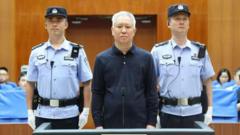
Founder of collapsed Chinese property giant Evergrande sentenced to life in prison – A Shenzhen court sentenced Hui Ka Yan, the founder of Evergrande, to life imprisonment on June 19, 2024, after finding him guilty of fraud and embezzlement. The ruling caps a three‑year legal saga that began when the developer defaulted on debt payments in 2021, sparking a wave of defaults across China’s property sector. The verdict is seen as a warning to other indebted conglomerates and a test of Beijing’s resolve to enforce stricter corporate governance. The case matters because Evergrande’s collapse threatened global financial stability and exposed systemic risks in China’s housing market.
Key takeaways
- Hui Ka Yan receives a life sentence for fraud and embezzlement linked to Evergrande’s collapse.
- The judgment follows a prolonged investigation that began after the 2021 debt crisis.
- Chinese regulators view the sentence as a deterrent against risky corporate practices.
- Investors remain cautious as the broader property sector undergoes restructuring.
Background
Evergrande, once the world’s most indebted real‑estate developer, amassed over $300 billion in liabilities before defaulting on several offshore bonds in 2021. The company’s rapid expansion relied heavily on pre‑sales of unfinished apartments, a model that collapsed when sales stalled and credit tightened. Beijing responded with “three red lines” policy to curb leverage, but Evergrande’s size made the shockwaves unavoidable. Hui Ka Yan, a billionaire with a high‑profile lifestyle, became the public face of the crisis, drawing scrutiny from both domestic regulators and foreign investors.
What happened
On June 19, a Shenzhen intermediate people’s court found Hui guilty of “contract fraud, fraud involving public funds and illegal possession of public property,” according to the court’s statement. The sentence includes life imprisonment without parole and a hefty fine, though the exact amount was not disclosed. The ruling follows a 2022 arrest, a 2023 trial, and months of evidence gathering by the Ministry of Public Security. The court’s decision aligns with China’s broader crackdown on corporate misconduct, echoing earlier cases involving tech moguls and financial executives.
Why it matters
The sentencing sends a clear signal that China will not tolerate large‑scale financial mismanagement that threatens economic stability. Evergrande’s default had already forced banks to tighten credit, slowed construction activity, and depressed property prices in Tier‑2 and Tier‑3 cities. By holding its founder personally accountable, authorities aim to restore confidence among investors and homebuyers. Moreover, the case highlights the challenges faced by the Chinese government in balancing debt deleveraging with maintaining growth, a dilemma that continues to affect global markets and supply chains.
What happens next
Legal scholars expect Hui to appeal the verdict, though success is uncertain given the political climate. Meanwhile, Evergrande’s remaining assets are being liquidated under court supervision, with proceeds earmarked for bondholders and homebuyers. The Chinese government has pledged to “ensure orderly settlement” of the developer’s obligations, but the timeline remains vague. Analysts will watch closely for any policy adjustments that could further tighten or ease credit conditions in the property sector, influencing both domestic consumption and foreign investment flows.
> For a broader view of how regulatory actions reverberate across industries, see our coverage of the Travelodge boss steps down after security issues in rooms and the security challenges facing hospitality chains.
> The ongoing geopolitical tension in Eastern Europe also underscores the interconnectedness of global risk, as reported in At least 12 killed in Kyiv as Ukraine grapples with air defence shortages.
For more updates on this story and other world developments, visit our world section or explore the full archive at Chronicle News.
Frequently asked questions
Who is Hui Ka Yan?
Hui Ka Yan is the billionaire founder and former chairman of Evergrande Group, once ranked among the world’s richest individuals. He built the conglomerate into a real‑estate behemoth before its 2021 debt crisis.
What specific crimes led to the life sentence?
The court convicted Hui of contract fraud, fraud involving public funds, and illegal possession of public property, all linked to the misappropriation of investor money during Evergrande’s expansion.
How will this affect ordinary homebuyers?
Homebuyers who pre‑paid for unfinished apartments may see delayed refunds or transfers of ownership as Evergrande’s assets are liquidated, though the government has pledged to protect their interests where possible.
Bottom line
The life sentence for Evergrande’s founder marks a decisive moment in China’s effort to curb corporate excess and restore market confidence. The ruling underscores the far‑reaching impact of the property giant’s collapse on the global economy.
Reporting by BBC News.
Related reading
- Travelodge boss steps down after security issues in rooms
- [At least 12 killed in Kyiv as Ukraine