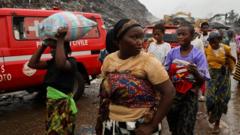
A tragic collapse at a major rubbish landfill in Conakry, Guinea, has claimed the lives of 31 people, authorities confirmed. The incident occurred when a towering mound of waste gave way, burying several homes in the city’s Dar-Es-Salaam neighborhood on Tuesday. This devastating event highlights ongoing challenges in waste management and infrastructure in the West African nation. Rescue efforts are underway, but the death toll underscores the urgency of addressing safety concerns in urban areas.
Key takeaways
- 31 fatalities confirmed after a rubbish mound collapsed in Conakry, Guinea, burying homes near the landfill site.
- The disaster occurred in the densely populated Dar-Es-Salaam neighborhood, raising concerns about urban waste management.
- Rescue operations continue, but survivors face dire conditions amidst destroyed homes and limited resources.
- Authorities pledge investigations into landfill safety to prevent future tragedies in Guinea's capital city.
Background
Guinea’s capital, Conakry, has long struggled with managing its growing waste problem. Rapid urbanization and population growth have led to a significant increase in rubbish production, straining the city's infrastructure. The Dar-Es-Salaam landfill, one of the largest waste sites in the area, has been a critical yet hazardous component of the city’s waste disposal system. Residents living near the landfill have repeatedly voiced concerns about health risks and structural safety, fears that tragically materialized in the latest incident.
What happened
On Tuesday, a towering pile of rubbish at the Dar-Es-Salaam landfill collapsed, sending tons of waste cascading into nearby homes. Authorities confirmed that 31 people lost their lives, including women and children, with several others injured or missing. Witnesses reported hearing a loud rumble before their homes were engulfed by debris. Emergency responders rushed to the scene to search for survivors, but the scale of destruction has made rescue efforts challenging. The government stated that investigations would be launched to determine the cause of the collapse.
Why it matters
The tragedy highlights severe shortcomings in Conakry’s waste management system and urban planning. Landfills like Dar-Es-Salaam are often located near densely populated neighborhoods, exposing residents to health hazards and physical danger. Urban waste management crises are not unique to Guinea, with similar incidents reported in other developing nations. These disasters emphasize the need for sustainable infrastructure solutions to protect vulnerable communities. The loss of life also draws attention to the broader consequences of neglecting environmental and safety standards.
What happens next
Guinea’s government has pledged to conduct an investigation into the landfill collapse and assess safety measures across the city’s waste disposal sites. Immediate relief efforts are being organized for survivors, including temporary shelter and medical aid. However, long-term solutions will require significant investment in waste management systems and relocation of communities living near hazardous sites. International organizations may also play a role in providing expertise and resources to improve infrastructure and prevent future tragedies.
Frequently asked questions
What caused the landfill collapse?
Initial reports suggest that the sheer weight and instability of the rubbish mound led to the collapse. Heavy rains and inadequate structural reinforcement could have exacerbated the situation. Authorities are investigating the exact cause to prevent similar incidents in the future.
How are survivors being helped?
Emergency responders are providing medical care and searching for missing individuals. Temporary shelters are being set up for those displaced by the collapse, though resources remain limited. The government has promised aid and long-term support for affected families.
Has this happened before in Guinea?
While this is one of the deadliest landfill collapses in Guinea’s history, concerns over waste management and safety have been raised repeatedly. Similar incidents have occurred in developing nations where urban infrastructure struggles to keep pace with population growth.
Bottom line
The landfill collapse in Conakry serves as a stark reminder of the human cost of inadequate waste management systems. Addressing these challenges is crucial to preventing future tragedies in Guinea and beyond, as reported by BBC News.
Related reading
- Race Across the World star Jo Gardiner dies
- 'Half my business will be gone' - Firms in Canada and US fear trade war
- Pubs and hotels could see business rates reformed after review
- Watch: Wildfire seen near Reno as tens of thousands told to evacuate
- Nearly 90,000 told to evacuate as wildfire approaches Reno, Nevada
Explore more updates from the world or read all articles on Chronicle News for the latest coverage.