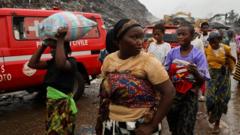
A tragic landfill collapse in Conakry, Guinea, has claimed the lives of at least 31 people, according to government reports. The incident occurred on Tuesday when a massive mound of rubbish at the city’s primary waste site gave way, burying several homes. Rescue operations are ongoing, with fears that the death toll may rise as authorities continue to search for survivors. The disaster highlights the urgent need for improved waste management systems in the rapidly urbanizing capital.
Key Takeaways
- Death toll rises to 31: Families devastated after rubbish buried homes in Conakry.
- Rescue efforts underway: Authorities searching for survivors amid fears of rising casualties.
- Urbanization challenges: Conakry’s waste management system struggles to cope with growing population.
- Government response: Officials pledge reforms amid public outcry over landfill safety.
Background
Conakry, Guinea’s capital, is home to over two million residents, many of whom live in informal settlements near hazardous areas like the city’s main landfill. The site, a sprawling expanse of waste, has long been a source of concern due to its proximity to residential neighborhoods. Despite warnings from environmental groups, little has been done to address the risks posed by the landfill, which has grown significantly over the years as urbanization continues to surge.
Waste management challenges remain a pressing issue in Guinea, where infrastructure struggles to keep pace with population growth. The recent collapse is a stark reminder of the dangers posed by poorly managed waste sites, particularly in rapidly developing cities.
What Happened
On Tuesday, a towering pile of rubbish at Conakry’s largest landfill suddenly collapsed, sending tons of debris cascading into nearby homes. Witnesses described a deafening noise as the mound gave way, trapping families beneath the rubble. Emergency teams rushed to the scene to assist with rescue efforts, but their progress has been hindered by the sheer scale of the disaster.
As of Wednesday morning, 31 deaths have been confirmed, with local hospitals treating several injured survivors. Many residents have been left homeless, forced to seek shelter elsewhere as authorities assess the damage. The government has declared three days of national mourning to honor the victims and pledged to investigate the cause of the collapse.
Why It Matters
This tragedy underscores the urgent need for improved waste management systems in world cities like Conakry. Poorly regulated landfills not only contribute to environmental degradation but also pose significant risks to public health and safety.
With over two million residents, Conakry’s population growth has outpaced its infrastructure, leaving vulnerable communities exposed to hazards like unstable waste sites. The collapse has sparked outrage among locals, many of whom blame government negligence for the disaster. As urbanization continues to accelerate, this incident serves as a wake-up call for officials to prioritize sustainable waste management practices.
Deeper Analysis
The collapse highlights the broader issue of infrastructure gaps in urban areas across Africa. Rapid population growth and urban expansion have strained waste management systems, leaving many cities grappling with mounting piles of rubbish.
Environmental experts have repeatedly warned that poorly maintained landfills can become ticking time bombs when not properly managed. In Conakry, the lack of adequate safety measures at the landfill has been a longstanding concern, with many homes built dangerously close to the site. Similar issues have been reported in other regions, such as Nevada’s wildfire evacuations, which expose the global scale of urban vulnerabilities (Nearly 90,000 told to evacuate as wildfire approaches Reno, Nevada).
The tragedy also raises questions about accountability. While the government has promised reforms, critics argue that such promises often fall short without concrete action. In comparison, recent arrests in South Africa over a boxing champion’s murder (Four arrested over boxing champion's murder in South Africa) highlight the need for swift and decisive responses to crises.
What Happens Next
Authorities in Guinea have launched an investigation into the landfill collapse, aiming to determine its cause and identify measures to prevent future tragedies. Rescue operations will continue in the coming days, with efforts focused on locating survivors and recovering bodies from the debris.
The government has also pledged to implement reforms to address waste management challenges, though details remain unclear. Meanwhile, environmental groups and local activists are calling for immediate action to relocate residents living near hazardous sites and improve infrastructure.
Beyond Guinea, the incident is likely to spark renewed discussions about urban planning and environmental safety across the developing world. Similar disasters could potentially occur in other cities facing rapid population growth, underscoring the need for global collaboration on sustainable solutions.
Frequently Asked Questions
What caused the landfill to collapse?
Although the exact cause is still under investigation, experts believe the collapse was triggered by the instability of the waste mound, exacerbated by years of poor management. Heavy rains in the region may have also played a role by weakening the landfill’s structure.
How many people have been affected?
As of now, 31 deaths have been confirmed, with several others injured or displaced. The full impact remains uncertain as rescue operations continue, and authorities fear the death toll could rise further.
What is being done to prevent future disasters?
The Guinean government has pledged to investigate the incident and reform its waste management system. Activists are urging officials to prioritize relocating residents near hazardous sites and implementing stricter safety measures.
Bottom Line
The tragic landfill collapse in Conakry, Guinea, has claimed 31 lives and highlighted urgent infrastructure challenges. Reporting sourced from BBC News.