Hawaii braces for potential first direct hit by a hurricane in 34 years
The National Weather Service has issued a rare hurricane watch for the Hawaiian Islands as Tropical Cyclone Lala threatens to become the first storm to make a direct landfall on the state since 1992. Meteorologists warn that the Category 1 system could unleash up to 25 inches (63 cm) of rain on the Big Island, triggering flash floods and landslides. Residents, emergency managers, and tourism operators are scrambling to secure property and suspend services ahead of the possible impact. The storm’s trajectory matters not only for local safety but also for the U.S. Pacific’s broader climate resilience planning.
Key takeaways
- Lala may bring record‑breaking rainfall to the Big Island, exceeding 25 inches.
- Hawaii’s last direct hurricane hit occurred in 1992, making this a historic threat.
- State officials have activated emergency shelters and pre‑positioned supplies.
- Power outages and road closures could affect thousands of residents and tourists.
Background
Hawaii sits in a marginal portion of the Pacific hurricane basin, where storms usually veer westward toward Asia or weaken over cooler waters. The last time a hurricane struck the islands directly was Hurricane Iniki in 1992, which caused $3 billion in damage. Since then, most tropical systems have brushed the archipelago, delivering heavy rain but sparing the islands from a true landfall. Climate scientists note that warming ocean temperatures are lengthening the hurricane season and increasing the odds of storms maintaining intensity farther east, a trend that could make events like Lala more common. For a state whose economy relies heavily on tourism, any disruption to infrastructure ripples through hotels, airlines, and local businesses.
What happened
On Monday, August 12, the Central Pacific Hurricane Center upgraded Lala to a Category 1 hurricane as satellite imagery showed a well‑defined eye forming near 19° N, 155° W. The system is moving west‑northwest at roughly 10 mph, positioning the Big Island in its projected path within 48 hours. The National Weather Service’s Hawaii County office issued a hurricane watch for the leeward side of the island, the first such advisory in more than three decades. Local officials have ordered the closure of several coastal parks and urged residents in low‑lying areas to relocate to designated shelters. The watch also triggered a cascade of alerts across the world news feed, underscoring the global relevance of Pacific weather patterns.
Why it matters
A direct hit would test Hawaii’s emergency‑management capabilities, which have been refined after Iniki but are still challenged by the islands’ isolated geography. Power grids are vulnerable to wind‑driven outages, and the state’s water supply could be compromised by heavy rain saturating volcanic soil. Moreover, the tourism sector—accounting for roughly 21 % of the state’s GDP—could suffer significant revenue loss if flights are canceled and resorts close. The event also serves as a real‑time case study for climate‑adaptation policies, prompting policymakers to reassess building codes, evacuation routes, and community outreach programs. As the storm approaches, the Chronicle News team is monitoring updates to provide continuous coverage.
Deeper analysis
Meteorological perspective
Lala’s rapid intensification is linked to unusually warm sea‑surface temperatures—about 1.5 °C above the 30‑year average—creating a favorable environment for convection. Researchers from the University of Hawaii’s Center for Climate Studies note that “the combination of low wind shear and high moisture content is a textbook recipe for a tropical cyclone to strengthen quickly.” While Lala remains a Category 1 system on the Saffir‑Simpson scale, the associated rainfall threat is disproportionately high because of the island’s steep topography, which can funnel water into narrow valleys and cause flash flooding within minutes.
Infrastructure readiness
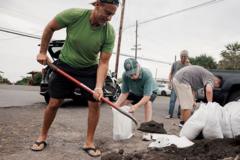
Since Iniki, the state has invested $150 million in hardened utility poles and underground power lines in critical zones. However, many rural communities still rely on above‑ground lines that are susceptible to wind damage. Emergency shelters have been upgraded with backup generators, but capacity remains limited on the Big Island’s east side, where the majority of the population resides. The Hawaii Emergency Management Agency (HI‑EMA) has pre‑positioned sandbags, portable water filtration units, and medical kits at four strategic locations, a move praised by local NGOs.
Socio‑economic impacts
A study by the Pacific Business Forum projects that a week‑long disruption could cost the islands up to $200 million in lost tourism revenue, factoring in canceled bookings and supply‑chain interruptions. Small businesses, especially those dependent on beach traffic, are particularly vulnerable. Community leaders are urging tourists to heed evacuation orders, citing the safety of “both visitors and residents.” For context, see how other high‑profile events have affected travel in the region, such as the Ariana Grande leaves problems at home as her tour hits the UK article, which highlighted the ripple effects of sudden schedule changes.
What happens next
The next 24 hours will be decisive. Forecast models diverge slightly, with some suggesting a landfall near Hilo, while others predict a glancing blow on the island’s south coast. HI‑EMA will issue a hurricane warning if Lala’s center moves within 30 miles of the shoreline, triggering mandatory evacuations for at-risk neighborhoods. Residents are advised to secure loose items, stock up on non‑perishable food, and keep phones charged. Airlines have already begun re‑booking passengers, and cruise lines are rerouting vessels to avoid the storm corridor. The National Hurricane Center will provide hourly updates, and the BBC News outlet will continue to deliver live coverage as the situation evolves.
Frequently asked questions
How much rain can Lala actually produce?
Meteorologists estimate up to 25 inches (63 cm) of rain on the Big Island, which could cause flash floods and landslides.
Are there any shelters available for tourists?
Yes, the state has opened several emergency shelters in Maui, Oahu, and the Big Island, many of which are equipped with backup generators and medical supplies.
When will the hurricane watch be upgraded to a warning?
If Lala’s eye moves within 30 miles of any Hawaiian coastline within the next 12 hours, officials will issue a hurricane warning and may order mandatory evacuations.
Bottom line
Hawaii’s preparedness will be put to the test as Lala threatens a historic direct hit, the first in 34 years. Residents and visitors alike should follow official guidance and stay tuned for updates. Reporting by BBC News.
Related reading
- Ariana Grande leaves problems at home as her tour hits the UK
- BBC seeks to subpoena family members in Panorama lawsuit
- I survived two years as prime minister in a hit new game - then my cabinet deserted me
- The influencers getting bitten while chasing the perfect shark shot
- Scheffler in charge as he chases first win since January