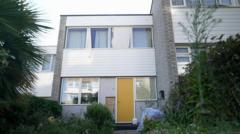
A renovated 1960s ex-council house in Bristol is turning heads for its ability to remain cool during record-breaking UK heatwaves—all without air conditioning. The home, retrofitted to meet the energy-efficient Passivhaus standard, uses advanced insulation and ventilation techniques to regulate indoor temperatures. As climate change drives higher summer heat, such innovations are gaining attention for their affordability and sustainability. This project serves as a potential blueprint for retrofitting older UK housing stock to meet modern challenges.
Key Takeaways
- A 1960s ex-council house in Bristol stays cool without air conditioning.
- The home was retrofitted using the Passivhaus standard for energy efficiency and temperature control.
- Rising UK temperatures have prompted interest in sustainable housing solutions like this.
- Older homes across the UK could adopt similar retrofitting techniques to combat climate challenges.
Background
The UK’s housing stock, much of which was built before modern energy efficiency standards, is poorly suited to extreme weather conditions. With increasing summer temperatures due to climate change, many homeowners are struggling to keep their properties cool. Retrofitting homes to meet the Passivhaus standard—originally developed in Germany—provides a solution by focusing on airtightness, optimal insulation, and mechanical ventilation systems.
The Bristol project started as a typical 1960s council house, a structure not known for its thermal efficiency. However, the homeowners chose to retrofit the property, turning it into an energy-efficient model. The home now maintains stable temperatures year-round with minimal reliance on heating or cooling systems.
What Happened
The homeowners partnered with architects specializing in the Passivhaus standard to retrofit their property. They installed state-of-the-art insulation, triple-glazed windows, and mechanical ventilation with heat recovery (MVHR) systems. These upgrades seal the home from external temperature fluctuations while ensuring fresh air circulation.
The result? Even during the UK's sweltering summer heatwaves, the home remains consistently cool inside without requiring energy-intensive air conditioning. The project demonstrates how older homes can be transformed into energy-efficient havens, offering both comfort and reduced energy bills.
Why It Matters
With the UK experiencing hotter summers due to climate change, housing that can regulate temperatures efficiently is becoming a necessity. Retrofitting homes to meet Passivhaus standards not only helps with temperature control but also reduces energy consumption, a crucial step toward achieving net-zero carbon goals.
In cities like Bristol, where housing is a mix of Victorian terraces and post-war council estates, the potential for similar retrofits is enormous. Scaling up such projects could significantly reduce the urban heat island effect while improving living conditions for residents. Moreover, it offers a sustainable alternative to air conditioning, which contributes to greenhouse gas emissions.
What Happens Next
The success of this Bristol project has sparked interest among local councils and homeowners alike. Some local councils are exploring funding initiatives to help residents retrofit their homes to meet Passivhaus standards. Additionally, architects and builders specializing in sustainable housing are urging the government to provide subsidies for energy-efficient home upgrades.
As climate change accelerates, scaling up retrofitting efforts across the UK could become a critical component of national climate adaptation strategies. The Bristol house serves as a real-world example of how older homes can be part of a sustainable future.
Frequently Asked Questions
What is the Passivhaus standard?
The Passivhaus standard is a building performance standard focused on energy efficiency, thermal comfort, and sustainability. It emphasizes airtight construction, high-quality insulation, and mechanical ventilation systems to maintain stable indoor temperatures with minimal energy use.
How does retrofitting differ from new construction?
Retrofitting involves upgrading existing buildings to improve energy efficiency, while new construction is built from scratch. Retrofitting older homes often focuses on adding insulation, replacing windows, and improving ventilation to meet modern efficiency standards without demolishing the structure.
Can this approach be applied to all UK homes?
While every home has unique challenges, many of the Passivhaus principles—such as improved insulation and ventilation—can be adapted to a wide range of housing types. Retrofitting is particularly relevant for Britain’s older housing stock, which is often inefficient and poorly insulated.
Bottom Line
This 1960s ex-council house in Bristol showcases the potential of retrofitting older homes to meet modern energy and climate challenges. For more on this story, visit BBC News.
Related Reading
- Not 'poor enough': Do people use London's pay-it-forward schemes?
- Cyborg title not at stake as opponent misses weight
- Search for survivors after 16 killed by Russian double-tap strike on Ukraine mall
- 'I'm not ashamed' - Ellison on mental health and playing at 47
- Flex your football brain with our daily quizzes