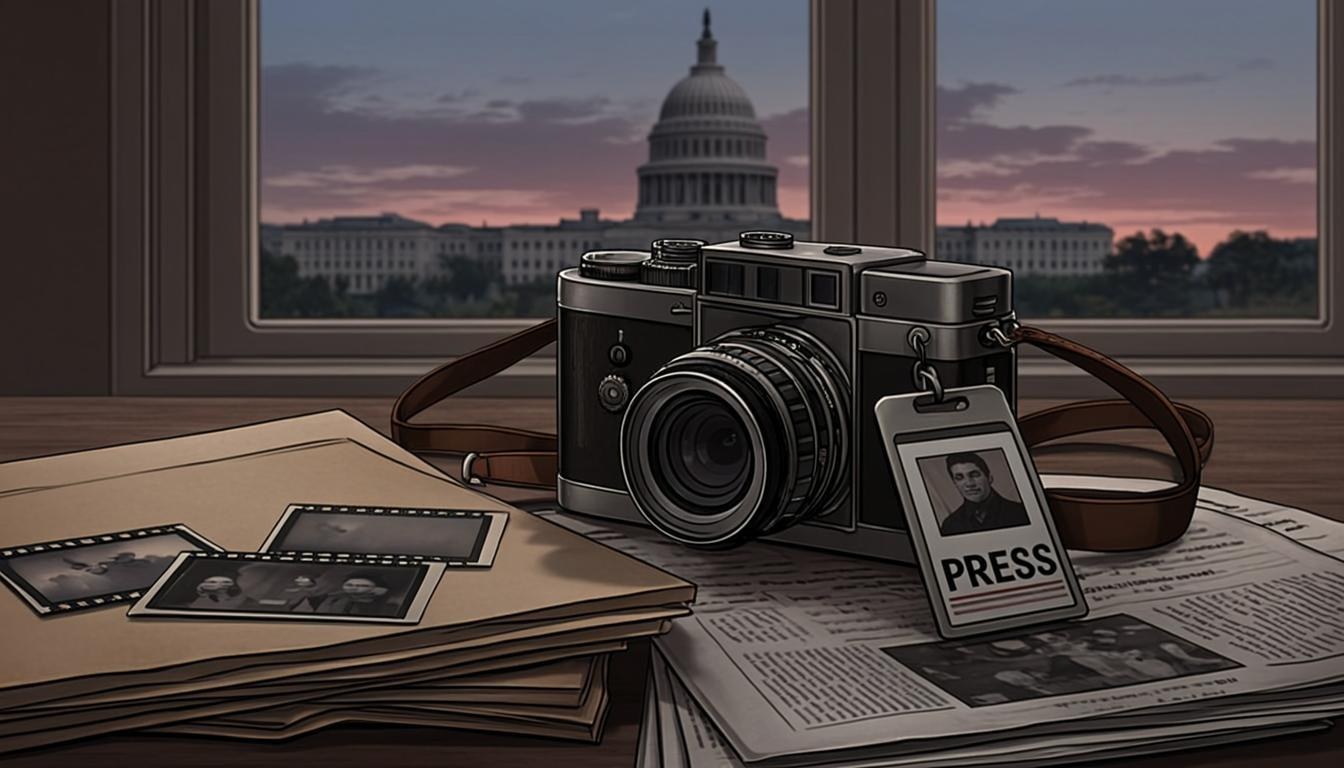
Searches for jan 6 riot photos spike around anniversaries, trials, and congressional milestones — and most searchers quickly discover the same problem: the open web mixes authentic archival material with partisan framing and, increasingly, images of unclear origin. This guide takes a deliberately neutral, archival approach. It does not relitigate the politics; it maps where the authentic imagery and documents live — NPR's dedicated archive, the Library of Congress, the congressional record on govinfo, licensed wire photography on Getty Images, and the document indexes maintained by outlets such as Lawfare — and it explains how to check an image's provenance before trusting or sharing it. Every characterization of the day itself below is attributed strictly to the institution that made it.
Table of Contents
- Why photos of January 6 are searched — and why provenance matters
- What the documented record says about January 6, 2021
- Jan 6 riot photos: where to find authentic images
- How to verify images of January 6 before you trust or share them
- The contested memory of January 6
- Key Takeaways
- Frequently Asked Questions
- What to watch next
- Sources
Why photos of January 6 are searched — and why provenance matters
January 6, 2021, is among the most heavily photographed days in recent American political history, and the imagery continues to serve different purposes in 2026: courts and scholars use photos as evidence; journalists use them to document events; educators use them to teach; and the general public encounters them every time the anniversary returns or a new development in the legal aftermath surfaces.
Because the day remains politically contested, the images themselves have become contested objects — reposted with cropped captions, stripped of context, and, in the current media environment, occasionally imitated or fabricated. That is why this guide pairs every source of imagery with a note about what kind of material it holds and under what terms. The core principle of archival work applies: an image is only as reliable as the institution that preserves it and the chain of custody behind it.
What the documented record says about January 6, 2021
Before looking at the pictures, it helps to anchor on what institutions have put on the record — with each description attributed exactly:
- The Library of Congress research guide states that on January 6, 2021, the U.S. Capitol was attacked by a crowd attempting to stop the joint session of Congress from certifying the electoral votes of the 2020 election.
- FactCheck.org reports that about 140 law enforcement officers were injured during the attack, according to multiple reports; the same fact-checking page also examined claims about whether officers were killed, and readers should rely on that page's careful wording rather than secondhand summaries of it.
- PBS, in its June 7, 2022, coverage, summarized the House select committee's findings as laying blame firmly on Donald Trump — that summary is PBS's characterization of the committee's conclusions.
- The current White House website, as it stood in 2026, characterizes the day very differently, describing "peaceful" protesters and stating that "Democrats successfully flipped the narrative to brand peaceful protesters as 'insurrectionists'." That sentence is presented here strictly as an attributed example of how contested the memory of the day remains — set alongside the Library of Congress and NPR descriptions, not as a neutral adjudication by this article.
Those four attributions span the spectrum of public memory: a neutral research library, a fact-checking outlet, a public broadcaster summarizing a congressional committee, and the sitting administration's own framing. A reader who holds all four in view has an honest map of both the events and the dispute over their meaning.
Jan 6 riot photos: where to find authentic images
The table below is the practical core of this guide — the documented places where imagery and records of January 6 can be found, what each holds, and what access looks like:
| Source | What you get | Access & rights | Notes |
|---|---|---|---|
| NPR's Jan. 6 archive (apps.npr.org; updated January 4, 2026) | Reporting, video, documents and testimony gathered to show what happened during the Capitol riot | Free to view | Curated by NPR; the closest thing to a comprehensive public reference collection |
| Library of Congress research guide (loc.gov) | Official research guide documenting the January 6, 2021 attack and the certification process it targeted | Free | The authoritative starting point for the institutional record |
| govinfo.gov | The House Select Committee's Final Report and supporting materials, including court documents and hearing videos | Free; official government documents | Primary-source material suitable for citation |
| Lawfare Media | An index of Jan. 6 documents: the final report, subpoenas, depositions, records requests | Free to access | Maintained by a legal-affairs outlet; useful for navigating the paper trail |
| Getty Images | Premium, licensable collection of January 6 Capitol Attack photos | Paid licensing | The standard channel for publication-quality imagery with clear rights |
| Politico's May 19, 2022 reporting | Documents that the Jan. 6 committee's evidence included official White House photos from the day | Free (reporting) | Context for where some of the day's imagery entered the public record |
Two practical notes on that table. First, for anything you intend to publish, licensed collections such as Getty Images exist precisely because rights are cleared — pulling an unlicensed image from social media creates both legal and accuracy risks. Second, for research rather than publication, the NPR archive and the govinfo materials are free and institutional, which makes them the safest first stops; the Library of Congress guide then situates those materials in the official account of the day.
How to verify images of January 6 before you trust or share them
No single check is foolproof, but a short routine catches most problems:
- Trace the image to an institutional source. If a photo cannot be found in the NPR archive, licensed collections, or documented hearing exhibits, treat it as unverified no matter how widely it circulates.
- Check the surrounding record. Authentic archival images come with dates, photographers, and captions. An image stripped of all three has lost the metadata that made it evidence.
- Cross-reference the scene. Official collections and the committee's supporting materials on govinfo allow the same location and moment to be corroborated across multiple sources; a one-off image with no corroboration deserves skepticism.
- Be cautious with "new" photos surfacing years later. The further an image appears from the documented record — archives, hearings, court filings — the more scrutiny its provenance requires. This is general media-literacy guidance, and in an era when images can be altered or generated, provenance is the strongest signal available.
None of this guidance is specific to January 6; it is the same verification discipline used for any contested historical imagery. But it is especially relevant here, precisely because the day's memory is contested and because both scholarly and partisan audiences have strong incentives to circulate particular frames.
The contested memory of January 6
It would be misleading to end an archive guide without acknowledging that what the photos mean remains actively disputed in American public life — and the disagreement can be documented just like the events.
On one side of the spectrum of description: the Library of Congress states that the Capitol was attacked by a crowd attempting to stop certification of the 2020 electoral votes, and PBS summarized the House select committee's findings as placing blame firmly on Donald Trump. On the other: the current White House site, as of 2026, characterizes the protesters as "peaceful" and asserts that "Democrats successfully flipped the narrative to brand peaceful protesters as 'insurrectionists'."
This article does not adjudicate between those framings — its purpose is to point readers to the primary record. What the documented sources do support is narrower and factual: the events of the day were extensively photographed and filmed; the congressional record, including the Final Report and hearing videos on govinfo, is publicly available; about 140 law enforcement officers were injured, per FactCheck.org's accounting of multiple reports; and the meaning of the day remains the subject of sharply different public characterizations, of which the two quoted above are the documented poles.
Key Takeaways
- The Library of Congress research guide documents that on January 6, 2021, the U.S. Capitol was attacked by a crowd attempting to stop the joint session from certifying the 2020 electoral votes.
- NPR's Jan. 6 archive, updated January 4, 2026, brings together reporting, video, documents and testimony — the most comprehensive free public reference collection.
- FactCheck.org reports that about 140 law enforcement officers were injured during the attack, according to multiple reports; the same page examined related claims about officers being killed.
- The House Select Committee's Final Report, supporting materials, court documents and hearing videos are freely available on govinfo.gov; Lawfare Media maintains a parallel index of subpoenas, depositions and records requests.
- Getty Images holds the premium licensable collection of January 6 Capitol Attack photos — the standard channel for cleared publication rights.
- Politico reported on May 19, 2022, that the committee's evidence included official White House photos from the day.
- Memory of the day remains contested: PBS (June 7, 2022) summarized the committee as laying blame firmly on Trump, while the current White House site (2026) characterizes the protesters as "peaceful" — both strictly attributed.
Frequently Asked Questions
Where can I see authentic photos of the January 6 riot?
Start with institutional sources: NPR's dedicated Jan. 6 archive (updated January 4, 2026) collects reporting, video, documents and testimony; Getty Images licenses a premium collection of January 6 Capitol Attack photos for publication; and the Library of Congress research guide anchors the official account. Official White House photos from the day also entered the congressional record, per Politico's May 19, 2022 reporting on the committee's evidence.
How many police officers were injured on January 6, 2021?
About 140 law enforcement officers were injured during the attack, according to multiple reports gathered by FactCheck.org. The fact-checking page also examined claims about whether officers were killed; readers should consult that page directly for its careful treatment of those claims rather than relying on summaries.
Are the January 6 committee documents publicly available?
Yes. The House Select Committee's Final Report and supporting materials — including court documents and hearing videos — are available through govinfo.gov, the official government documents portal. Lawfare Media additionally maintains an index of Jan. 6 documents covering the final report, subpoenas, depositions and records requests.
How can I tell if a Jan 6 photo is authentic?
Trace it to an institutional source — the NPR archive, licensed collections, or documented hearing exhibits — and check that it retains dates, photographer credits, and captions. Cross-reference the scene against other documented material, and be skeptical of images surfacing years later with no provenance. Provenance, not virality, is what makes a photo a historical record.
What to watch next
Interest in jan 6 riot photos will keep returning with each anniversary, legal development, and archival release, and the landscape to watch has three parts: whether NPR's archive continues to expand its holdings beyond the January 4, 2026, update; whether new tranches of records — subpoenas, depositions, and records requests of the kind indexed by Lawfare — make their way onto govinfo; and how the contested-memory debate documented above continues to evolve, from the Library of Congress's institutional description to the current White House site's characterization of the protesters as "peaceful." For researchers and readers alike, the best preparation is the same as ever: build your reference set from the institutional sources in the table above, and let provenance — not framing — decide which images you trust.
Sources
- NPR — Jan. 6 archive (updated Jan 4, 2026)
- Library of Congress — Jan. 6 research guide
- Getty Images — January 6 Capitol Attack photo collection
- FactCheck.org — officer injuries and related claims
- Politico — committee evidence incl. official White House photos (May 19, 2022)
- govinfo.gov — House Select Committee Final Report and materials
- Lawfare Media — Jan. 6 document index
- PBS — committee findings summary (June 7, 2022)
- White House — current characterization of January 6 (2026)


