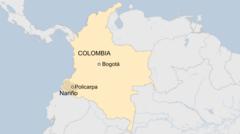
Landslide at unlicensed Colombian gold mine kills 13
A sudden landslide on Saturday night buried an illegal gold‑extraction pit in Colombia’s remote Chocó region, killing 13 people, including four members of an indigenous family. The disaster struck a makeshift tunnel dug by miners who lacked any government licence. Rescue teams arrived on Sunday but found only bodies and debris, underscoring the peril of unregulated mining in a country already grappling with illegal extraction. The tragedy matters because it highlights deep‑rooted governance gaps, environmental risks, and the human cost of the black‑market gold trade that fuels both local economies and international supply chains. For a broader view of similar incidents, see the world coverage.
Key takeaways
- Thirteen dead, four of them from the same indigenous family, after a landslide at an unlicensed gold mine.
- The mine operated without official permits, reflecting Colombia’s ongoing struggle with illegal mining.
- Remote location and poor infrastructure delayed rescue efforts, worsening the death toll.
- Authorities face pressure to tighten oversight and protect vulnerable communities in mining zones.
Background
Illegal gold mining has surged in Colombia’s Pacific basin, driven by high global prices and limited economic alternatives for rural populations. The Chocó department, rich in biodiversity, has become a hotspot for unregulated extraction, often staffed by informal labourers who lack safety training. Environmental NGOs warn that such operations cause deforestation, mercury contamination, and destabilise slopes, creating conditions ripe for landslides. The Colombian government estimates that informal mining accounts for up to 30 % of the nation’s gold output, despite repeated crackdowns.
What happened
At approximately 22:30 local time, a collapse occurred in a shallow tunnel carved into a steep hillside near the village of La Victoria. Witnesses reported hearing a deep rumble followed by a cloud of dust and rock. When rescue crews from the regional police and the National Police’s Special Operations Unit reached the site, they discovered 13 bodies trapped under meters of mud and stone. Four of the victims were identified as siblings from an indigenous family that had lived in the area for generations. The remaining victims were believed to be hired miners who travelled from nearby towns.
Why it matters
The incident exposes how unlicensed mining endangers lives, ecosystems, and the rule of law. Colombia’s BBC News report notes that similar landslides have claimed dozens of lives in the past decade, yet enforcement remains inconsistent. The loss of indigenous lives also raises cultural concerns, as these communities often lack legal representation in disputes over land use. Moreover, the tragedy could prompt international scrutiny of gold supply chains, pressuring retailers to verify that their products are not sourced from hazardous, illegal sites. For further context on how media coverage shapes public perception, read the analysis in Togo charges two French journalists over incorrect documents, rights group says.
What happens next
Colombian authorities have launched an investigation into the mine’s ownership and the circumstances that allowed the operation to continue unchecked. The Ministry of Mines and Energy announced plans to increase aerial surveillance of high‑risk zones and to collaborate with local Indigenous councils for community‑led monitoring. Meanwhile, humanitarian groups are providing counseling and financial assistance to the victims’ families, while urging the government to deliver long‑term economic alternatives to prevent future tragedies. Readers can follow updates on this story through the Chronicle News portal, which aggregates official statements and on‑the‑ground reports.
Frequently asked questions
How many people were working at the mine when it collapsed?
Authorities believe roughly 20 miners were present, but only 13 were found dead; the others escaped or were not accounted for in the immediate aftermath.
Are landslides common in Colombian mining areas?
Yes, the combination of steep terrain, heavy rainfall, and unregulated excavations makes landslides a frequent hazard in the country’s informal mining sector.
What steps is the government taking to regulate illegal mining?
The government has pledged tighter licensing checks, increased patrols, and community‑based monitoring programmes, though implementation has been uneven across remote regions.
Bottom line
The landslide at an illegal gold mine in Chocó underscores the lethal risks of unregulated extraction and the urgent need for stronger oversight. Reporting by BBC News.