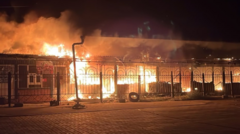
Russia and Ukraine trade more deadly strikes – In the past 24 hours both Moscow and Kyiv have reported fresh civilian casualties, with Russian officials saying nine people were killed and Ukrainian authorities confirming four deaths. The attacks, which have intensified across contested front‑line towns, highlight a dangerous escalation as both sides ramp up artillery and missile fire. The surge matters because it threatens to widen the humanitarian crisis and could reshape diplomatic calculations ahead of upcoming peace talks.
Key takeaways
- Nine civilians killed in Russian‑controlled areas, four in Ukrainian‑held zones within 24 hours.
- Both governments accuse the other of violating cease‑fire agreements and international law.
- Intensified strikes raise concerns for displaced families already sheltering in makeshift camps.
- The escalation may pressure mediators to revisit stalled negotiations before winter.
Background
Since February 2022, the Russia‑Ukraine war has oscillated between static trench warfare and periodic offensives. After the spring counter‑offensive, Kyiv reclaimed parts of the east, while Moscow fortified its positions in the south. International observers, including the United Nations, have repeatedly warned that civilian areas are increasingly caught in the crossfire. The latest spike follows a week of artillery exchanges along the Donetsk‑Luhansk front, where both sides claim to be defending “strategic settlements” — a narrative echoed across the world coverage of the conflict.
What happened
On Tuesday, Russian forces launched a barrage of short‑range missiles targeting the town of Avdiivka, a hotspot of prior clashes. Local officials reported nine civilian deaths and several injuries, prompting Moscow to label the strike a “necessary response to Ukrainian aggression.” Within hours, Ukrainian air‑defence units reported downing multiple Russian drones over the same area, while artillery shells landed in the neighboring village of Hryhorivka, killing four residents, according to Kyiv’s emergency services. Both sides released video footage that they say proves the other is deliberately targeting non‑combatants, but independent verification remains limited.
Why it matters
The twin incidents underscore a grim trend: each side is willing to accept higher civilian tolls to gain tactical advantages. Human‑rights groups warn that the growing frequency of “deadly strikes” could breach the Geneva Conventions, potentially inviting new sanctions or legal action. Moreover, the heightened violence threatens to derail the tentative diplomatic overtures facilitated by the OSCE and the United Nations, whose envoys have warned that any further escalation could make a negotiated settlement “increasingly unattainable.” For families already displaced, the renewed shelling forces another round of evacuations, stretching limited humanitarian resources thin.
What happens next
Analysts expect both Moscow and Kyiv to continue using artillery and missile strikes as leverage in upcoming talks scheduled for early November. Western governments, including the United States and the European Union, have signaled readiness to impose additional economic penalties if civilian casualties rise sharply. Meanwhile, humanitarian organisations are urging the establishment of “safe corridors” to evacuate civilians from the most contested zones, a proposal that Russia has so far dismissed as “politically motivated.” The coming weeks will likely test whether diplomatic pressure can curb the violence or whether the front lines will see further bloodshed.
Frequently asked questions
How many civilians have been killed in the latest attacks?
Russian officials report nine deaths; Ukrainian authorities confirm four additional fatalities in the same 24‑hour period.
Are these strikes a violation of international law?
Both sides claim the attacks target legitimate military objectives, but independent observers argue that the high civilian toll may breach the Geneva Conventions.
What impact could this have on peace negotiations?
Escalating violence raises the risk that negotiators will lose momentum, potentially delaying any cease‑fire agreement until after the winter months.
Bottom line
The renewed deadly strikes deepen the humanitarian crisis and complicate diplomatic efforts to end the war. Reporting by BBC News.
Related reading
- Trump threatens to bomb Oman if it 'gets in the way' over Iran issue
- WordPress.com targets the next generation of web creators with a free student plan
- England's new number three Cox leaning on Kohli advice
- What England can expect from captain Root
- Emotional farewell to 'global, iconic superstar' Bonnie Tyler
For more coverage, visit Chronicle News or explore all articles.