Scottish FA withdraws support for FIFA president Infantino
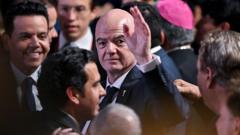
The Scottish Football Association announced on Tuesday that it will not back Gianni Infantino in the upcoming FIFA presidential election. Chief executive Ian Maxwell told BBC Sport the association has lost confidence in Infantino’s leadership. The decision, made ahead of the June vote in Zurich, could tip the balance in a tightly contested race and signals growing unrest among UEFA members.
Key takeaways
- Scottish FA will abstain from voting for Infantino’s re‑election in June.
- Ian Maxwell cited a loss of confidence in Infantino’s governance of world football.
- The move adds pressure on other European federations to reassess their support.
- A shift in the voting bloc could influence FIFA’s strategic direction for years.
Background
Infantino has chaired FIFA since 2016, overseeing reforms that include expanded World Cups and new revenue streams. While some members praise his commercial acumen, critics argue that governance transparency remains insufficient. The Scottish FA, a founding UEFA member, has traditionally aligned with the broader British football agenda but has grown uneasy over recent governance controversies.
What happened
During a brief interview with BBC Sport, Maxwell confirmed that the Scottish FA “has lost confidence in Gianni Infantino” and will therefore not cast a vote in his favour. The statement was made at the association’s Glasgow headquarters, where officials declined to elaborate on specific grievances. No formal motion was lodged with UEFA, but the public withdrawal signals a clear break from previous endorsements.
Why it matters
- Electoral impact – FIFA’s presidential election requires a two‑thirds majority of the 211-member associations. Scotland’s abstention, while numerically small, may encourage other dissenting federations to follow suit, potentially forcing a runoff.
- Governance pressure – The Scottish FA’s stance adds to a chorus of calls for greater accountability, echoing concerns raised by clubs and players over issues such as financial fair play and tournament scheduling.
- European dynamics – As part of the wider sports community, Scotland’s move could reshape alliances within UEFA, especially ahead of the 2028 European Championship bids.
The development also reflects a broader trend of national associations demanding more influence over FIFA’s policy‑making, a theme explored in recent coverage of Crypto hardware wallet owners face fresh security risks after recent spate of personal data thefts and Pocognoli 'feels connection' with 'passionate' Scotland.
What happens next
FIFA’s election is scheduled for 13 June in Zurich. If Infantino fails to secure the required super‑majority, a second‑round ballot will be triggered, opening the field to challengers such as South‑American federation president Alejandro Domínguez or Asian counterpart Salman Bin Ibrahim Al Khalifa. The Scottish FA has indicated it will monitor the process closely and may issue a formal statement after the vote. Meanwhile, journalists at Chronicle News are tracking reactions from other UEFA members, many of whom remain silent but are expected to weigh in before the deadline.
Frequently asked questions
Will Scotland’s abstention affect the final vote count?
Yes. While Scotland alone accounts for one vote, its public dissent may persuade other federations to withhold support, potentially preventing Infantino from reaching the two‑thirds threshold.
Has the Scottish FA given reasons for losing confidence?
Maxwell did not disclose detailed reasons, citing internal deliberations. Observers suggest the decision relates to perceived shortcomings in transparency and decision‑making at FIFA.
Could this lead to a leadership challenge within UEFA?
Possibly. A weakened mandate for Infantino could embolden reform‑focused groups within UEFA to push for structural changes, though any formal challenge would require a coordinated coalition of several national associations.
Bottom line
The Scottish FA’s withdrawal of support signals growing unease with FIFA’s leadership and could reshape the upcoming presidential election. The move underscores the increasing influence of individual associations in global football governance, as reported by BBC Sport.
Related reading
- Crypto hardware wallet owners face fresh security risks after recent spate of personal data thefts
- Pocognoli 'feels connection' with 'passionate' Scotland
- [Virgin takes step towards running Channel Tunnel rail services](/articles/virgin-takes-step-towards-running-channel-tunnel-rail-services-