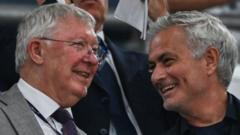
In a twist of footballing fate, Jose Mourinho, one of the most decorated managers in the world, reportedly turned down the opportunity to succeed Sir Alex Ferguson at Manchester United in 2013. According to a BBC Sport report, Mourinho initially said yes to the job but later reversed his decision. This stunning revelation sheds light on a pivotal moment in football history, altering the trajectory of both Mourinho's career and the Premier League powerhouse. The decision matters because it shaped the managerial saga that ensued at Old Trafford, influencing the club's fortunes for years.
Key Takeaways
- Jose Mourinho reportedly agreed to replace Sir Alex Ferguson at Manchester United in 2013.
- Mourinho later changed his mind, paving the way for David Moyes to take the reins.
- Mourinho’s decision underscores the difficulty of succeeding a legendary manager like Ferguson.
- The fallout shaped United's turbulent managerial years and Mourinho's eventual arrival in 2016.
Background
When Sir Alex Ferguson retired in 2013 after a glittering 26-year tenure at Manchester United, the club faced the daunting task of replacing a footballing giant. Ferguson, who won 13 Premier League titles, five FA Cups, and two Champions League trophies, left behind a legacy few could hope to replicate. The search for his successor became one of football's most scrutinized decisions, with names like Pep Guardiola, Carlo Ancelotti, and Jose Mourinho floated as possible candidates.
Mourinho, then managing Real Madrid, was one of the top contenders. Known for his tactical acumen and fiery persona, Mourinho appeared to be a perfect fit for the job. However, what transpired behind the scenes has remained largely under wraps—until now.
What Happened
As reported by BBC Sport, Jose Mourinho initially accepted Manchester United's offer to replace Sir Alex Ferguson. Sources close to the negotiation revealed that Mourinho was intrigued by the challenge of managing one of the world's most prestigious clubs. However, as talks progressed, Mourinho reportedly had second thoughts. Concerns about stepping into Ferguson's shadow, coupled with other professional and personal considerations, ultimately led him to decline the role.
In Mourinho's absence, United appointed David Moyes, who was handpicked by Ferguson himself. Moyes struggled to fill the legendary manager's shoes, lasting less than a season before being sacked. Mourinho eventually joined United in 2016, where he won the Europa League and EFL Cup but failed to deliver a Premier League title.
Why It Matters
Mourinho's decision to turn down Manchester United in 2013 was a sliding-doors moment that reverberated across the football world. Had Mourinho taken the job, the club's fortunes in the post-Ferguson era might have been vastly different. His tactical expertise and track record of winning titles could have offered stability during a turbulent transition.
Instead, United went through a series of managerial changes, including the brief tenures of Moyes, Louis van Gaal, and eventually Mourinho himself. The club's struggles during this period have been well-documented, with fans and pundits alike lamenting the lack of a clear vision. This decision also impacted Mourinho's career, as he stayed at Real Madrid for another year before moving to Chelsea, where he won the Premier League in 2015.
What Happens Next
The revelation about Mourinho's initial acceptance and subsequent rejection of the United job adds a new layer to the narrative of the club's modern history. While Mourinho's eventual stint at United ended in mixed reviews, it underscores the complexity of replacing a figure as iconic as Ferguson. The club continues to grapple with finding long-term managerial success, currently under the stewardship of Erik ten Hag.
For Mourinho, now managing AS Roma, the decision to wait before joining United may have saved him from the immediate backlash Moyes faced. However, it also raises questions about what might have been had he taken over during that critical juncture.
Frequently Asked Questions
Why did Mourinho say no to Manchester United in 2013?
Mourinho reportedly had concerns about succeeding Sir Alex Ferguson, whose legacy overshadowed the role. Personal and professional factors also contributed to his decision to remain at Real Madrid at the time.
How did Mourinho’s decision impact Manchester United?
Mourinho’s decision led to the appointment of David Moyes, whose brief and unsuccessful tenure marked the start of a turbulent period for United. The club struggled with consistency and identity under several managers before Mourinho eventually joined in 2016.
Did Mourinho eventually find success at Manchester United?
Mourinho enjoyed some success at United, winning the Europa League and EFL Cup in 2017. However, he failed to deliver a Premier League title and was sacked in 2018 after a string of poor performances.
Bottom Line
Jose Mourinho's decision to turn down Manchester United in 2013 was a pivotal moment that shaped the club's trajectory and his own career. This report from BBC Sport reminds us how one choice can alter football history.
Related Reading
- Ex-Cambridge professor Jason Arday cancels live event after plagiarism row
- Thames Water gave finance boss a £1m signing-on fee
- Netanyahu's rejection of Trump's 15-point Gaza plan unlikely to be final word
- Watch: What we know about suspected crime boss Daniel Kinahan
- At least 13 killed in Ukrainian drone strike deep into Russia