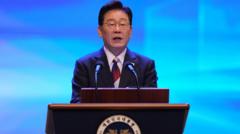
South Korean President Lee Jae Myung has proposed formal talks to end the Korean War, a conflict that has technically been ongoing since 1950. The announcement was made during a televised address on Monday, October 23, as Lee extended an olive branch to North Korea, calling for dialogue to replace the 1953 armistice with a peace treaty. This initiative comes amid heightened regional tensions and growing concerns over North Korea's escalating missile tests. If successful, the talks could mark a historic shift in inter-Korean relations and regional stability.
Key Takeaways
- South Korea seeks talks to replace 1953 armistice with a formal peace treaty.
- President Lee Jae Myung extended the offer during a televised address on October 23.
- The move follows increased tensions over North Korea's recent weapons testing.
- Ending the war could reshape East Asia’s geopolitical landscape and boost global stability.
Background
The Korean War began in 1950 and saw North Korea, backed by China and the Soviet Union, clash with South Korea, supported by the United Nations and the United States. Although active fighting ceased in 1953 with the establishment of an armistice, no formal peace treaty was ever signed, leaving the two Koreas technically at war.
Over the decades, intermittent efforts to normalize relations have failed, including the breakdown of U.S.-North Korea nuclear talks in 2019. Tensions have been exacerbated by North Korea’s missile tests and its pursuit of nuclear weapons, which have drawn sanctions and international condemnation.
What Happened
On October 23, South Korean President Lee Jae Myung publicly proposed talks to officially end the Korean War. Speaking in Seoul, Lee called for North Korea to engage in dialogue, suggesting that a peace treaty could pave the way for greater economic cooperation and security in the region. He emphasized that the proposal is not conditional upon North Korea’s denuclearization, a sticking point in past negotiations.
"Our shared history demands that we take courageous steps toward reconciliation and peace," Lee stated. The North Korean government has yet to respond to the proposal.
Why It Matters
Ending the Korean War would have significant implications for both the Korean Peninsula and the global community. For South Korea, a peace treaty could lead to reduced military tensions and a potential thaw in relations with its northern neighbor. For North Korea, it could mean access to international aid and economic opportunities.
Regionally, improved inter-Korean relations could stabilize East Asia, where fears over North Korea’s missile program have alarmed the world. Globally, it could signal a major diplomatic achievement, potentially easing one of the last vestiges of the Cold War.
What Happens Next
The ball is now in North Korea’s court. Analysts suggest Pyongyang may demand concessions, such as sanctions relief, before agreeing to talks. International stakeholders like the U.S., China, and Russia are also likely to play pivotal roles in shaping the outcome.
If North Korea accepts, negotiations could begin as early as late 2023. However, given the history of failed agreements, skepticism remains high. Observers are closely monitoring Pyongyang’s response, as well as how this initiative might influence U.S. policy in the region.
Frequently Asked Questions
What is the current status of the Korean War?
The Korean War is technically ongoing, as it ended in 1953 with an armistice, not a peace treaty. Efforts to formally end the war have stalled for decades, largely due to disagreements over North Korea's nuclear ambitions.
How has North Korea responded to the proposal?
As of now, North Korea has not issued an official response to President Lee’s proposal. Analysts believe its decision will hinge on potential concessions, such as sanctions relief or security guarantees.
What role will the United States play?
The U.S. is expected to play a key role in any peace talks, given its military alliance with South Korea and longstanding tensions with North Korea. Washington’s stance on sanctions and North Korea’s denuclearization will likely influence the trajectory of negotiations.
Bottom Line
South Korea’s proposal to formally end the Korean War could herald a new chapter in inter-Korean relations, but significant challenges remain. BBC News reports that North Korea’s response will be critical in determining the path forward.