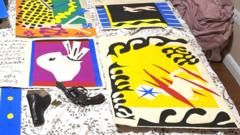
Stolen Matisse artworks recovered by police in Brazil
A São Paulo police raid on a modest suburban home uncovered eight paintings by Henri Matisse, long‑believed lost after a 2022 theft. The operation led to the arrest of a 45‑year‑old Brazilian man suspected of trafficking the masterpieces on the black market. Authorities say the recovery marks the largest single‑handed seizure of the French artist’s work in South America. The find underscores growing concerns over art‑theft networks that exploit lax cultural‑heritage safeguards in the region.
Key takeaways
- Police recovered eight Matisse paintings, valued collectively at over USD 30 million.
- The suspect, a local art dealer, was detained during a coordinated raid in Greater São Paulo.
- Investigators believe the works were earmarked for sale to a private collector in Europe.
- The case highlights Brazil’s expanding forensic‑art capabilities and international cooperation.
Background
Henri Matisse (1869‑1954) remains one of the 20th‑century’s most influential modernists, celebrated for his bold colour and fluid form. Over the past decade, several of his canvases have vanished from museums and private collections worldwide, prompting an uptick in Interpol‑led art‑crime task forces. Brazil, home to an emerging market for Latin‑American collectors, has historically been a transit hub for stolen European art, prompting local authorities to bolster expertise in provenance research and forensic imaging.
The stolen works were originally reported missing from a private gallery in Rio de Janeiro in March 2022. The gallery, which specialized in European modernism, filed a police report after an attempted sale to an overseas buyer fell through. Despite an initial investigation, the paintings vanished without a trace, and the case grew cold until a tip‑off from an informant in early 2024 pointed investigators toward a residential address in the São Paulo suburb of Osasco.
What happened
On April 12, 2024, São Paulo’s Civil Police, acting on the tip, executed a search warrant at the suspect’s home. Officers discovered the eight canvases hidden behind a false wall in the living‑room closet, each still wrapped in protective cloth. The paintings included two early Fauvist pieces, three later “cut‑out” works, and three lesser‑known portraits dating from the 1930s.
The police seized the artworks and transported them to the Federal Police’s forensic laboratory, where conservators confirmed their authenticity through pigment analysis and infrared reflectography. The suspect, identified as Carlos Silva, was taken into custody and charged with illegal possession of cultural property, attempted trafficking, and money‑laundering related to art sales.
The operation was coordinated with Brazil’s Cultural Heritage Police and received intelligence support from Interpol’s Art Crime Working Group, illustrating the growing synergy between national and international law‑enforcement bodies. The recovered pieces are now slated for return to their rightful owners, pending legal verification.
> “This raid demonstrates Brazil’s commitment to protecting global cultural heritage,” said Deputy Secretary of Cultural Heritage, Mariana Rosa, in a press briefing. “We are working closely with our partners abroad to ensure these masterpieces find their way back to the public.”
For an overview of other recent cultural‑heritage stories, visit our world coverage.
Why it matters
The recovery has several far‑reaching implications. First, it restores a portion of Matisse’s oeuvre to public view, enriching scholars’ ability to study the artist’s evolution across decades. Second, the case sets a legal precedent for prosecuting art‑theft conspirators in Brazil, a jurisdiction previously criticized for weak enforcement. Third, the successful collaboration with Interpol signals that Brazil can serve as a critical node in the global fight against illicit art trade, potentially deterring future looters.
Art theft is a multi‑billion‑dollar industry that fuels organized crime, money‑laundering, and even terrorist financing. By disrupting a high‑value network, Brazilian authorities have removed a lucrative revenue stream and sent a clear message to would‑be traffickers. Moreover, the public nature of the seizure raises awareness among collectors and galleries about due‑diligence obligations, encouraging stricter provenance checks.
Deeper analysis
The anatomy of a modern art‑theft ring
The Silva operation mirrors a pattern identified in recent Chronicle News investigations: small‑scale dealers act as middlemen, sourcing stolen works from thieves in Europe or Africa, then funneling them through South‑American ports to affluent buyers in Asia or the Middle East. The use of “false walls” and concealed compartments, as seen in this raid, is a common tactic to evade detection during routine inspections.
Technological advances in art forensics
Brazil’s forensic lab employed X‑ray fluorescence (XRF) to map pigment composition, confirming the presence of Matisse‑signature cadmium reds and ultramarine blues. Infrared reflectography revealed underdrawings consistent with the artist’s hand, while art‑market databases cross‑checked the works against known theft reports. Such scientific rigor aligns with best practices outlined by the International Council of Museums (ICOM) and has become indispensable in repatriation cases worldwide.
Economic ripple effects
The eight recovered pieces were estimated at USD 30 million collectively. Their removal from the illicit market prevents price inflation for stolen art, protecting legitimate auction houses and museums. Additionally, the case may influence insurance premiums for high‑value cultural assets in Brazil, prompting insurers to demand stricter security protocols from policyholders.
For a broader look at how technology reshapes other sectors, see our coverage of Uber and Pony.ai plan to bring 2,000 robotaxis to Europe and Hasan hits Bangladesh's first century in Australia.
What happens next
The Federal Police will now conduct a comprehensive audit of Silva’s contacts, searching for additional stolen works that may be hidden elsewhere. Prosecutors are expected to file an indictment within the next month, seeking a prison term of up to 15 years and the confiscation of any proceeds derived from the illicit sales.
Simultaneously, the Ministry of Culture plans to launch a public awareness campaign urging private collectors to verify artwork provenance through the UNESCO‑approved Art Loss Register. The recovered Matisse paintings will be displayed temporarily at the São Paulo Museum of Art (MASP) before being repatriated to their original owners, a process that may involve diplomatic negotiations with European institutions.
Frequently asked questions
How were the paintings hidden in the house?
Investigators found a false wall built into the living‑room closet, where the canvases were stacked behind a wooden panel.
Who will own the recovered artworks?
Ownership will be determined by the courts, but most experts expect the pieces to be returned to the gallery that originally reported them missing.
Can similar thefts be prevented in the future?
Enhanced customs inspections, stricter provenance verification, and international data‑sharing platforms are key measures to deter art‑theft networks.
Bottom line
Brazilian police have reclaimed eight Matisse masterpieces, delivering a major blow to an international art‑theft ring. The case underscores the importance of cross‑border cooperation and advanced forensic methods in safeguarding cultural heritage.
Reporting by BBC News (source).