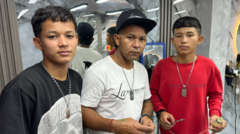
Teens who fled Venezuela after deadly quakes caught in another disaster in Colombia
A 17‑year‑old Venezuelan teenager and his 15‑year‑old brother, who escaped their home after a 2023 earthquake killed their mother, were injured when a landslide struck the Colombian town of Tumaco on 24 April 2024. The brothers, Deivi Delfín and his sibling, had been living in a temporary shelter provided by Colombian authorities when a sudden mudslide buried several makeshift homes. The incident spotlights the growing vulnerability of climate‑displaced migrants in South America and raises urgent questions about regional disaster preparedness.
Key takeaways
- Venezuelan teens, displaced by a 2023 quake, were injured in a Colombian landslide on 24 April 2024.
- The landslide killed eight people and left dozens homeless in Tumaco, a coastal town already prone to flooding.
- Human‑rights groups warn that lack of safe housing compounds risks for migrants fleeing natural disasters.
- Colombian and Venezuelan authorities pledge joint aid, but long‑term relocation solutions remain unclear.
Background
The 2023 earthquake that rocked Venezuela’s western states left thousands homeless and claimed more than 30 lives, including the mother of Deivi Delfín. Seeking safety, the brothers crossed the border into Colombia’s Nariño department, where they were placed in a government‑run camp in Tumaco. The town, part of the world region’s “Pacific disaster corridor,” experiences frequent heavy rains that trigger landslides and flooding. Chronicle News has previously reported on similar cross‑border humanitarian challenges.
What happened
On the morning of 24 April, torrential rain triggered a hillside collapse that swept through the camp’s perimeter. Emergency services arrived within minutes, rescuing survivors and transporting the Delfín brothers to a local hospital. According to Colombian officials, eight residents died, and more than 30 were injured. The incident occurred just weeks after the community received aid following a separate flood, highlighting the compounding nature of natural hazards in the region.
Why it matters
The tragedy underscores how climate‑related events disproportionately affect displaced populations. The brothers’ story mirrors that of many Venezuelan migrants who, after surviving one disaster, find themselves exposed to another without adequate shelter or infrastructure. International observers, including the United Nations, have warned that the Pacific coast of Colombia is a “high‑risk zone” for repeated catastrophes. Moreover, the incident draws attention to the need for coordinated cross‑border disaster response—a topic also explored in recent coverage such as the US says dozens of countries helped China dodge Trump's tariffs piece, which illustrates how global cooperation can mitigate crises.
What happens next
Colombian President Gustavo Petro Urrego announced a three‑phase response: immediate medical care, temporary relocation of the affected families, and a long‑term reconstruction plan for Tumaco’s vulnerable neighborhoods. Venezuelan authorities have pledged to assist the displaced families with documentation and financial aid. Human‑rights NGOs are calling for an independent investigation into the safety standards of the temporary shelters, while the United Nations Office for the Coordination of Humanitarian Affairs (OCHA) is preparing a joint assessment with the Colombian Red Cross. The outcome of these actions will shape future policies for migrants facing successive natural disasters.
Frequently asked questions
How many Venezuelan teens are currently living in temporary shelters in Colombia?
Exact figures are not publicly disclosed, but humanitarian agencies estimate that several thousand Venezuelan minors reside in provisional housing across Colombia’s border regions.
What caused the landslide that hit Tumaco?
Intense rainfall over several days saturated the soil on the coastal hillsides, triggering a slope failure that swept down into the settlement. Experts cite climate change‑induced weather patterns as a contributing factor.
Will the brothers receive compensation for their injuries?
Colombian health officials have covered the immediate medical costs, and both Colombian and Venezuelan governments have indicated they will explore compensation mechanisms, though details remain pending.
Bottom line
The Delfín brothers’ ordeal illustrates the cascading risks faced by climate‑displaced migrants in South America. Their story reinforces the urgency for coordinated disaster‑risk reduction across borders, as reported by BBC News.
Related reading
- US says dozens of countries helped China dodge Trump's tariffs
- Stolen Matisse artworks recovered by police in Brazil
- Man City must act like champions as WSL rivals grow stronger
- [I got an £89 refund – how to cancel and avoid unwanted subscriptions](/articles