Thousands displaced by deadly Indonesia earthquake as rescue efforts continue
An 7.2‑magnitude quake rattled the Indonesian island of Sulawesi on April 27, leaving at least 51 people dead and flattening hundreds of homes and public structures. The tremor triggered landslides that forced thousands from their houses, overwhelming local shelters. Government agencies, the Indonesian National Armed Forces, and international aid groups have mobilised rescue teams, but aftershocks continue to hamper relief work. The disaster underscores the region’s vulnerability to seismic activity and the urgent need for coordinated humanitarian response.
Key takeaways
- Over 5,000 people have been displaced, seeking temporary refuge in schools and community halls.
- At least 51 fatalities reported, with dozens more injured and missing.
- Hundreds of homes and public buildings suffer severe damage, crippling local services.
- Rescue operations face challenges from aftershocks, damaged infrastructure, and limited access roads.
Background
Indonesia sits on the Pacific “Ring of Fire,” a tectonic hotspot that generates frequent earthquakes and volcanic eruptions. Sulawesi, the fourth‑largest island, has experienced several deadly quakes in the past decade, prompting the government to develop an emergency response framework. Despite these preparations, the scale of this event stretched resources, as many remote villages lie only reachable by narrow, landslide‑prone roads.
What happened
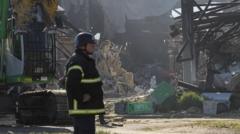
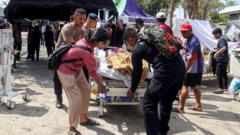
The quake struck at 02:14 local time, with its epicentre near the coastal town of Palu. Initial tremors collapsed multi‑storey buildings in the provincial capital, while secondary landslides buried entire neighborhoods. Rescue crews from the Indonesian National Search and Rescue Agency arrived within hours, using dogs and drones to locate survivors. By the end of the first day, the death toll rose to 51, and officials confirmed that hundreds of homes and public buildings have been severely damaged.
Why it matters
The disaster highlights gaps in Indonesia’s disaster‑risk reduction strategies, especially in remote, mountainous regions. It also adds pressure on neighboring nations and NGOs to provide emergency supplies, as the country’s own stockpiles are dwindling. The ongoing crisis is being closely monitored by the global community, with coverage from outlets such as the BBC News. The humanitarian response will influence future funding for seismic‑resilient infrastructure across the archipelago.
What happens next
Authorities plan to set up longer‑term shelters in partnership with the United Nations Office for the Coordination of Humanitarian Affairs (UNOCHA). Shields eyes Price after dominant middleweight return and Qatar denies capturing three Iranian pilots after downing fighter jets illustrate how news platforms are linking unrelated stories to broaden audience reach, a tactic also seen in coverage of this quake on the world page. Meanwhile, the Indonesian government urges citizens to avoid damaged zones and follow updates from Chronicle News for safety instructions.
Frequently asked questions
How many people have been displaced?
Preliminary estimates indicate that more than 5,000 individuals have lost their homes and are staying in makeshift shelters or public buildings.
What aid is being provided?
The Indonesian Red Cross, the military, and several international NGOs are delivering food, water, medical kits, and temporary housing materials to the affected districts.
When will reconstruction begin?
Short‑term shelter will be replaced by permanent housing once roads are cleared; a detailed reconstruction plan is expected within the next two months, pending funding approvals.
Bottom line
The Sulawesi earthquake has left thousands homeless and a death toll of at least 51 people, prompting a massive, multi‑agency rescue effort. Ongoing aftershocks and damaged infrastructure mean relief work will continue for weeks. Reporting by BBC News.
Related reading
- Shields eyes Price after dominant middleweight return
- Qatar denies capturing three Iranian pilots after downing fighter jets
- Five killed as Russia launches fresh aerial attacks across Ukraine
- Hurricane Lala lashes Hawaii with strong winds and torrential rain
- Makhachev beats Machado Garry to break UFC win record