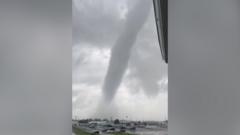
Tornadoes tore through parts of New York and Delaware late Thursday as severe storms battered the Mid-Atlantic region with heavy rain, strong winds, and lightning. The National Weather Service confirmed touchdowns in both states, leaving behind damaged buildings, uprooted trees, and power outages. Emergency responders were deployed to assess the extent of the destruction, but fortunately, no fatalities have been reported. This rare event highlights the growing frequency of extreme weather in areas unaccustomed to such phenomena.
Key Takeaways
- Tornadoes struck New York and Delaware, causing structural damage but no reported fatalities.
- Severe storms brought torrential rain and widespread power outages across the Mid-Atlantic region.
- Emergency services are working to assess damage and assist affected communities.
- Events underscore concerns about climate change's role in intensifying extreme weather patterns.
Background
New York and Delaware are not traditionally prone to tornadoes, but recent years have seen an uptick in extreme weather events across the northeastern United States. The National Weather Service has warned of increasing risks due to shifting climate patterns. While tornadoes are usually associated with the Midwest's "Tornado Alley," storms in the Mid-Atlantic have become more unpredictable and severe.
What Happened
On Thursday evening, tornadoes touched down in Sussex County, Delaware, and parts of eastern New York during a string of violent thunderstorms. Eyewitnesses reported seeing funnel clouds form rapidly before tearing through residential neighborhoods and rural areas. Trees were uprooted, roofs ripped off buildings, and vehicles overturned in the chaos.
Meteorologists reported wind speeds exceeding 100 mph in some areas, contributing to widespread power outages. In New York, flash flooding compounded the damage, with several roads rendered impassable. The National Weather Service continues to survey the affected areas to confirm the strength and scope of the tornadoes.
Why It Matters
The unexpected tornadoes are a stark reminder of the growing unpredictability in global weather patterns. Areas in the northeast, like New York and Delaware, are increasingly experiencing storms previously typical of the Midwest. The damage underscores the urgent need for disaster preparedness in regions where tornadoes were once rare.
As climate change accelerates, meteorologists warn that extreme weather events like these could become more frequent. This brings heightened risks for infrastructure, property, and public safety in communities that lack the resources or experience to effectively respond to such disasters.
What Happens Next
Emergency crews are working to clear debris and restore power to affected neighborhoods. Residents are being advised to stay indoors and avoid areas with downed power lines or unstable structures. The National Weather Service has urged caution as additional storms are forecasted for parts of the Mid-Atlantic throughout the weekend.
Local authorities are collaborating with federal agencies to provide aid to those impacted. Damage assessments may take days to complete, and officials warn that recovery could be prolonged if additional severe weather occurs.
Frequently Asked Questions
Are tornadoes common in New York and Delaware?
No, tornadoes are relatively rare in these states. However, shifting climate patterns have caused an increase in extreme weather events, including tornadoes, in the northeastern United States.
How are officials responding to the damage?
Emergency crews are clearing debris, restoring power, and assessing damage. Local governments are working with federal agencies to provide aid and ensure public safety in affected areas.
Could this happen again soon?
Yes. Meteorologists warn that additional storms are forecasted for the region over the weekend, raising concerns about further damage. Residents are advised to stay alert and follow weather updates closely.
Bottom Line
Tornadoes in New York and Delaware demonstrate the growing unpredictability of weather patterns in the Mid-Atlantic. Reporting attributed to BBC News.
Related Reading
- Several injured after sword attack at Swedish school
- Fixing park pond would 'impact other services'
- Oura faces lawsuit accusing it of misleading consumers about sleep-tracking accuracy
- Corruption charges dropped against South Africa's police intelligence boss
- Walmart to finally start accepting Apple Pay and Google Pay