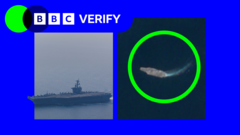
The USS Abraham Lincoln, one of the United States' most prominent aircraft carriers, has been on a record-breaking deployment, raising concerns about the conditions faced by its crew. According to BBC News, the warship has been operating at sea for months, and satellite imagery has been used to track its movements. While the mission underscores the U.S. Navy's commitment to global security, questions are surfacing about the toll it has taken on the sailors aboard. The extended deployment highlights both the operational capabilities and human costs of such missions.
Key Takeaways
- The USS Lincoln is on one of the U.S. Navy's longest deployments in history.
- Satellite imagery has tracked the carrier's movements in key global regions.
- Concerns are rising about the physical and mental toll on the crew.
- The mission underscores the U.S. military's focus on maintaining global presence.
Background
The USS Abraham Lincoln, a Nimitz-class aircraft carrier, has been a cornerstone of the U.S. Navy's global operations. Historically, carriers like the Lincoln are deployed for six to seven months, but this mission has exceeded those timelines, making it one of the longest deployments ever. The ship is part of the U.S. Navy’s efforts to project power in geopolitically significant regions, including the Indo-Pacific and the Middle East.
What Happened
In recent months, the USS Lincoln has been monitored through satellite imagery by BBC Verify, revealing its presence in several high-tension areas. The carrier was spotted operating in the South China Sea, the Persian Gulf, and other strategic waters. These regions are central to ongoing geopolitical disputes, including tensions involving China and the Taiwan Strait.
While the extended deployment demonstrates the U.S. Navy’s ability to maintain a sustained presence, it has not been without challenges. Reports suggest that prolonged time at sea, coupled with the high-pressure environment of a military mission, may be impacting crew morale and physical well-being.
Why It Matters
The extended deployment of the USS Lincoln is significant for several reasons. First, it underscores the United States’ commitment to maintaining a dominant presence in strategic regions, particularly as global powers like China and Russia assert their influence. Second, it raises questions about the sustainability of such missions, especially given the human toll on service members.
Long deployments can lead to fatigue, mental health challenges, and physical strain among crew members. These issues have prompted debates about the balance between operational readiness and the well-being of military personnel. The Lincoln’s mission serves as a reminder of the sacrifices made by service members and the need for policies that prioritize their health and safety.
What Happens Next
The USS Lincoln’s deployment is expected to wind down in the coming weeks, though no official timeline has been confirmed. The Navy will likely conduct a comprehensive review of the mission to assess its successes and challenges, including the impact on crew morale. Advocates for military personnel are urging reforms to limit deployment lengths and address the mental health needs of sailors.
As the U.S. continues to respond to global challenges, the Navy’s ability to balance operational demands with personnel welfare will remain a key issue. The situation also highlights broader questions about the future of U.S. military strategy and its implications for service members.
Frequently Asked Questions
What is the USS Abraham Lincoln’s mission?
The USS Lincoln is deployed to maintain a U.S. military presence in geopolitically significant regions, including the Indo-Pacific and the Middle East. Its extended mission demonstrates the Navy’s operational capabilities during a time of heightened global tensions.
Why are extended deployments a concern?
Prolonged deployments can lead to fatigue, mental health challenges, and physical strain for service members. These conditions can impact not only the well-being of the crew but also the overall effectiveness of the mission.
How is the deployment being monitored?
The USS Lincoln’s deployment has been tracked using satellite imagery, which has revealed its presence in strategic regions such as the South China Sea and the Persian Gulf. This monitoring provides valuable insights into U.S. naval operations and global tactics.
Bottom Line
The USS Abraham Lincoln’s unprecedented deployment reflects the challenges and sacrifices inherent in maintaining global security. This story highlights the need for a balanced approach to military readiness and crew welfare, as reported by BBC News.
Related Reading
- Chinese robotics giant Unitree soars in stock market debut
- Sacked Ukrainian defence minister calls for presidential election
- Harvard agrees to pay millions after morgue manager sold body parts
- The critical tech staying safe by going underground
- 'Banned over a pair of £2 sandals': Why some sellers are complaining about Vinted