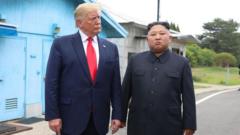
Trump says US to reduce military drills with South Korea after it stayed out of Iran war
Former President Donald Trump announced on Thursday that the United States will scale back joint military exercises with South Korea. He cited Seoul’s decision to stay out of the ongoing Iran‑Israel conflict and his “very good relationship” with North Korean leader Kim Jong un as the rationale. The statement was made during a press briefing in Washington, D.C., and signals a potential shift in the U.S.‑Korea security alliance. Analysts say the move could reshape regional deterrence dynamics in East Asia and the broader Middle East.
Key takeaways
- Trump links reduced U.S.–South Korea drills to Seoul’s non‑involvement in the Iran war.
- The decision is framed around a “very good relationship” with North Korea’s Kim Jong un.
- Critics warn the cutback may weaken the deterrent posture against North Korean aggression.
- The announcement arrives as Washington reassesses its global military commitments.
Background
The United States and South Korea have conducted annual combined field training exercises, known as Freedom Shield and Foal‑Eagle, for decades. These drills are designed to ensure interoperability and to signal resolve against North Korean provocations. In recent months, Tehran’s missile strikes on Israeli targets have heightened tensions across multiple theaters, prompting allies to reassess their engagement levels.
Trump’s comments echo his 2020 foreign‑policy stance, which often emphasized personal rapport with authoritarian leaders over traditional alliance calculus. The former president’s remarks were reported by BBC News and quickly circulated on social media, sparking debate among defense experts and lawmakers.
What happened
During a televised interview on Thursday, Trump stated, “We’re going to reduce the drills with South Korea because they chose to stay out of the Iran war, and I have a very good relationship with Kim Jong‑un.” He added that the United States would still maintain a “strong defensive posture” but would “focus on other priorities.” The announcement was not accompanied by an official Pentagon briefing, leaving the scale and timeline of the reduction unclear.
South Korean officials, speaking to the world desk, expressed concern that any cutback could undermine the credibility of the alliance. Meanwhile, North Korean state media praised the comment as a “positive step toward peace,” though analysts caution that rhetoric does not automatically translate into policy change.
Why it matters
- Regional security: The U.S.–South Korea drills serve as a deterrent against North Korean missile tests. A reduction could embolden Pyongyang to accelerate its weapons program.
- Alliance cohesion: Seoul’s partnership with Washington has been a cornerstone of East Asian stability since the Korean War. Perceived wavering may prompt Seoul to diversify its security partners, including Japan and Australia.
- Global signaling: By tying drill reductions to Iran‑related decisions, the United States may be signaling a broader reluctance to intervene in Middle Eastern conflicts, which could affect NATO and Gulf allies.
- Domestic politics: Trump's remarks revive the debate over the role of personal diplomacy versus institutional foreign policy, a theme also explored in coverage of other high‑profile stories such as Lamour leaves Fifa after Infantino plan criticism and LIV cancels final event to focus on 'next chapter'.
What happens next
The Pentagon is expected to issue a formal statement within the next 48 hours outlining any adjustments to the joint exercise schedule. Congressional committees overseeing defense spending may hold hearings to assess the strategic implications of the proposed cutback. In Seoul, the Ministry of National Defense is likely to convene a senior‑level meeting with U.S. counterparts to negotiate the scope of the reduction while preserving core deterrence capabilities.
Observers suggest that the United States could replace large‑scale drills with smaller, technology‑focused training, such as cyber‑defense simulations. Meanwhile, diplomatic channels between Washington and Tehran remain strained, and any escalation in the Iran‑Israel theater could further test the limits of the new U.S. stance. For continued coverage, follow Chronicle News and check the All articles archive for related updates.
Frequently asked questions
How will the drill reduction affect North Korea’s behavior?
Most experts believe a modest scaling back will not dramatically alter Pyongyang’s calculations, but it could remove a key deterrent that discourages aggressive missile testing.
Does this mean the United States is abandoning its allies in the region?
No. The U.S. has affirmed that its defensive commitments to South Korea remain intact; the change is framed as a strategic re‑balancing rather than a withdrawal.
Could this decision impact U.S. involvement in the Iran conflict?
Potentially. By linking the drill cutback to Seoul’s non‑participation, the United States may be signaling a more limited willingness to