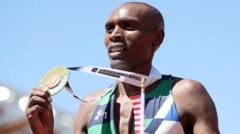
US 1500 m champion Koech receives three‑year doping ban
American middle‑distance star Jonah Koech has been handed a three‑year suspension after an anti‑doping tribunal found him guilty of blood doping. The decision was announced on 8 August 2026 by US Athletics, the governing body for track and field in the United States. The ban bars Koech from all sanctioned competitions worldwide until August 2029, ending his bid to defend the 1500 m title he won at the national championships last June. The ruling reverberates across the sport, raising fresh questions about testing protocols and athlete accountability.
Key takeaways
- Koech’s three‑year suspension follows a positive test for autologous blood transfusion, a prohibited method under WADA rules.
- The ban applies retroactively from the provisional suspension imposed in March 2026, wiping out his recent results.
- US Athletics will review its internal testing program to prevent similar violations in the future.
- Koech may appeal the decision, but any provisional clearance is unlikely before the end of 2026.
Background
Jonah Koech burst onto the scene in 2023, claiming the US 1500 m championship with a personal best of 3:33.84. His rapid ascent earned him a spot on the World Championships team and the attention of sponsors. However, routine out‑of‑competition testing in February 2026 flagged an abnormal blood profile, prompting a targeted investigation that uncovered evidence of a blood‑boosting transfusion. The case was escalated to the United States Anti‑Doping Agency (USADA), which referred it to the sport’s disciplinary panel.
What happened
After the February sample was sent to a WADA‑accredited lab, the analysis revealed elevated hematocrit levels inconsistent with natural variation. Koech was provisionally suspended in March 2026 while investigators gathered additional evidence, including testimony from a medical practitioner linked to the athlete’s support team. In a hearing held in July, the panel concluded that Koech had knowingly used autologous blood doping to enhance performance. The sanction—three years’ ineligibility and the disqualification of all results from the date of the provisional suspension—was announced on 8 August 2026.
Why it matters
The ban sends a strong signal to the global athletics community that blood‑doping violations will be met with severe penalties, reinforcing the integrity of competition. For US athletics fans, the loss of a national champion disrupts the narrative of a rising generation of middle‑distance talent. It also places pressure on governing bodies to improve testing frequency and education, especially as other sports grapple with similar scandals. Moreover, the case arrives at a time when the broader sporting world is watching how technology and performance enhancement intersect—parallels can be drawn with recent investigations into AI‑driven cheating in e‑sports, as reported in the coverage of OpenAI reportedly completed a $7 billion employee tender offer and As AI‑led attacks multiply, OpenAI launches a new cyber model.
The decision also reverberates beyond the track, prompting sponsors to reassess partnerships with athletes under scrutiny. In the context of the broader sports ecosystem, Koech’s case underscores the need for transparent anti‑doping measures to preserve public trust.
What happens next
Koech has the right to appeal the ruling to the Court of Arbitration for Sport (CAS) within 21 days of notification. If he pursues this route, the appeal process could extend into late 2026, potentially delaying the enforcement of the ban. Meanwhile, US Athletics announced plans to tighten its out‑of‑competition testing schedule and to launch an education campaign aimed at athletes, coaches, and medical staff. The federation will also cooperate with World Athletics to share findings that may inform global policy updates. For fans seeking the latest coverage, the story will be tracked on Chronicle News and updated across all articles on the site.
Frequently asked questions
How long will the ban last?
The three‑year suspension runs from the date of Koech’s provisional suspension in March 2026, meaning he will be eligible to compete again in August 2029.
Can Koech return to competition after the ban?
Yes, provided he complies with reinstatement requirements, which include a clean testing record and completion of an anti‑doping education program.
What impact does the ban have on Koech’s past results?
All results, medals, and prize money earned from March 2026 onward are automatically disqualified, and the national title he won in June 2026 is stripped.
Bottom line
Jonah Koech’s three‑year doping ban highlights the strict enforcement of anti‑doping rules in elite athletics and signals a tougher stance on blood‑boosting methods. The ruling will reshape the US middle‑distance scene and prompt broader reforms in testing and education.
Reporting by BBC Sport.
Related reading
- [OpenAI reportedly completed a $7 billion employee tender offer](/articles/openai-reportedly-completed-a-7-billion-employee-tender-offer-198yr1e?