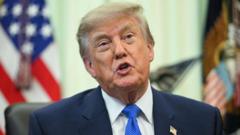
US says dozens of countries helped China dodge Trump’s tariffs
Washington, D.C. – A freshly released report from the Office of the United States Trade Representative (USTR) alleges that China has been routing billions of dollars worth of goods through a network of partner nations to evade the tariffs imposed by former President Donald Trump. The document, dated early June 2026, identifies more than thirty “intermediate” jurisdictions that allegedly provide lower‑tariff corridors for Chinese exporters. If verified, the findings could reshape trade enforcement strategies and trigger diplomatic friction across multiple continents. The story matters because it touches on global supply‑chain integrity, the credibility of U.S. trade policy, and the geopolitical tug‑of‑war between Washington and Beijing.
Key takeaways
- USTR claims China used over 30 partner countries to sidestep Trump‑era tariffs.
- The report cites lower‑tariff routes for electronics, apparel, and automotive parts.
- U.S. officials warn of “systemic abuse” that undermines fair‑trade rules.
- Potential retaliation could include expanded sanctions and stricter customs inspections.
Background
The tariff regime that defined the 2018‑2020 trade war placed duties of up to 25 % on a swath of Chinese imports. While many of those duties were rolled back under the Biden administration, a core set of “Section 301” measures remains in force. Over the past two years, U.S. customs officials have flagged suspicious shipments that appeared to originate from third‑party ports such as Malaysia, Vietnam, and the United Arab Emirates.
Industry analysts have long warned that China’s “transshipment” strategy could erode the effectiveness of any tariff schedule. In a 2024 briefing, the world trade community noted that 12 % of U.S. imports labeled “origin‑China” actually passed through at least one other nation.
The USTR’s latest assessment builds on a series of congressional inquiries that began in 2023, when lawmakers asked the Commerce Department to audit customs data for irregular patterns. Those audits revealed a “significant uptick” in goods re‑labeled as “Made in Singapore” or “Made in Mexico” despite clear Chinese componentry.
For the United States, the issue is not merely fiscal; it also reflects a broader contest over technological dominance and supply‑chain resilience.
What happened
In early June, the USTR released a 62‑page dossier titled “Transshipment Practices and Tariff Evasion: A Multi‑Country Review.” The report enumerates specific product categories—smartphones, solar panels, and textile fabrics—that have been routed through low‑tariff hubs before reaching U.S. ports.
Customs records show that, for example, a batch of 5G‑compatible smartphones labeled as “Vietnam‑origin” entered the United States with a 7.5 % duty, far below the 15 % rate that would apply to a direct Chinese export. The dossier cites shipping manifests, bill‑of‑lading data, and supplier declarations to support its claims.
U.S. Trade Representative Katherine Tai, who spearheaded the investigation, told reporters that “the evidence points to a coordinated effort by Chinese exporters to exploit loopholes across dozens of jurisdictions.” She added that the USTR is now consulting with partner governments to “close the gaps” that enable such circumvention.
The report also highlights cases where Chinese firms set up shell companies in tax‑friendly jurisdictions, allowing them to claim “origin‑neutral” status under certain free‑trade agreements. This practice, the USTR argues, runs afoul of the spirit of the agreements and the letter of U.S. tariff law.
Why it matters
First, the alleged evasion undermines the credibility of the United States’ trade enforcement mechanisms. If tariffs can be sidestepped through clever routing, the deterrent effect of punitive duties evaporates, encouraging further non‑compliance.
Second, American manufacturers and farmers who have benefited from tariff protection may face renewed competition from cheaper Chinese goods that re‑enter the market under a different flag. The agriculture sector, for instance, has long relied on tariffs to shield corn and soybean growers from low‑priced imports.
Third, the findings could strain diplomatic relations with the identified “intermediate” countries. Nations such as Malaysia, the United Arab Emirates, and Mexico have already expressed concern that the USTR’s accusations could lead to “unilateral” measures that hurt their own economies.
Finally, the issue raises questions about the future of multilateral trade governance. If the United States proceeds with unilateral enforcement actions, it may trigger a cascade of retaliatory steps in the World Trade Organization (WTO) dispute‑settlement arena.
Deeper analysis
- Supply‑chain opacity – Modern logistics networks are notoriously complex. A single container can change hands five or more times before reaching its final destination, making it difficult for customs officials to verify true country of origin. Researchers at the Peterson Institute for International Economics have called for “enhanced digital tracking” to improve transparency.
- Legal gray zones – Many of the countries cited in the USTR report have bilateral agreements with the United States that include “origin‑determination rules.” These rules can be exploited when a product undergoes minimal processing in a third country, allowing it to qualify for preferential treatment. The report argues that China is leveraging these loopholes, but legal scholars caution that proving “intentional fraud” is a high bar.
- Geopolitical leverage – By exposing the network, Washington may be seeking to pressure Beijing into a broader negotiation on trade practices. Some analysts view the report as a strategic move ahead of the upcoming WTO Ministerial Conference in Geneva, where tariff reform is on the agenda.
- Economic impact estimates – While the USTR refrains from publishing exact loss figures, an internal Treasury memo cited by the BBC notes that “potential revenue leakage could run into the low‑hundreds of millions of dollars annually.” This estimate aligns with earlier Congressional Research Service calculations that projected a 3 % reduction in tariff effectiveness if transshipment persists.
- Industry response – Major U.S. importers, represented by the National Association of Importers, have urged the government to focus on “clear, consistent rules” rather than punitive actions that could disrupt legitimate trade. In contrast, some labor unions argue that stricter enforcement would protect American jobs.
What happens next
The USTR says it will convene a series of bilateral talks with the most frequently mentioned intermediary nations over the next quarter. The goal is to negotiate “mutual verification protocols” that could include shared customs data and joint inspections.
Congress is expected to hold hearings where the USTR’s findings will be scrutinized. Lawmakers from the House Ways and Means Committee have already drafted a resolution to allocate additional funding for customs technology upgrades.
If diplomatic outreach fails, the United States may pursue formal WTO complaints, alleging that the transshipment practices constitute “discriminatory trade measures.” Such a step would likely invite counter‑claims from China and its allies, potentially escalating into a new round of trade disputes.
In the meantime, Chinese officials have denied the allegations, labeling the report as “politically motivated” and “lacking concrete evidence.” A spokesperson for the Ministry of Commerce warned that “any unilateral action will be met with proportionate countermeasures.”
Businesses on both sides of the Pacific are now watching closely for any policy shift. Companies that rely on Chinese components are revisiting their sourcing strategies, while U.S. exporters are preparing for possible retaliatory tariffs on American goods.
For readers seeking more context on how international trade disputes intersect with other global stories, see our coverage of the Stolen Matisse artworks recovered by police in Brazil and the challenges faced by Venezuelan teens in Colombia here.
Frequently asked questions
How does the USTR define “transshipment”?
Transshipment refers to the practice of routing goods through an intermediate country—often one with lower tariffs—before they reach their final destination, thereby obscuring the product’s true origin.
Will the United States impose new tariffs on the identified intermediary countries?
At this stage, Washington is focusing on diplomatic engagement and data‑sharing agreements rather than immediate tariff hikes, though officials have not ruled out stricter measures if negotiations stall.
How can businesses verify the true origin of imported goods?
Importers can request certificates of origin, use blockchain‑based tracking solutions, and work with customs brokers who specialize in compliance with the U.S. Harmonized Tariff Schedule.
Bottom line
The USTR’s report suggests a coordinated effort by China to bypass Trump‑era tariffs through dozens of partner nations, prompting a potential overhaul of U.S. trade enforcement. The findings could catalyze new diplomatic talks, legal battles, and policy shifts across the global supply chain. Reporting by BBC News.
Related reading
- Stolen Matisse artworks recovered by police in Brazil
- Man City must act like champions as WSL rivals grow stronger
- Teens who fled Venezuela after deadly quakes caught in another disaster in Colombia
- I got an £89 refund – how to cancel and avoid unwanted subscriptions
- UFC champion Dern says poker patience helps her fighting
For more in‑depth reporting, visit Chronicle News or explore our full archive of stories at all articles.