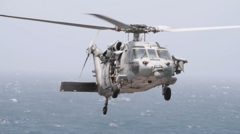
The United States has confirmed that one of its military helicopters fired missiles to disable a Panama-flagged cargo ship attempting to break an Iranian blockade in the Gulf of Oman. The incident occurred on Tuesday, with US Central Command stating the vessel was carrying illicit cargo and defying international maritime regulations. This escalation highlights ongoing tensions in the region, as Iran continues to exert control over critical shipping lanes.
Key Takeaways
- US helicopter targeted Panama-flagged vessel in Gulf of Oman on Tuesday.
- Ship reportedly defied Iranian blockade and carried illicit cargo.
- Missiles struck the ship's engine room, rendering it non-operational.
- Incident underscores rising tensions in a key global shipping corridor.
Background
The Gulf of Oman lies at the heart of one of the world's most strategic maritime routes, connecting global oil supply chains through the Strait of Hormuz. Iran has long sought to assert dominance over this waterway, frequently clashing with international forces, including the US Navy. Recent sanctions and geopolitical tensions have further strained relations between Tehran and Washington, with both nations engaging in tit-for-tat maritime incidents.
This latest confrontation comes amid heightened scrutiny of Iran's naval activities, following reports of its efforts to enforce maritime blockades and seize foreign vessels. The US has repeatedly vowed to ensure freedom of navigation in the region, which is vital for global trade and energy security.
What Happened
On Tuesday, a US military helicopter fired precision missiles at a Panama-flagged cargo ship that was attempting to evade an Iranian blockade in the Gulf of Oman. According to US Central Command, the vessel was carrying illicit cargo and ignored warnings to halt. The missiles targeted the ship’s engine room, effectively disabling it without causing casualties.
Iranian forces had initially intercepted the vessel and accused it of violating its territorial waters. The US intervened, citing international maritime law and the right to free navigation. Details about the cargo remain unclear, but US officials have stated the operation was necessary to prevent illegal activity and ensure regional stability.
Why It Matters
This incident adds another layer of complexity to the already volatile relations between Iran and the United States. The Gulf of Oman is a critical chokepoint for global oil shipments, and any disruption poses a risk to international markets and energy security. The US action also underscores its commitment to countering Iran’s aggressive maritime policies, which have drawn widespread criticism from the international community.
For nations reliant on Middle East oil supplies, maintaining stability in the Gulf of Oman is paramount. As tensions escalate, the risk of broader conflict increases, potentially impacting trade and diplomatic alliances. This incident serves as a reminder of the fragile balance in one of the world's most geopolitically significant regions.
What Happens Next
The disabled cargo ship remains under investigation, with US authorities working to determine the nature of its cargo and its intentions. Iran has yet to respond officially to the US intervention, but analysts predict retaliation may follow, either through direct confrontations or other strategic moves in the region.
Meanwhile, international pressure is likely to mount on Iran to ease its maritime restrictions. The US is expected to bolster its naval presence in the area as a deterrent, potentially inviting further clashes. Diplomatic efforts to resolve the underlying tensions may also gain traction as global stakeholders push for a de-escalation.
Frequently Asked Questions
What is the significance of the Gulf of Oman?
The Gulf of Oman is a vital maritime route connecting the Arabian Sea to the Strait of Hormuz, through which nearly 20% of global oil supplies pass. Any disruption in this region can have profound effects on international trade and energy markets.
Why did the US fire missiles at the vessel?
The US claims the Panama-flagged ship was carrying illicit cargo and defied international maritime regulations. The helicopter targeted the engine room to disable the vessel without causing casualties, ensuring compliance with maritime law.
Could this lead to further conflict?
The incident risks escalating tensions between Iran and the US, which have a history of maritime confrontations in the region. Both nations may intensify their military presence in the Gulf of Oman, heightening the possibility of future clashes.
Bottom Line
The US missile strike on the Panama-flagged vessel breaking Iran's blockade signals growing tensions in the Gulf of Oman, a critical global shipping corridor. Reporting from BBC News highlights the high stakes at play in this volatile region.
Related Reading
- Glave wins 100m gold ahead of Azu in stunning GB one-two
- Watch: Severe storms overturn vehicle and trigger flooding in Ohio
- Seifer stars as Super Giants thrash Sunrisers to boost knockout hopes
- Inside the Secret Service 'shell game' to hide US presidents in plain sight
Explore more world stories or check out Chronicle News for all articles.