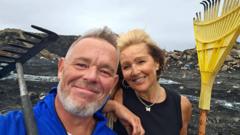
Residents of a wildfire-ravaged community in the UK have removed a Greenpeace mural of Greater Manchester Mayor Andy Burnham from a charred mountainside. Painted to highlight the urgency of climate action, the mural bore the phrase "Our house is on fire, Andy." However, locals criticized the timing and location of the artwork, which was unveiled shortly after devastating wildfires swept through the area. The removal underscores tensions between environmental campaigns and the lived realities of affected communities.
Key takeaways
- Greenpeace painted a mural of Andy Burnham on a wildfire-scorched mountain.
- The mural read "Our house is on fire, Andy," urging climate action.
- Residents removed the artwork, calling it insensitive after the recent wildfires.
- The incident highlights friction between activism and local community priorities.
Background
Wildfires have become increasingly common across the UK, fueled by rising global temperatures and extreme weather events. This summer, Greater Manchester experienced severe blazes that destroyed homes and wildlife habitats, leaving communities reeling. Environmental groups like Greenpeace have been vocal about the need for urgent climate action, often using bold campaigns to draw attention. The mural featuring Andy Burnham—a prominent advocate for climate policy—was intended to amplify calls for change but instead sparked controversy.
What happened
Shortly after the wildfires were extinguished, Greenpeace unveiled a large mural of Andy Burnham on a scorched mountainside. Accompanied by the slogan "Our house is on fire, Andy," the artwork was meant to highlight the connection between climate change and local disasters. While Greenpeace’s message aligned with the global push for more aggressive climate policies, many residents felt the mural was poorly timed and insensitive given the community’s trauma.
The mural was removed by locals within days, who argued that the burned landscape was a painful reminder of their losses. "We’re still recovering from the devastation," one resident told BBC News. "This isn’t the place for political statements."
Why it matters
The incident illustrates the growing tensions between global environmental activism and local realities. While Greenpeace sought to use dramatic imagery to spotlight climate issues, many residents felt disconnected from the campaign’s approach. In wildfire-hit regions, efforts to rebuild and recover often take precedence over broader policy discussions.
Moreover, the removal of the mural raises questions about how advocacy groups can better engage with communities directly affected by climate change. Striking the balance between raising awareness and respecting local sentiments is a challenge likely to intensify as extreme weather events continue.
For those living in areas increasingly prone to wildfires, the focus often shifts from prevention through policy to immediate recovery, such as rebuilding homes, restoring ecosystems, and safeguarding wildlife. This disconnect highlights the importance of nuanced, community-driven approaches to climate activism.
What happens next
Greenpeace has yet to issue an official statement on the mural’s removal but is expected to address concerns raised by locals. Andy Burnham, a key figure in climate policy, may also face increased scrutiny over how his government plans to tackle environmental challenges in Greater Manchester.
Meanwhile, wildfire-hit communities continue to grapple with the aftermath, focusing on rebuilding efforts. The episode underscores the need for collaboration between advocacy groups, policymakers, and local communities to create meaningful climate solutions.
Frequently asked questions
What was Greenpeace’s goal with the mural?
Greenpeace intended the mural to raise awareness of the urgency of climate action, particularly in relation to the wildfires. By using Andy Burnham’s image and the slogan "Our house is on fire, Andy," the group hoped to push leaders to accelerate climate policies.
Why did residents find the mural offensive?
Many locals felt the mural’s timing and placement were insensitive, as it was painted on a mountain recently devastated by wildfires. Residents argued the artwork failed to consider their immediate struggles with loss and recovery.
How does this reflect broader tensions in climate activism?
The removal highlights the challenge environmental groups face in balancing bold campaigning with local realities. Activism often focuses on global issues, but affected communities may prioritize recovery and rebuilding over advocacy.
Bottom line
The removal of Greenpeace’s mural of Andy Burnham from a wildfire-scorched mountain underscores the complexities of climate activism in disaster-hit communities. Reporting attributed to BBC News.
Related reading
- 'We are devastated' - Nigerian villagers bury bodies after overloaded boat capsizes
- El Niño set to be 'strongest in living memory', says Met Office
- Pakistan ex-PM Imran Khan back in jail after hospital examination
- King penguin chick hatches in UK heatwave
- West Ham's Wan‑Bissaka joins Aston Villa on loan