At least 14 dead after 7.7‑magnitude earthquake strikes Indonesia
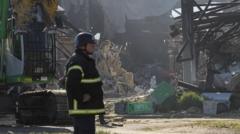
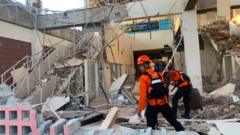
A powerful 7.7‑magnitude quake rattled Indonesia’s eastern province of East Nusa Tenggara early Saturday, killing at least 14 people and injuring dozens more. The tremor’s epicenter was located offshore near the island of Flores, prompting immediate fears of a tsunami that never materialised. Rescue teams, the military and local volunteers are racing against time to locate survivors amid collapsed homes and landslides. The disaster underscores the region’s vulnerability to seismic activity and tests Indonesia’s emergency response capacity.
Key takeaways
- 7.7‑magnitude quake struck off Flores Island, leaving 14 confirmed dead and many injured.
- Massive landslides and building collapses have blocked major roads, hampering rescue efforts.
- Authorities have declared a state of emergency and deployed the army, police and NGOs.
- International aid is being coordinated, with neighboring countries offering rescue teams and supplies.
Background
Indonesia sits on the Pacific “Ring of Fire,” where the Indo‑Australian and Eurasian plates converge, generating frequent strong earthquakes. Flores, a volcanic island, has experienced deadly quakes in 1992 and 2018, each causing widespread loss of life and infrastructure damage. The nation’s disaster‑management agency, BNPB, has refined its protocols after the 2004 tsunami, yet remote terrain and limited road networks still pose significant challenges. For a broader view of regional seismic activity, see our world coverage.
What happened
At 04:32 a.m. local time, a shallow focus quake registered 7.7 on the Richter scale, with its epicenter roughly 30 km southwest of Larantuka, Flores. The shaking was felt across several islands, prompting panic and the evacuation of coastal communities. Initial reports from the Indonesian National Board for Disaster Management confirmed 14 fatalities, most of them in the villages of Sikka and Ngada, where homes collapsed under the force of the tremor. Over 70 people were reported injured, and dozens remain missing as aftershocks continue to complicate search operations.
The Indonesian Ministry of Public Works reported that several bridges and a key coastal road were damaged, isolating remote villages. In the capital, Jakarta, President Joko Widodo activated the national disaster response system and ordered the deployment of the army’s engineering corps to clear debris and restore access routes. The quake also triggered several landslides that buried entire hamlets, making aerial surveys essential for locating survivors.
Why it matters
The tragedy highlights Indonesia’s ongoing struggle with natural hazards that threaten millions of lives each year. With tourism a vital part of Flores’s economy, the destruction of hotels, restaurants and cultural sites could have long‑term economic repercussions. Moreover, the quake raises concerns about secondary hazards such as tsunamis, which have historically caused massive loss of life in the archipelago. The international community is watching closely, as Indonesia’s response will influence future aid commitments and regional cooperation on disaster preparedness.
What happens next
The government has declared a state of emergency for East Nusa Tenggara, unlocking emergency funds and allowing rapid procurement of relief supplies. Military engineers are working around the clock to reopen the damaged road network, while the Indonesian Red Cross is setting up temporary shelters for displaced families. International assistance is already arriving; Australia, Japan and the United Nations have pledged rescue teams, medical kits and food aid. NGOs featured on Chronicle News are mobilising volunteers to assist with search‑and‑rescue operations and to provide psychosocial support for traumatized survivors.
Long‑term recovery will require rebuilding homes to earthquake‑resistant standards, improving early‑warning systems, and investing in resilient infrastructure. Experts suggest that lessons learned from this event could inform updated building codes across the nation, reducing future casualties. For further insight into how other crises are managed, check out our analysis of recent disaster responses in the region.
Frequently asked questions
How many people are still missing?
As of the latest update, authorities estimate that 20‑30 individuals remain unaccounted for, with rescue teams focusing on landslide‑affected zones.
Will there be a tsunami warning after the quake?
A tsunami alert was briefly issued but lifted within an hour because sea‑level measurements showed no abnormal rise.
How can I donate to relief efforts?
Donations can be made through the Indonesian Red Cross, the United Nations Office for the Coordination of Humanitarian Affairs, or reputable NGOs listed on the all articles portal.
Bottom line
Indonesia’s 7.7‑magnitude quake has claimed at least 14 lives and left thousands homeless, prompting a massive emergency response. The situation remains fluid as rescue teams continue to search for survivors and assess infrastructure damage. Reporting by BBC News.
Related reading
- Makhachev v Machado Garry - UFC 330 fight predictions
- Who am I? Guess Premier League star No 26
- [Fresh rivals & forced to settle for silver - but Hodgkinson up for fight](/