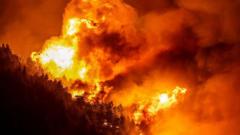
Dozens injured and thousands evacuated in Croatia wildfire
A fast‑moving forest fire erupted on the coastal fringe of Omis, Croatia, on Tuesday, forcing the evacuation of more than 2,000 residents and injuring dozens of people. The blaze, fanned by strong winds and dry Mediterranean heat, quickly spread across the pine‑laden hillsides that border the historic port town. Officials describe it as one of the worst wildfires in the country’s modern history, prompting a massive emergency response. The scale of the disaster raises concerns about climate‑driven fire risk across the world and tests Croatia’s disaster‑management capacities.
Key takeaways
- Dozens injured, over 2,000 people evacuated from Omis and surrounding villages.
- The fire is classified among Croatia’s most severe wildfires in recent decades.
- International aid teams, including firefighters from neighboring EU states, have been deployed.
- Authorities warn that ongoing drought conditions could spark additional flare‑ups.
Background
Croatia’s Mediterranean coastline experiences hot, dry summers, and the region around Omis has long been prone to brush fires. In recent years, climate models published by the European Environment Agency have highlighted rising temperatures and prolonged droughts as key drivers of wildfire intensity. The town of Omis, a popular tourist gateway to the Cetina River canyon, sits at the foot of steep, forested slopes that are difficult to access with conventional firefighting equipment. Earlier this week, the Ministry of the Interior confirmed that the country’s fire‑season forecast had already been marked as “high risk.”
What happened
At approximately 14:30 local time, a spark—likely from an illegal campfire—ignited a patch of dry underbrush near the village of Viganj, just west of Omis. Within minutes, gusts of up to 45 km/h pushed the flames uphill, engulfing a 12‑square‑kilometre area. Emergency services received the first calls at 14:45, and by 15:10 the fire had breached the main road that connects Omis to the inland highway, prompting the immediate evacuation order.
Firefighters from the Croatian National Guard, supported by aerial water drops from the Ministry of Defence, battled the blaze for several hours. By nightfall, the fire had burned through more than 5,000 hectares, scorching both residential zones and protected pine forests. Dozens of residents suffered smoke inhalation and minor burns; they were taken to hospitals in Split and Dubrovnik for treatment.
The response also triggered a cross‑border appeal: Slovenia, Italy and Austria sent specialized fire crews, while the European Union’s Civil Protection Mechanism activated a rapid response team. The coordination effort was highlighted in a live‑blog on Chronicle News, which tracked the evolving situation hour by hour.
Why it matters
The Omis wildfire underscores a growing pattern of severe fire events across Southern Europe, where climate change is lengthening the fire season and creating tinder‑dry conditions. According to the BBC News report, the fire’s rapid spread was exacerbated by a combination of high temperatures (over 32 °C) and low humidity.
Beyond the immediate human toll, the blaze threatens Croatia’s tourism‑dependent economy. Omis attracts thousands of visitors each summer for its historic fort, river rafting, and seaside festivals. A prolonged closure of the main access road could dent local revenues for months. Moreover, the loss of mature pine stands reduces carbon sequestration capacity, feeding back into the region’s climate vulnerability.
The incident also raises questions about the adequacy of existing fire‑prevention policies. Critics point to lax enforcement of campfire bans and insufficient funding for modern firefighting equipment, issues that echo concerns raised in the Draft dark skies guidance drawn up for the Highlands article about policy gaps in environmental protection.
What happens next
Authorities have declared a state of emergency for the Split‑Dalmatia County, granting police and the fire service broader powers to restrict movement and enforce safety zones. A joint task force, comprising the Ministry of the Interior, the Ministry of Environment, and local municipalities, will conduct a damage assessment over the next week.
The government plans to allocate €15 million from the national disaster fund to rebuild homes, restore burned forest areas, and upgrade fire‑fighting infrastructure, including the purchase of additional water‑bombing aircraft. International aid, particularly from EU neighbor states, is expected to continue for at least the next three months.
Public education campaigns on fire safety are slated to launch in late September, targeting both residents and the influx of tourists that arrive for the autumn shoulder season. The Ministry of Tourism also announced a temporary discount program for hotels in the affected area to encourage a swift economic rebound.
Frequently asked questions
How many people were injured and evacuated?
Dozens of individuals sustained minor injuries, mainly smoke inhalation, while more than 2,000 residents were evacuated from Omis and nearby villages.
What caused the fire to spread so quickly?
Strong gusty winds, extremely dry vegetation, and a prolonged heatwave created perfect conditions for the blaze to leap across steep terrain within minutes.
Will the evacuated residents be able to return soon?
Officials say some neighborhoods may be cleared within a week, but full re‑entry depends on fire‑line containment and safety inspections, which could take several weeks.
Bottom line
The Omis wildfire represents a stark reminder of how climate‑driven extremes can overwhelm local capacities and endanger lives. Ongoing rescue efforts, international assistance, and a renewed focus on prevention aim to curb further damage.
Reporting by BBC News.
Related reading
- [H