Fast‑moving Canada wildfire doubles in size, forcing thousands to flee homes
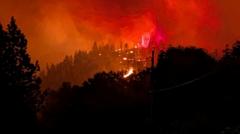
A massive blaze known as the Bald Range wildfire has surged across British Columbia’s interior, more than doubling its footprint to over 36 sq mi (95 sq km). The fire, still classified as “out of control,” has pushed emergency crews to order mass evacuations, displacing thousands of residents from towns such as Burns Lake and Fraser Lake. The rapid expansion, recorded on Monday, underscores the growing threat of extreme weather to Canada’s forested regions and has drawn international attention. The situation matters because it tests provincial response capacity, strains shelter resources, and raises concerns about air‑quality impacts far beyond the immediate zone.
Key takeaways
- Bald Range wildfire now covers >36 sq mi, a more than two‑fold increase in less than 48 hours.
- Over 4,000 residents have been ordered to evacuate from at‑risk communities in northern BC.
- Fire‑fighting assets include 250+ personnel, 30 helicopters, and cross‑border support from the U.S.
- Climate‑linked heatwaves amplify fire risk, prompting calls for stronger forest‑management policies.
Background
British Columbia’s forest belt has long been a tinderbox, but a combination of a lingering drought, record‑high temperatures, and strong westerly winds created perfect ignition conditions this spring. The Bald Range fire was first reported on a remote ridge near the town of Burns Lake on Tuesday, initially estimated at 15 sq mi. Within 24 hours, gusts pushed the flames downhill, merging with smaller spot fires and overwhelming local suppression teams. The province has declared a state of emergency, unlocking federal assistance and mobilising the Canadian Armed Forces for logistical support.
What happened
The fire’s explosive growth was captured by satellite imagery and confirmed by on‑ground observations from the BC Wildfire Service. By Thursday, the blaze had leapt the Fraser River, engulfing a swath of old‑growth timber and threatening the community of Fraser Lake. Emergency alerts issued through the world portal prompted residents to pack essentials and head for designated shelters. Authorities set up temporary housing at the local high school and coordinated transportation for vulnerable populations, including seniors and Indigenous families. Meanwhile, air‑quality monitors in Prince George reported hazardous PM2.5 levels, prompting health advisories for the wider region.
Why it matters
The incident is a stark illustration of how climate‑driven extremes can strain public‑health and emergency‑management systems. With thousands displaced, local hospitals are already seeing an uptick in respiratory complaints, echoing concerns raised in other wildfire‑prone nations. The fire also threatens critical timber resources, which support both the provincial economy and Indigenous livelihoods. International observers have drawn parallels to recent Australian bushfires, noting that “the scale of the blaze and the speed of its spread are reminiscent of the 2020‑21 season” – a comparison explored in detail in the article Australia is the planet's extinction hotspot, but one animal offers a glimmer of hope.
What happens next
Provincial officials expect the fire to remain active for several more days, given the prevailing wind patterns and the abundant fuel load. Reinforcements from the Chronicle News network indicate that additional aerial retardant drops are scheduled for the coming 24‑hour period. Long‑term strategies under discussion include accelerated fuel‑break construction, revised building codes for fire‑prone zones, and expanded community‑evacuation plans. Residents awaiting shelter are advised to stay tuned to local radio and the provincial alert system, while the federal government reviews emergency‑fund allocations to support reconstruction once the blaze is finally contained.
Frequently asked questions
How many people have been evacuated so far?
As of the latest update, roughly 4,200 individuals have been moved to temporary shelters in and around Burns Lake and Fraser Lake.
Are nearby communities at risk of the fire spreading further?
Fire‑behaviour models suggest that strong winds could push the blaze toward the Cariboo region, but containment lines are being reinforced to protect key transport corridors.
What health precautions should residents take while the smoke lingers?
Health officials recommend staying indoors with windows closed, using air purifiers if available, and limiting strenuous outdoor activity until air‑quality readings improve.
Bottom line
The Bald Range wildfire’s rapid expansion highlights the urgent need for coordinated emergency response and climate‑adaptation measures. Ongoing reporting follows the situation closely, with updates from BBC News.
Related reading
- Australia is the planet's extinction hotspot, but one animal offers a glimmer of hope
- [Eight-try Wigan thump Toulouse to move into second](/articles/eight-try-wigan-thump