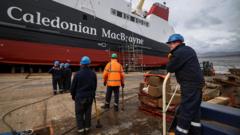
Ferguson shipyard to cut a quarter of its workforce
The state‑owned Ferguson shipyard on the River Clyde announced on Monday that it will eliminate a quarter of its staff through a voluntary redundancy scheme. Seventy of the yard’s 283 employees will be offered exit packages as the company seeks to align its workforce with a reduced order book. The move, set to roll out over the next twelve weeks, has immediate repercussions for the local economy and the broader Scottish maritime sector. Understanding why this downsizing matters is essential for anyone tracking the health of business in the region.
Key takeaways
- Ferguson will lose 70 jobs, representing 25 % of its total workforce.
- The redundancies are voluntary, aiming to avoid compulsory layoffs.
- The cut reflects a slowdown in shipbuilding orders across the Clyde.
- Community and supply‑chain impacts are expected to ripple through Glasgow.
Background
Ferguson Shipyard has been a fixture on the Clyde since the 19th century, supplying naval, commercial and renewable‑energy vessels for the UK and abroad. In recent years, the yard has benefited from government contracts and a modest pipeline of offshore wind projects. However, global supply‑chain disruptions and a dip in new‑build orders have strained its cash flow. The Scottish government, which owns the yard, has been monitoring the situation closely, commissioning a review that highlighted the need for a more flexible staffing model.
What happened
On 22 April 2026, the shipyard’s board released a statement confirming a voluntary redundancy process targeting 70 employees. Workers were given a four‑week window to submit applications, with the aim of finalising the exits by the end of June. The scheme offers enhanced severance pay, career‑transition support and access to retraining programmes funded by the Scottish Enterprise. No compulsory dismissals have been announced, and the yard stresses that the remaining 213 staff will continue to operate under the current production schedule.
Why it matters
The reduction translates into a loss of skilled tradespeople, engineers and support staff who have long underpinned the Clyde’s maritime reputation. Local suppliers—ranging from steel fabricators to electronic component manufacturers—could see a dip in orders, echoing trends noted in the Job vacancies at five-year low as smaller firms scale back recruitment story. Moreover, the cut comes at a time when the UK government is pushing for a “green shipbuilding” agenda, raising questions about the sector’s capacity to meet future demand. Communities surrounding the yard, many of which depend on shipyard wages, may also experience a short‑term economic shock, similar to the concerns raised in the US states call for big changes to Instagram and Facebook as Meta child privacy trial begins coverage about broader policy impacts.
Deeper analysis
Industry context
Across the United Kingdom, shipbuilding has been in a gradual decline since the post‑war boom, with only a handful of yards remaining viable without state support. Ferguson’s decision mirrors moves at other European yards that have turned to flexible staffing to survive volatile order books. Analysts at Chronicle News note that the sector’s capital‑intensive nature makes it particularly sensitive to macro‑economic shifts, such as fluctuating oil prices and the transition to low‑carbon vessels.
Financial implications
By reducing payroll obligations, Ferguson expects to save roughly £10 million annually, according to the internal review. While the exact figure is confidential, the savings are intended to fund equipment upgrades and R&D for next‑generation ferries. The voluntary nature of the redundancies also helps preserve morale among the remaining workforce, mitigating the risk of productivity losses that often accompany forced layoffs.
Social impact
The shipyard’s workforce is heavily unionised, and the unions have welcomed the voluntary approach, citing it as a humane alternative to compulsory cuts. Nevertheless, community groups have raised concerns about the long‑term availability of skilled jobs in Glasgow’s East End. Local councils are exploring partnership programmes with colleges to upskill displaced workers, aiming to channel them into emerging sectors such as offshore wind turbine assembly.
Comparative perspective
Data from the Office for National Statistics indicates that shipbuilding employment fell by 12 % over the past five years, a trend that Ferguson’s cut accentuates. Yet, the broader manufacturing landscape is seeing pockets of growth, particularly in renewable‑energy components. If Ferguson can redirect its remaining capacity toward green projects, the yard may offset the headline loss of jobs with new, higher‑value roles in the future.
What happens next
The voluntary redundancy window closes on 30 May 2026. Applications will be reviewed on a first‑come, first‑served basis, with the first wave of exits expected in early June. Remaining staff will receive a revised production plan that prioritises contracts for offshore wind support vessels and hybrid‑propulsion ferries slated for delivery in 2027.
In parallel, the Scottish government has pledged an additional £5 million grant to support shipyard innovation, contingent on meeting specific sustainability milestones. If Ferguson can secure the funding, the yard may embark on a modest expansion of its dry‑dock facilities, potentially creating new specialist roles within five years.
Stakeholders—including local authorities, trade unions and supplier firms—are set to meet in a joint forum next month to discuss transition strategies. The outcomes of those discussions will shape how the Clyde’s maritime ecosystem adapts to a leaner Ferguson shipyard while striving to meet national green‑shipping targets.
Frequently asked questions
How many employees will be affected?
Seventy staff members, representing a quarter of the yard’s 283‑person workforce, will be eligible for voluntary redundancy.
Will the redundancies be compulsory?
No. The process is entirely voluntary, with employees choosing whether to apply for the enhanced severance package.
What is the timeline for the cuts?
Applications close on 30 May 2026, and the first departures are planned for early June, with the full programme completing by the end of June.
Bottom line
Ferguson shipyard’s voluntary redundancy plan will trim its staff by 70, marking a 25 % reduction that could reshape the Clyde’s maritime landscape. The move aims to safeguard the yard’s financial health while positioning it for future green‑technology contracts, as reported by BBC News.
Related reading
- US states call for big changes to Instagram and Facebook as Meta child privacy trial begins
- Job vacancies at five-year low as smaller firms scale back recruitment
- Hayden Panettiere's ex Wladimir Klitschko says family in 'profound shock and grief'
- Newcastle complete £30m move for Benfica's Dedic
- IVF staff accused of misleading UK parents about sperm and egg donors in northern Cyprus