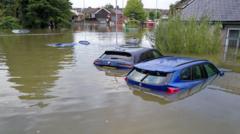
Heavy rain and thunderstorms are battering large parts of the UK, raising concerns over flash flooding and travel disruptions. The Met Office has issued yellow weather warnings for many regions, cautioning residents to prepare for localized flooding and potential damage. This bout of extreme weather, which began earlier this week, is expected to persist over the coming days, with rainfall totals exceeding 50mm in some areas. Authorities are urging vigilance as emergency services remain on high alert.
Key Takeaways
- Heavy rain and thunderstorms are causing widespread disruption across the UK.
- The Met Office has issued yellow warnings for flash flooding and travel delays.
- Rainfall totals in some areas could exceed 50mm, intensifying flood risks.
- Emergency services are on standby as the adverse weather is expected to continue.
Background
The UK has been experiencing unsettled weather patterns over the past week, with a mix of torrential downpours, thunderstorms, and localized flooding. The Met Office attributes the current conditions to a low-pressure system moving across the country, exacerbated by warm, moist air from the Atlantic. Regions in northern England, Wales, and parts of Scotland have been particularly affected, with some areas already reporting flood-related incidents.
This warning follows a summer of unpredictable weather across the UK, where heatwaves were quickly followed by intense rainfall. Similar conditions were reported earlier this week, with thunderstorm warnings expiring but rain continuing to bring flood risks.
What Happened
On Wednesday, the Met Office issued yellow weather warnings for thunderstorms and heavy rain, with alerts covering much of England, Wales, and southern Scotland. In some areas, roads were inundated, causing major traffic delays and disruptions to public transport. Emergency services in flood-prone regions have been working around the clock to assist residents and protect properties.
Rainfall has been particularly heavy in parts of northern England and Wales, where rivers are nearing bursting point. Some towns have experienced power outages due to water damage, while train services in affected areas have been suspended as a precautionary measure.
Why It Matters
Flash flooding poses significant risks to life, property, and infrastructure. The UK’s aging drainage systems, coupled with the increasing frequency of extreme weather events linked to climate change, have made many regions more vulnerable. Businesses and local economies are also at risk, particularly in heavily impacted areas where transportation and deliveries have been disrupted.
Furthermore, this weather pattern highlights the urgent need for climate resilience. As the frequency of extreme weather events increases, experts warn that long-term infrastructure investments are essential to mitigate future risks. For more insights into the science of weather patterns, visit our science section.
What Happens Next
The Met Office predicts that the adverse weather will persist through the weekend, with the potential for further yellow warnings to be issued. Residents in high-risk areas are being advised to monitor updates and take precautions, such as clearing drains and securing outdoor items.
Emergency response teams will remain on standby as flood risks are expected to peak in the coming days. Authorities are also urging drivers to avoid flooded roads and check for travel updates before setting out. For ongoing weather developments, you can follow Chronicle News for live updates.
Frequently Asked Questions
What areas are most at risk of flooding?
The most affected regions include northern England, Wales, and parts of southern Scotland. Urban areas with poor drainage and low-lying regions near rivers are particularly vulnerable.
How can residents prepare for flash flooding?
Residents are advised to clear gutters and drains, secure outdoor furniture, and prepare emergency supplies. It’s also essential to stay informed through weather alerts and avoid walking or driving through flooded areas.
Is this weather linked to climate change?
Scientists believe that climate change is intensifying weather extremes, including the frequency and severity of heavy rainfall events. Warmer air holds more moisture, leading to heavier downpours—a phenomenon increasingly observed in the UK.
Bottom Line
The UK faces significant risks from heavy rain and thunderstorms, with flash flooding expected to persist in the coming days. Stay informed, take precautions, and monitor updates from trusted sources like BBC News.