The Secret Service has long been known for its meticulous and innovative strategies to protect U.S. presidents, but new insights reveal the extent of their "shell game" operations to obscure the president's movements. Using decoys, misdirection, and rapid route changes, the agency ensures the commander-in-chief remains concealed from potential threats. This elaborate deception, detailed in a BBC News report, highlights the lengths to which the Secret Service goes to safeguard national security. The revelations shed light on the critical balance between public accessibility and presidential safety.
Key Takeaways
- The Secret Service employs decoys and multiple motorcades to confuse potential adversaries.
- Rapid route changes and fake schedules ensure the president’s movements remain unpredictable.
- Technology plays a pivotal role in tracking threats and adjusting security measures in real time.
- The methods underscore growing challenges in protecting high-profile leaders in a digital age.
Background
The Secret Service, founded in 1865, is tasked with protecting the president, vice president, and their families, along with other dignitaries. Over the years, its operations have evolved to address emerging threats, from physical attacks to cyber intrusions. As political leaders face increasing scrutiny and risks, the agency's methods have become more sophisticated, blending traditional tactics with modern technology.
To ensure operational security, the Secret Service often uses decoy motorcades, alternative vehicles, and fake arrival schedules. These measures aim to deter potential attackers who might be tracking the president's movements. The "shell game" approach is an essential part of the agency's strategy to prevent scenarios that could jeopardize national security.
What Happened
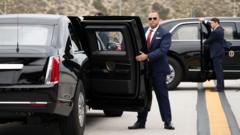
Recent reporting from BBC News reveals the intricate tactics deployed by the Secret Service to obscure the president's whereabouts. These include sending multiple motorcades to different locations, sometimes with identical vehicles, to confuse observers. In addition, decoys resembling the president are sometimes used to lead potential threats astray.
Technology plays a significant role in these operations. Surveillance drones, GPS trackers, and real-time threat monitoring are integrated into the agency’s protocols to adjust security measures on the fly. For example, changes to routes can be implemented seconds before departure based on incoming intelligence.
Why It Matters
The safety of a U.S. president is not just about protecting an individual—it symbolizes the protection of the nation’s leadership and stability. With political polarization and global tensions at an all-time high, threats to high-profile figures have increased. The Secret Service’s ability to adapt and evolve its methods is critical to maintaining uninterrupted governance.
Moreover, the tactics reveal a broader challenge in the modern world: balancing transparency with security. While citizens expect access to their leaders, the risks of that exposure have grown with advancements in technology, including facial recognition and real-time tracking tools. This raises questions about the future of public-facing leadership and national security strategies.
What Happens Next
As threats continue to evolve, the Secret Service is likely to further invest in advanced technologies, including artificial intelligence and predictive analytics, to enhance its protective measures. Collaboration with other federal agencies, such as the FBI and CIA, will also remain crucial, especially as cyber threats increasingly intersect with physical security risks.
Additionally, ongoing public debates about the visibility of political leaders may influence how security operations are conducted. Striking the right balance between public accessibility and protection will be a key challenge in the years ahead.
Frequently Asked Questions
How does the Secret Service decide on security measures for the president?
The agency assesses risks based on real-time intelligence and historical data, tailoring security protocols to the specific circumstances of each event. Factors such as location, crowd size, and potential threats are all considered when determining the level of protection needed.
Are decoy motorcades common during presidential movements?
Yes, decoy motorcades are frequently used to confuse observers and potential attackers. By deploying identical vehicles and alternate routes, the Secret Service ensures that the president’s actual location remains unknown to anyone planning harmful activities.
Can technology completely eliminate threats to the president?
While technology significantly enhances security measures, it cannot eliminate all risks. The Secret Service combines technology with human intelligence and physical protocols to create a layered approach to protection. This ensures that multiple contingencies are in place to address unforeseen threats.
Bottom Line
The Secret Service's "shell game" tactics underscore the complexity of protecting the U.S. president in a world of increasing threats. As highlighted by BBC News, the agency’s innovative strategies are vital to national security.
Related Reading
- Glave wins 100m gold ahead of Azu in stunning GB one-two
- Watch: Severe storms overturn vehicle and trigger flooding in Ohio
- US says helicopter fired missiles to disable ship breaking Iran blockade
- Seifer stars as Super Giants thrash Sunrisers to boost knockout hopes
- 40 balls, 80 runs - Seifert's sensational 52 minutes at the crease