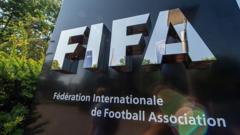
Lamour leaves FIFA after Infantino plan criticism – A senior FIFA official announced his departure on 28 April 2026, just three weeks after publicly challenging President Gianni Infantino’s new governance proposal. The resignation was confirmed in a brief statement in Zurich, where the world football body is headquartered. Lamour’s exit signals growing dissent within the organization and could reshape the debate over FIFA’s reform agenda. The move matters because it highlights internal fractures that may affect upcoming World Cup preparations and the sport’s global credibility.
Key takeaways
- Lamour, a senior FIFA figure, resigns three weeks after criticizing Infantino’s reform plan.
- The departure intensifies scrutiny of FIFA’s governance and transparency efforts.
- Stakeholders fear the split could delay implementation of proposed structural changes.
- The controversy may influence voting dynamics ahead of the 2027 FIFA Congress.
Background
FIFA has been under pressure since the 2022 corruption scandals, prompting President Gianni Infantino to unveil a sweeping reform blueprint in January 2026. The plan proposes a new executive committee, stricter financial oversight, and broader representation for confederations. While some member associations welcomed the changes, others, including senior officials like Lamour, voiced concerns about the speed of implementation and potential power imbalances. The debate unfolded across FIFA’s internal forums and external media, drawing attention from the broader sports community.
What happened
On 28 April 2026, FIFA released a concise press note confirming that Lamour had tendered his resignation, effective immediately. The statement did not elaborate on the reasons, but Lamour’s earlier interview with a European outlet—where he described Infantino’s plan as “overly centralized and insufficiently consulted”—provides context. Within hours, the news spread across social platforms, prompting reactions from national federations, players’ unions, and sponsors. FIFA’s communications director reiterated the organization’s commitment to the reform agenda, emphasizing that the departure would not disrupt ongoing projects.
Why it matters
Lamour’s exit underscores a growing rift between FIFA’s leadership and some of its senior administrators. The controversy could stall the rollout of the new governance structure, which is slated for approval at the 2027 FIFA Congress. Moreover, the resignation may embolden other dissenting voices, potentially leading to further departures or public challenges. Sponsors, already cautious after past governance scandals, are monitoring the situation closely, as any perception of instability could affect commercial agreements.
Deeper analysis
- Governance tension: Lamour’s criticism reflects a broader unease among long‑standing officials who fear that Infantino’s reforms could concentrate decision‑making power in a few regions. Academic experts on sports governance argue that inclusive reforms require not just structural tweaks but also cultural shifts within the organization.
- Political dynamics: Several confederations have hinted at forming a coalition to demand more transparent voting mechanisms. If this coalition gains momentum, it could reshape the power balance at the upcoming congress.
- Commercial implications: Major partners such as Adidas and Coca‑Cola have issued neutral statements, but analysts note that prolonged internal disputes could affect sponsorship renewal cycles. In a related development, the industry is watching how other sectors handle governance challenges; for instance, see how tech events are navigating sponsor expectations in the article “Save up to $300 on your TechCrunch Disrupt 2026 pass until August 21.”
- Media narrative: Coverage has been swift, with outlets like BBC Sport reporting the resignation alongside analysis of Infantino’s reform plan. The story’s prominence on headline news sites suggests that the issue resonates beyond football’s inner circles, touching on themes of accountability that are relevant to all major sports bodies.
What happens next
FIFA’s executive committee is expected to convene an emergency meeting within the week to address the leadership gap and to reassure stakeholders. A replacement for Lamour has not been named, but the organization has indicated that an internal candidate will be promoted to maintain continuity. Meanwhile, the reform proposal will continue to be debated at the upcoming regional meetings, with a final vote scheduled for the 2027 FIFA Congress in Tokyo. Observers suggest that the outcome will hinge on whether the dissenting bloc can rally enough support to demand amendments to Infantino’s original draft.
Frequently asked questions
Who is Lamour and what role did he hold at FIFA?
Lamour served as a senior executive overseeing FIFA’s governance and compliance departments, playing a key role in shaping policy implementation.
What specific aspects of Infantino’s plan did Lamour criticize?
He argued that the proposal was overly centralized, lacked sufficient consultation with member associations, and could marginalize smaller confederations.
How might Lamour’s resignation affect the 2027 FIFA Congress?
The departure could embolden other officials to voice concerns, potentially leading to revisions of the reform package before the congress votes on it.
Bottom line
Lamour’s resignation adds a new layer of complexity to FIFA’s reform journey, highlighting internal dissent that could reshape upcoming governance decisions. The story was first reported by BBC Sport.
Related reading
- Save up to $300 on your TechCrunch Disrupt 2026 pass until August 21
- LIV cancels final event to focus on 'next chapter'
- Trump threatens to bomb US ally Oman if it 'gets in the way' over Iran deal
- Spotify’s new Playlist Notes let users and editors explain their song picks
- Higgsfield raises $400M Series B, quadrupling its valuation in 8 months to $5.4B
Read more on Chronicle News or explore other stories in our all articles archive.