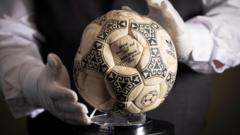
The football used by Diego Maradona to score his iconic 'Hand of God' goal during the 1986 World Cup has been sold for £2.5 million at auction. This historic piece of sports memorabilia was bought on Wednesday by an anonymous bidder. The ball was used in Argentina's quarter-final victory over England, a match remembered for Maradona's controversial handball goal and his stunning solo effort shortly afterward. Its sale underscores the enduring legacy of one of football's most dramatic moments.
Key Takeaways
- The ball used in Maradona's 'Hand of God' goal sold for £2.5 million at auction.
- The 1986 World Cup quarter-final saw Argentina defeat England 2-1.
- Maradona described the handball goal as "a little with the head of Maradona and a little with the hand of God."
- The auction highlights the global significance of football history and memorabilia.
Background
The 1986 FIFA World Cup marked a pivotal moment in football history, with Argentina emerging as champions. Maradona's performance in the quarter-final against England remains legendary. His first goal, later dubbed the 'Hand of God,' was scored by punching the ball into the net, unnoticed by the referees. Moments later, he dribbled past five English players to score what is widely considered one of the greatest goals in football history.
The ball in question was used for the entirety of that match, cementing its place as an enduring symbol of Maradona's brilliance and controversy.
What Happened
The ball was put up for auction by Tunisian referee Ali Bin Nasser, who officiated the match. Despite being at the center of one of football’s most debated refereeing decisions, Bin Nasser has spoken of his admiration for Maradona's skill. The auction, organized by Graham Budd Auctions, drew global interest, reflecting the ball’s immense historical and cultural value.
After fierce bidding, the ball was sold for £2.5 million to an anonymous buyer. This sale follows the record-breaking auction of Maradona’s match-worn shirt earlier this year, which fetched £7.1 million.
Why It Matters
Maradona’s 'Hand of God' and the subsequent solo goal are emblematic of the duality of sport—controversy and genius coexisting in a single moment. The sale of the ball for such an extraordinary sum underscores the global cultural impact of football and its ability to create timeless narratives.
Sporting memorabilia like this ball serves as a tangible connection to history, resonating with fans and collectors alike. It also highlights the increasing value placed on items tied to pivotal moments in sports, as seen in recent high-profile auctions.
What Happens Next
The new owner of the 'Hand of God' ball remains anonymous, and it is unclear whether the ball will be displayed publicly or kept in a private collection. However, the sale has reignited discussions about the legacy of Diego Maradona and the 1986 World Cup.
As interest in sports memorabilia continues to grow, we may see more such items go under the hammer, further immortalizing key moments in the world of sport.
Frequently Asked Questions
What is the 'Hand of God' goal?
The 'Hand of God' goal refers to Diego Maradona's controversial handball goal during the 1986 World Cup quarter-final against England. Maradona used his hand to punch the ball into the net, a move unseen by the referee.
Who sold the ball?
The ball was sold by Ali Bin Nasser, the Tunisian referee who officiated the 1986 match. He has said he wanted to share the ball with football fans and collectors around the world.
Why is this ball so valuable?
The ball was present during two iconic moments in football history: Maradona's 'Hand of God' goal and his legendary solo effort. Its direct connection to such a significant match makes it an invaluable piece of sports history.
Bottom Line
The sale of Maradona's 'Hand of God' ball for £2.5 million highlights the enduring cultural and historical significance of football’s most iconic moments. For more details, visit BBC News.