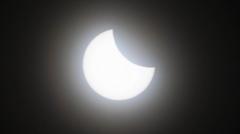
A partial solar eclipse on Saturday drew increased crowds to local attractions, though tourism officials report no significant rise in accommodation bookings. The event, visible across several parts of the UK, brought visitors to observatories, parks, and coastal areas to witness the celestial phenomenon. While the economic impact on hotels and restaurants was muted, tourism chiefs noted a marked increase in footfall at key sites. They emphasized that events like this eclipse could help promote regional tourism in the long term by attracting day-trippers and raising awareness about local attractions.
Key Takeaways
- The partial solar eclipse occurred on Saturday, drawing crowds across the UK to outdoor sites.
- Observatories and parks reported higher visitor numbers, but no substantial rise in hotel bookings occurred.
- Tourism officials highlight eclipses as opportunities to market regional attractions and foster future tourism.
- Footfall spikes show potential for events-driven tourism to grow beyond immediate economic impacts.
Background
Astronomical events such as eclipses have long fascinated the public, often serving as opportunities to boost interest in science and outdoor exploration. Saturday’s partial solar eclipse was visible in parts of the UK, drawing enthusiasts equipped with special glasses and telescopes. Observatories, public parks, and scenic coastal areas became hotspots as people gathered to experience the rare event. While eclipses are fleeting, they can generate significant attention for regional attractions and help local tourism markets.
Tourism bodies often seize on such natural phenomena to attract visitors. For example, Scotland’s tourism industry has benefited from promoting stargazing and dark-sky locations, while science outreach events tied to astronomical phenomena have gained popularity in recent years.
What Happened
The partial solar eclipse on Saturday morning saw the moon cover a portion of the sun, creating a striking visual display. The eclipse was best observed in clear-weather regions, with popular viewing spots including observatories, beaches, and countryside locations.
While local attractions such as planetariums and science museums recorded high visitor numbers, the anticipated spillover into broader tourism sectors like hotels and restaurants was less evident. Tourism officials acknowledged that day-trippers comprised the bulk of the footfall increase.
“We saw a noticeable uptick in visitors at key locations, but it didn’t translate to overnight stays,” said a spokesperson for a regional tourism board. “That said, events like this create invaluable exposure for our area and could encourage repeat visits.”
Why It Matters
Eclipses and similar astronomical events offer more than just a fleeting spectacle—they present opportunities to engage the public, promote science education, and boost tourism. For local economies, even a temporary surge in footfall can highlight attractions that otherwise might not receive widespread attention.
While the immediate economic boost from this eclipse may have been modest, the broader potential for event-driven tourism is significant. By leveraging such phenomena, regions can position themselves as destinations for science tourism, nature enthusiasts, and families seeking unique experiences.
This aligns with a growing trend where the intersection of science and tourism plays a key role in drawing visitors to lesser-known locations. Events like eclipses also provide cost-effective marketing, as they naturally attract media coverage and public interest.
Deeper Analysis
The muted economic impact of this eclipse underscores a challenge for tourism boards: converting single-day visitors into long-term economic contributors. While footfall increases are a positive sign, they don’t always translate into higher revenues for businesses like hotels and restaurants.
One reason could be the timing—since the eclipse occurred in the morning, many visitors opted to return home after the event. Additionally, astronomical events often attract local and regional visitors rather than international tourists, limiting the scope of economic benefits.
However, tourism officials remain optimistic. They argue that the exposure generated by events like eclipses can have a ripple effect, encouraging repeat visits and fostering interest in other regional offerings. For example, promoting stargazing tours or hosting follow-up science workshops could sustain the momentum created by the eclipse.
Similar strategies have proven effective in other contexts. For instance, the "dark sky tourism" trend has elevated remote destinations in Scotland and Wales, drawing visitors year-round. By investing in infrastructure and marketing, regions can transform one-off events into lasting tourism assets.
What Happens Next
Tourism boards are likely to analyze the data from Saturday’s eclipse to refine their strategies for future events. Enhanced collaboration with local businesses, such as offering eclipse-themed overnight packages or guided tours, could help maximize economic benefits.
Additionally, officials may explore expanding public outreach efforts, such as partnering with schools, universities, or science organizations to host educational events tied to astronomical phenomena. These initiatives could strengthen the connection between science and tourism, creating a sustainable model for future growth.
Looking ahead, the next major celestial event visible in the UK could serve as a valuable test case for these strategies. With better preparation and targeted marketing, regions may be able to capitalize more effectively on the opportunities presented by such phenomena.
Frequently Asked Questions
What is a partial solar eclipse?
A partial solar eclipse occurs when the moon passes between the Earth and the sun, covering only a portion of the sun’s surface. This creates a dramatic visual effect, with the sun appearing as a crescent or partially obscured disc.
Did the eclipse result in economic benefits for local businesses?
While observatories and parks experienced higher footfall, broader economic benefits were limited. Most visitors were day-trippers, meaning hotels and restaurants saw little impact. However, officials see potential for long-term gains through increased exposure.
How can regions capitalize on future eclipses?
Regions can collaborate with local businesses to create themed packages, promote related events, and invest in marketing campaigns. Additionally, they can focus on educational initiatives to attract families, students, and science enthusiasts.
Bottom Line
The partial solar eclipse boosted footfall at UK attractions but failed to significantly impact accommodation bookings. Tourism officials are optimistic about leveraging similar events to promote regional tourism in the future, according to BBC News.