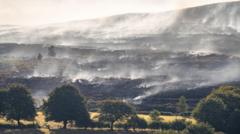
A wildfire in Blaenavon, a town in South Wales, has made headlines for its massive carbon emissions, turning the area into an unexpected global hotspot. The fire, which began earlier this week, produced smoke and pollution that spread as far as Cardiff, 30 miles away. Experts warn that wildfires like this could become more frequent due to climate change, raising concerns about their environmental impact. The incident highlights the urgent need for better wildfire prevention measures in the UK.
Key Takeaways
- Blaenavon wildfire emitted significant carbon, impacting global emission levels temporarily.
- Smoke and burning smell reached Cardiff, 30 miles from the fire's origin.
- Experts link increasing wildfires to climate change and drier conditions in Wales.
- Local authorities are evaluating emergency response and prevention strategies.
Background
Blaenavon, a UNESCO World Heritage Site, is known for its rich industrial history and scenic landscapes. However, its recent wildfire has brought international attention for less positive reasons. The blaze, which spanned several acres, occurred during unusually dry weather conditions, raising alarm among environmental scientists. Wildfires in Wales are rare compared to regions like California or Australia, but their frequency may increase as global temperatures rise.
What Happened
Earlier this week, a wildfire erupted in Blaenavon, burning through grasslands and releasing substantial carbon into the atmosphere. Local residents reported a strong smell of smoke, with some in Cardiff describing air quality issues more than 30 miles away. Firefighters worked tirelessly to control the flames, but the damage to the environment was significant.
The wildfire resulted in a spike in carbon emissions that temporarily placed Blaenavon among the world's top contributors, according to environmental analysts. While the fire has now been brought under control, its impact has left a lasting impression on the community and scientists studying climate change.
Why It Matters
The Blaenavon wildfire serves as a stark reminder of the environmental risks posed by climate change. Rising temperatures and prolonged dry spells are creating conditions conducive to wildfires, even in regions like Wales that are not traditionally prone to such disasters. Carbon emissions from wildfires are particularly concerning, as they contribute to global warming and degrade air quality for surrounding areas.
Local authorities and environmental groups are calling for increased investment in wildfire prevention and emergency response systems to mitigate future risks. Additionally, the incident highlights the need for global cooperation to address the root causes of climate change, ensuring that regions like Blaenavon are better protected.
What Happens Next
Efforts are underway in Blaenavon to assess the environmental damage caused by the wildfire. Scientists are studying the carbon output and its implications for regional and global climate patterns. Meanwhile, local authorities are reviewing their emergency response protocols to improve preparedness for future incidents.
Discussions about wildfire prevention have gained momentum, with calls for increased funding and public awareness campaigns. Environmental groups are also urging policymakers to prioritize climate action to address the factors driving more frequent and severe wildfires.
Frequently Asked Questions
What caused the Blaenavon wildfire?
The exact cause of the wildfire has not been determined, but experts believe it may be linked to dry weather conditions exacerbated by climate change. Human activities such as improperly extinguished fires or discarded cigarettes could also be contributors.
How far-reaching was the impact of the wildfire?
The wildfire’s smoke and smell were reported as far as Cardiff, 30 miles away. The carbon emissions from the fire also gained international attention, temporarily placing Blaenavon among the world’s top areas for carbon output.
What measures can prevent future wildfires in Wales?
Preventive measures include creating firebreaks, improving emergency response systems, and launching public awareness campaigns about fire risks. Addressing the broader issue of climate change is also essential to reduce the conditions that make wildfires more likely.
Bottom Line
The Blaenavon wildfire has sparked global concern about the environmental impact of wildfires, particularly in regions not traditionally prone to such events. As climate change continues to alter weather patterns, proactive measures to prevent future fires are becoming increasingly urgent. Read more from BBC News.