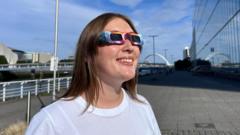
As anticipation grows for the upcoming solar eclipse, demand for protective glasses has surged, leaving shelves empty across the country. Retailers have reported widespread stock shortages, frustrating customers who are scrambling to find safe alternatives. Scheduled to occur on Saturday, October 14, the celestial event will be visible across parts of the Americas, and experts warn that direct viewing without proper protection could cause severe eye damage. With time running out, the public is turning to unconventional solutions to witness the phenomenon safely.
Key Takeaways
- Solar eclipse glasses are sold out nationwide ahead of Saturday's eclipse, creating supply concerns.
- Experts stress the need for proper eye protection when viewing the eclipse to avoid permanent damage.
- People are exploring alternatives like DIY pinhole projectors and online tutorials for safe viewing.
- Retailers and e-commerce platforms are seeing unprecedented demand for protective gear.
Background
A solar eclipse occurs when the moon passes between the Earth and the sun, temporarily blocking sunlight. This rare astronomical event captivates millions of people worldwide. However, viewing the eclipse directly without adequate protection can cause irreversible harm to the eyes, including retinal burns. Eclipse glasses, designed to filter out harmful ultraviolet and infrared rays, are considered essential for safe viewing.
The upcoming "ring of fire" eclipse will be visible across parts of North, Central, and South America, drawing widespread interest. As the date approaches, many high street retailers and online platforms are struggling to meet the overwhelming demand for eclipse glasses, leaving consumers desperate for alternatives.
What Happened
In the weeks leading up to the eclipse, retailers reported a sharp increase in sales of eclipse glasses. Popular stores such as Walmart, Target, and specialty science shops quickly sold out, while online platforms like Amazon faced similar shortages.
Social media has been flooded with posts from frustrated shoppers sharing their struggles to find protective eyewear. Meanwhile, some opportunistic sellers have begun listing eclipse glasses at inflated prices on secondary marketplaces. The shortage has also prompted a surge in searches for DIY eclipse viewing techniques, such as pinhole projectors.
Why It Matters
The shortage of eclipse glasses has raised concerns about public safety during the event. Experts warn that attempting to view the eclipse without proper protection could result in permanent eye damage, a condition known as solar retinopathy. Even brief exposure to the sun's rays during an eclipse can cause blindness or severe vision impairment.
The situation highlights the importance of preparation and awareness for rare astronomical phenomena. It also underscores supply chain challenges in meeting sudden spikes in demand for specialized products.
Deeper Analysis
The widespread stock shortages of eclipse glasses can be attributed to a combination of factors, including limited production capacity and the event's popularity. Manufacturers often ramp up production closer to an eclipse, but this approach leaves little room for error if demand exceeds expectations.
Additionally, the "ring of fire" eclipse, which creates a striking visual effect as the moon covers the sun's center, has generated intense public interest. This has led to a rush for protective gear, with some consumers buying glasses in bulk to resell at higher prices.
Efforts to educate the public about safe viewing methods have been ramped up by scientists, schools, and organizations like NASA. Many are urging people to use alternative methods, such as indirect viewing tools like pinhole cameras or watching livestreams of the event online.
What Happens Next
As the eclipse draws nearer, officials and educators are urging the public to prioritize safety. Local libraries, schools, and community centers are stepping in to distribute remaining supplies of eclipse glasses where available. Some organizations are hosting free events to teach attendees how to create pinhole projectors and other safe viewing devices.
For those unable to secure protective gear, experts recommend watching the eclipse through livestreams provided by institutions like NASA or the European Space Agency. These broadcasts offer a safe and immersive way to experience the event without risking eye damage.
Frequently Asked Questions
What should I do if I can't find eclipse glasses?
If eclipse glasses are unavailable, consider using indirect viewing techniques like a pinhole projector. This method allows you to safely observe the eclipse by projecting the sun's image onto a surface. Alternatively, watch livestreams of the event online through trusted sources like NASA.
Can regular sunglasses protect my eyes during an eclipse?
No, regular sunglasses are not sufficient protection during a solar eclipse. They do not block harmful ultraviolet and infrared rays that can cause permanent eye damage. Always use certified eclipse glasses or indirect viewing methods for safety.
Why are eclipse glasses so important?
Eclipse glasses are specially designed to filter out harmful rays and reduce the sun's brightness to a safe level for direct viewing. Without them, looking at the sun during an eclipse can lead to serious eye conditions, including retinal burns and blindness.
Bottom Line
The shortage of solar eclipse glasses highlights the challenges of preparing for a once-in-a-lifetime celestial event. Safety remains paramount, and experts advise exploring alternatives like pinhole projectors or livestreams to witness the eclipse responsibly. Reporting sourced from BBC News.
Related Reading
- Ramsay-Peaty fifth in European Championships 100m final
- Bluesky’s active user base is shrinking as its focus expands beyond the app
- What’s Scaleup Europe, the $5.7B fund that just backed satellite company ICEYE?
- Brad Lightcap, OpenAI’s longtime COO, is leaving to ‘start something new’
- General Catalyst leads $1.1B round into 2-month-old River AI
For more articles on science and current events, visit Chronicle News or explore all articles.