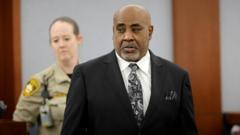
A critical piece of evidence has surfaced in the decades-old murder case of rapper Tupac Shakur. Duane "Keffe D" Davis, who is currently facing charges related to Tupac’s 1996 killing, admitted to police in a 2008 interview that his nephew, Orlando Anderson, was the one who fired the fatal shots. The admission was revealed in court this week when the taped interview was played to the jury. This development could significantly impact the trial, shedding new light on one of the music world’s most infamous unsolved murders.
Key Takeaways
- Duane Davis admitted in 2008 that his nephew, Orlando Anderson, shot Tupac Shakur.
- A taped police interview of Davis was presented as key evidence in court this week.
- Davis has been charged with orchestrating the 1996 drive-by shooting in Las Vegas.
- The case remains pivotal in hip-hop history and highlights unresolved questions of justice.
Background
Tupac Shakur, one of the most influential rappers of all time, was fatally shot on September 7, 1996, in a drive-by shooting in Las Vegas. He succumbed to his injuries six days later. For years, the murder remained unsolved, with numerous theories surrounding the case. Duane Davis, a former gang leader, was arrested in September 2023 and charged with orchestrating the murder. His alleged involvement has revived global interest in the case, which continues to captivate both fans and legal experts.
The murder of Tupac is not just a historical crime but also a defining moment in the broader cultural and musical landscape. His death is often linked to the East Coast-West Coast rap rivalry of the 1990s, which shaped the direction of hip-hop and its global influence.
What Happened
In a 2008 police interview, Davis admitted that his nephew, Orlando Anderson, fired the shots that killed Tupac Shakur. Anderson, who had a history of confrontations with Tupac, died in an unrelated gang shooting in 1998. Davis' statement was made during a Las Vegas police investigation but had not been widely publicized until now.
This week, the taped interview was played to the jury as pivotal evidence in the case against Davis. Prosecutors argue that Davis orchestrated the drive-by shooting after a confrontation between Tupac and Anderson at a Las Vegas casino earlier that night. Davis has pleaded not guilty, but the resurfacing of his 2008 admission could prove pivotal in determining his culpability.
Why It Matters
The revelation of Davis' 2008 admission not only provides a potential breakthrough in Tupac's murder case but also underscores the challenges of solving high-profile cold cases. Tupac's death has long been a symbol of unresolved justice within both the music industry and the broader criminal justice system.
For the hip-hop community, this case remains a painful reminder of the violence that plagued the genre during its formative years. Tupac’s death, along with the murder of fellow rapper The Notorious B.I.G., left a lasting scar on the industry. Solving the case could bring closure for fans, historians, and Tupac’s family, while also addressing deeper issues of accountability and justice.
What Happens Next
Duane Davis’ trial is expected to continue in the coming weeks, with the 2008 taped interview serving as key evidence for the prosecution. Legal experts believe the defense will likely challenge the admissibility and context of Davis' statements. Meanwhile, the global spotlight on the case ensures that every development will be closely scrutinized.
If Davis is convicted, it could mark a historic turning point in one of the music world’s longest-running mysteries. However, questions may still persist about the broader circumstances surrounding the murder and whether justice has truly been served.
Frequently Asked Questions
Who is Duane "Keffe D" Davis?
Duane Davis is a former gang leader who has long been linked to Tupac Shakur’s murder. He was arrested in September 2023 and charged with orchestrating the 1996 drive-by shooting. His 2008 police interview has become a focal point in the ongoing trial.
What was revealed in the 2008 police interview?
In a recorded 2008 interview played in court, Davis admitted that his nephew, Orlando Anderson, fired the shots that killed Tupac. Anderson, who died in 1998, had a history of conflict with the rapper.
Why is this case significant for the music world?
Tupac Shakur's death is one of the most infamous tragedies in music history. Solving his murder could bring closure to fans and underscore the need for justice in high-profile cases that have remained unsolved for decades.
Bottom Line
The taped 2008 admission by Duane Davis that his nephew killed Tupac Shakur has added a dramatic new layer to the ongoing court case. This revelation brings hope for justice in a case that has haunted the music world for nearly three decades, as reported by BBC News.