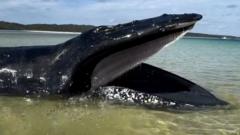
A young girl made a startling discovery on a Queensland beach when she came across a stranded humpback whale. The incident, which occurred on Monday morning, quickly drew local authorities and marine experts to the scene. Fortunately, the whale managed to free itself as the tide rose, returning to deeper waters. This heartwarming rescue has sparked discussions about marine conservation and the importance of protecting ocean habitats.
Key Takeaways
- A young girl discovered a stranded humpback whale in Queensland, Australia, on Monday morning.
- Local authorities and marine experts monitored the situation to ensure the whale's safety.
- Rising tides allowed the whale to free itself and return to open waters.
- The event highlights the need for ongoing marine conservation efforts.
Background
Queensland's beaches are home to a diverse range of marine life, including humpback whales, which migrate along Australia's east coast annually. These migrations are vital for breeding and feeding, but they also pose risks, as whales can become disoriented or trapped in shallow waters. Stranding events are not uncommon in the region, often drawing attention from locals and marine rescue teams.
The incident comes as conservationists continue to advocate for stricter protections for marine ecosystems. Coastal development, climate change, and human activities such as fishing contribute to the challenges marine animals face today.
What Happened
On Monday morning, a young girl walking along a Queensland beach stumbled upon a stranded humpback whale. Recognizing the situation's urgency, she alerted her family, who contacted local authorities. Marine rescue teams and volunteers quickly arrived at the scene to assess the whale's condition.
The whale, estimated to be several meters long, appeared to be in good health despite being stuck in the sand. Experts decided to monitor the animal rather than attempt a risky physical intervention. As the tide rose later in the day, the whale managed to free itself and returned to deeper waters.
The story has captured international attention, with many praising the young girl and the coordinated efforts of the community.
Why It Matters
This incident serves as a reminder of the delicate balance between marine life and human activities. While this whale's story had a happy ending, not all stranding events end positively. These occurrences underscore the urgent need for better protections for marine habitats, especially as climate change and pollution continue to impact ocean ecosystems.
Moreover, the child's quick thinking and the community's swift response highlight the importance of public awareness when it comes to environmental and wildlife issues. Events like this can inspire others to act responsibly and become advocates for marine conservation.
What Happens Next
Marine experts will likely monitor the area for any signs of distress or additional strandings in the coming days. Public awareness campaigns may also be launched to educate local communities about how to respond to similar situations in the future.
In the broader context, this event may add momentum to calls for stronger marine conservation policies in Australia and beyond. Advocates hope such incidents will encourage governments to prioritize sustainable practices and protect vulnerable marine species.
Frequently Asked Questions
What should you do if you find a stranded marine animal?
If you encounter a stranded marine animal, do not attempt to move it yourself. Contact local wildlife authorities or marine rescue services immediately. Keep a safe distance to avoid causing additional stress to the animal.
Why do whales become stranded?
Whales can become stranded for various reasons, including disorientation, illness, or injury. Environmental factors like tidal changes and underwater noise pollution may also contribute. In some cases, natural behaviors during migration lead whales into shallow waters.
How common are whale strandings in Australia?
Whale strandings are relatively common along Australia's coasts, particularly during migration seasons. While many stranded whales can be rescued, some unfortunately do not survive. Conservation efforts aim to reduce these occurrences and improve outcomes for marine life.
Bottom Line
A young girl's discovery of a stranded humpback whale on a Queensland beach led to a heartwarming rescue, as the animal freed itself with the rising tide. The incident highlights the importance of marine conservation and public awareness in protecting ocean ecosystems. Reporting attributed to BBC News.
Related Reading
- Trump signs order to limit childhood vaccines and split MMR shots
- Trump Media reports $238m loss as crypto falls
- At least 132 killed in Colombia's largest earthquake in years
- Perseid meteor shower reaches peak: When and where to catch a glimpse
- Disabled in a heatwave: 'We're talking about survival'
For more updates on world events, visit Chronicle News or browse all articles.