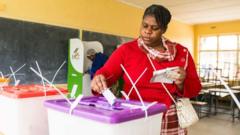
Zambians are heading to the polls in a pivotal election as President Hakainde Hichilema seeks a second term in office. Voting began early Thursday, with citizens across the nation casting their ballots amid growing concerns over inflation and the rising cost of living. Hichilema, who took office in 2021, faces waning support due to economic challenges, despite his initial promises to revitalize the economy. The outcome of this election will significantly shape Zambia's political and economic future.
Key Takeaways
- President Hakainde Hichilema is vying for a second term amid economic discontent.
- Rising costs of living have eroded the incumbent's popularity since his 2021 election win.
- Zambians are voting in a closely watched election that could impact regional stability.
- Results are expected to be announced within days, with turnout being closely monitored.
Background
In 2021, Hakainde Hichilema was elected president in a landslide victory, defeating the incumbent Edgar Lungu. Hichilema, a businessman-turned-politician, campaigned on promises to combat corruption, lower the cost of living, and attract foreign investment to boost Zambia's economy. His victory was seen as a turning point for the world, with Zambia touted as a beacon of democracy in southern Africa.
However, his administration has faced significant challenges, including rising inflation and public debt. Many Zambians feel the economic promises made during the 2021 campaign have been unfulfilled, fueling skepticism as voters return to the polls.
What Happened
Polling stations across Zambia opened early Thursday, allowing millions of registered voters to cast their ballots. The election pits President Hichilema against several challengers, though none have emerged as a clear front-runner. Long lines were reported at voting centers, reflecting the high stakes and voter engagement in this election.
Despite a peaceful start to the polls, opposition leaders have raised concerns about potential irregularities, including delays in ballot deliveries to some areas. Election officials assured the public that all registered voters would have the opportunity to participate.
Why It Matters
This election is critical as it will determine whether Hichilema can secure a mandate to continue his economic reforms or if the electorate will opt for change. Zambia, Africa’s second-largest copper producer, plays a significant role in regional trade and global copper markets. Political instability or a contested election result could have ripple effects beyond its borders.
Moreover, with inflation and unemployment rates surging, the election outcome will directly impact the livelihoods of millions of Zambians. Observers from the African Union and other international organizations are monitoring the process to ensure transparency and fairness.
What Happens Next
As voting concludes, the counting process will begin immediately. Preliminary results are expected within 48 hours, though the final count may take longer due to logistical challenges in rural areas. If no candidate secures a majority, a runoff will be held.
In the meantime, both domestic and international stakeholders will be closely watching for any signs of unrest or disputes over the results. The Electoral Commission of Zambia has urged all parties to remain calm and respect the outcome of the vote.
Frequently Asked Questions
What challenges is President Hichilema facing?
Hichilema is battling diminished public confidence due to rising inflation and an unfulfilled promise to lower living costs. While his administration has made strides in securing IMF support, the benefits have yet to trickle down to ordinary Zambians, fueling frustration.
How significant is this election for Zambia?
This election is crucial as it will determine Zambia's economic and political trajectory for the next five years. It is also being closely watched by the international community as a test of the country’s democratic institutions.
Could the election result in unrest?
While Zambia has a history of peaceful elections, tensions remain high due to economic pressures and opposition claims of potential irregularities. Authorities and observers are urging calm to prevent post-election disputes.
Bottom Line
Zambia's election is a critical moment for the nation, with President Hichilema seeking a second term amid economic challenges. The outcome will shape the country's future, with implications for both local and international stakeholders. Reporting courtesy of BBC News.