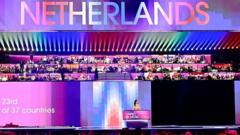
Avrotros, the Dutch national broadcaster, has announced it will not participate in the 2027 Eurovision Song Contest. The decision comes in response to ongoing concerns about the contest's neutrality, citing the involvement of a participating country in a large-scale military conflict. The move has sparked debates about the intersection of politics and culture in global events like Eurovision. Avrotros’s withdrawal raises questions about how geopolitical tensions could reshape one of Europe’s most beloved cultural traditions.
Key Takeaways
- Dutch broadcaster Avrotros will not participate in the 2027 Eurovision Song Contest.
- The decision stems from concerns over the contest's neutrality amid a military conflict.
- Eurovision traditionally promotes cultural unity but faces mounting political challenges.
- This marks a significant turning point for the Netherlands' Eurovision legacy.
Background
The Eurovision Song Contest is one of the world's most-watched music competitions, celebrated for its focus on cultural exchange and unity. Organized annually by the European Broadcasting Union (EBU), it attracts participants from across Europe and beyond. However, the event has occasionally been criticized for being politicized, particularly when member countries are embroiled in geopolitical conflicts.
The Netherlands has been a long-time participant in Eurovision, with its broadcaster Avrotros playing a crucial role in the nation’s contributions. The decision to withdraw from the 2027 contest marks a significant departure, as the Netherlands has competed in nearly every edition since Eurovision's inception in 1956.
What Happened
Avrotros announced on Tuesday that it would not take part in the 2027 Eurovision Song Contest, citing concerns over the competition's ability to remain a neutral cultural platform. The broadcaster specifically pointed to the ongoing military conflict involving one of the participating nations, though it did not name the country directly.
The decision has drawn mixed reactions. Supporters argue that cultural events like Eurovision should reflect ethical considerations, while critics warn of the dangers of politicizing a historically apolitical event. The European Broadcasting Union has yet to issue a formal response to Avrotros’s decision.
Why It Matters
This withdrawal challenges Eurovision's long-held position as a unifying cultural event that transcends political boundaries. By linking participation to geopolitical concerns, Avrotros's decision underscores how global conflicts can influence even seemingly apolitical platforms.
For the Netherlands, this marks a rare interruption in its Eurovision legacy, potentially setting a precedent for other broadcasters to follow suit. The move also raises broader questions about the contest's future viability as a space for cultural unity amidst increasing political tensions.
What Happens Next
The European Broadcasting Union is likely to face growing pressure to address concerns about Eurovision's neutrality. This could involve revisiting participation eligibility criteria or implementing measures to ensure the contest remains a cultural event, rather than a political battleground.
As for Avrotros, the broadcaster has not ruled out returning to Eurovision in the future. Its decision for 2027 may prompt other participating nations to reassess their own stances, particularly if the cited military conflict remains unresolved.
Frequently Asked Questions
Why is Avrotros withdrawing from Eurovision?
Avrotros is withdrawing due to concerns over the event's neutrality, citing the involvement of a participating country in a large-scale military conflict. The broadcaster believes this undermines Eurovision's spirit of cultural unity.
Has the Netherlands ever skipped Eurovision before?
Yes, but it is rare. The Netherlands missed the contest in 1985 and 1991 due to scheduling conflicts with national holidays but has otherwise been a consistent participant since 1956.
What does this mean for Eurovision’s future?
Avrotros’s decision highlights growing challenges for Eurovision’s apolitical stance. If similar withdrawals occur, the EBU may need to revisit its policies to maintain the contest’s integrity as a cultural platform.
Bottom Line
The Dutch broadcaster Avrotros's decision to withdraw from the 2027 Eurovision Song Contest underscores growing concerns about the intersection of culture and geopolitics. BBC News first reported the story.