
Gold Nears a Record Again Above $4,300: 2026's Journey from Collapse to Rally
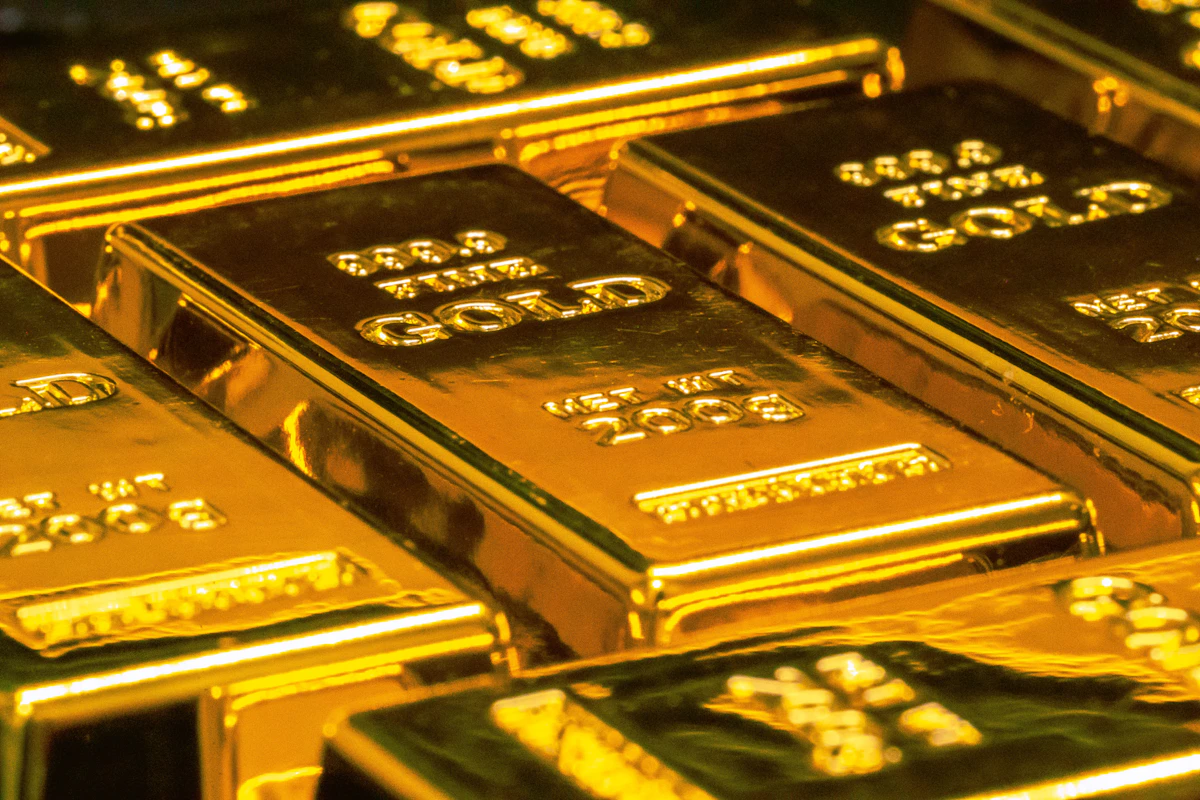
Image: Illustrative photo — Unsplash.
Gold was trading on the morning of September 16, 2026, at $4,346 per ounce, a daily gain of $55 according to Fortune, in a noisy return of the yellow metal to the top of the news agenda after a dramatic year that saw a historic record near $5,600 in January and then an extraordinary collapse of 21% in February, according to BullionVault. With Goldman Sachs expecting, in an early-September memo, a return to record levels, the gold market is living through one of its most volatile stretches in years.
Why is gold climbing while the Fed raises rates? It unpacks the full 2026 journey: the numbers, the drivers of the rally, and when buying gold is a good idea versus a trap.
Table of Contents
- Where Gold Stands Now
- From Historic Peak to Collapse: The 2026 Story
- Why Is Gold Rising in September Specifically?
- Gold, Interest Rates and the Dollar
- Who Expects What: The Forecasts Ahead
- Should You Buy Gold Now? A Balanced Read
- A Timeline of 2026's Turbulent Journey
- Gold in Arab Markets: Jewelry and Premiums
- Key Points
- FAQ: Frequently Asked Questions
- Sources
- Read Also
Where Gold Stands Now
| Indicator | Value | Source |
|---|---|---|
| Price at 9:05 a.m. Eastern time, September 16 | $4,346 per ounce | Fortune |
| Daily change | +$55 | Fortune |
| Opening of September 15 contracts | $4,340.30 | Yahoo Finance |
| September 10 trading range | $4,366 to $4,405 | GoldSilver |
| Historic record | Near $5,600 in January 2026 | BullionVault |
The numbers sketch a market settling above the $4,300 threshold after absorbing two consecutive shocks: hotter-than-expected American inflation data, and the Fed's mid-September rate hike — a move we followed in our report on the rate decision.
From Historic Peak to Collapse: The 2026 Story
The year began exceptionally; gold hit a historic level near $5,600 per ounce in January 2026, according to BullionVault's revised coverage, at the peak of a global buying wave driven by geopolitical fears and expectations of deep American rate cuts. Then February flipped the scene upside down: a collapse the same report described as unprecedented pulled 21% off the metal's peak.
This volatility is not just a tale for historians; it measures how fragile sentiment-driven valuations can be. Gold pays no dividends and produces nothing, so it is priced primarily on fear and expectations; when fear evaporates suddenly or rate expectations flip, the price falls at a speed no traditional commodity market allows.
Why Is Gold Rising in September Specifically?
September's wave brings together four drivers. First, the tension around the Strait of Hormuz and the maritime escalation between Iran and America that pushed oil above $100, raising hedging demand for safe assets, as we followed in our report on the Hormuz and energy crisis. Second, the returning inflation pressure after the hot August readings — the GoldSilver report on September's outlook confirms that producer price data came in high and helped push prices upward.
Third, the uncertainty around American monetary policy: Goldman Sachs made clear in its September 4 memo that uncertainty around American rates remains the fundamental driver of its expectation that the metal will return to new record levels. Fourth, the continued demand of central banks and institutional investors, a pillar of the market for years that buys on diversification away from the dollar, not daily speculation. Four factors meeting in one set of weeks explain why gold held above $4,300 despite a rate environment that should, in theory, weigh it down.
Gold, Interest Rates and the Dollar
The classical rule says: gold is a yield-free asset, and the higher American rates rise, the higher the opportunity cost of holding it, so the price tends to fall. But reality is more precise; in environments of high inflation and geopolitical wars, gold becomes a hedging instrument for which investors accept paying the opportunity cost in exchange for protection. That is exactly the mood of September 2026: a rate rising with the Fed, but a naval war and re-igniting inflation at the other end.
The dollar plays the third judge in this trinity. With the dollar index anchored around the 100 level according to end-of-week tracking, its pressure on gold stayed limited, allowing the risk factors to dominate pricing. Hence the practical rule: watch at once the real rate — the rate minus expected inflation — the dollar index, and the geopolitical risk level; gold never moves on one variable alone.
Who Expects What: The Forecasts Ahead
The forecasts stretch across a very wide range. At the optimistic end, Goldman Sachs expects gold to return to new record levels driven by uncertainty around rates, according to the early-September memo, while general forecasts published on trading platforms saw 2026 possibly taking the metal toward $6,300 per ounce, according to what BullionVault relayed of forward-looking market expectations. At the cautious end, some analysts see the Fed's continued hikes as a hard ceiling over any new rally, and the range above $4,300 as built on emotions that could evaporate.
The fair reading of this divergence is a battle between two logics: macroeconomics says high rates hurt gold, geopolitics says a tense world buys safety at any price. Short term, the logic with the stronger news wins; long term, the winner is usually whoever diversifies instead of betting on one scenario.
Should You Buy Gold Now? A Balanced Read
The useful answer begins with the purpose, not the price. If your goal is hedging against inflation and long-term diversification, a limited allocation to gold remains a globally accepted practice, whether through bars or exchange-traded funds — but bought in gradual steps, not in a single payment, precisely because 2026 proved that a 21% collapse within weeks is possible even in the strongest rally. Quick gains from fluctuations are speculation, not investing, and the difference presents its bill at the first big correction.
Then comes the local-currency point many overlook: the price of gold in dirhams, dinars or riyals moves not only with the dollar ounce price but with your currency's exchange rate against the dollar, plus the local premium on jewelry and bars. That is why we advise following the daily price from trusted sources such as the Fortune and Yahoo Finance pages, comparing local offers before buying, and reading our report on the Fed's rate hike to understand the months ahead.
A Timeline of 2026's Turbulent Journey
| Milestone | What happened | Impact |
|---|---|---|
| January 2026 | Historic record near $5,600 per ounce | Peak of the global rally wave |
| February 2026 | A collapse of 21% from the top | A correction trackers described as unprecedented |
| July and August | Maritime escalation between Iran and America | Gradual return of safe-haven demand |
| September 4 | Goldman Sachs forecasts new records | A shift in big-institution expectations |
| September 10 | Outage of the Saudi East-West pipeline | Global energy risks escalate |
| September 16 | The Fed's rate hike to 3.75-4% | A real test of the yellow metal's resilience |
The table shows gold's path in 2026 was not a straight line, but a chain of jumps and reversals, each event rearranging investors' calculations. The big institutional forecasts — such as the Goldman memo — came in the same weeks that saw oil rise and the Fed tighten: the rally waves are built on a mix of energy risks and inflation, not one isolated factor.
Gold in Arab Markets: Jewelry and Premiums
The Arab follower of gold prices faces an extra layer known as the local premium; the price of a gram in any Arab market equals the global ounce price divided and converted, plus the manufacturing cost, the seller's margin and local taxes — all of which vary from one country to another and from one piece of jewelry to another. That is why the reader may notice a clear difference between the global price and what the goldsmith offers in another city on the same day — a difference that deserves comparison before the purchase, not after it.
In an environment of elevated prices, interest grows in the difference between buying gold as jewelry, a consumable value, and buying bars and coins as an investment value; the first loses a share of its value on resale because of the manufacturing cost, while the second comes close to the global price in transactions. For first-time entrants, the rule of gradualism and documentation through a licensed seller remains the safest bet, along with reviewing our report on the Fed's hike to understand the monetary direction ahead.
Key Points
- Gold was trading at $4,346 per ounce on the morning of September 16, 2026, a daily gain of $55 (Fortune).
- The historic record came near $5,600 in January 2026 before a 21% collapse in February (BullionVault).
- The September 10 trading range ran between $4,366 and $4,405 alongside hot inflation data (GoldSilver).
- Goldman Sachs said on September 4 that it expects gold to return to new record levels, driven by uncertainty around rates.
- Four drivers lead the rally: the tension around Hormuz, the return of inflation, monetary uncertainty, and central-bank demand.
- The traditional inverse relationship with rates has temporarily receded in favor of safe-haven logic in the current tensions.
- The forecasts stretch from a $4,300 range to ambitious scenarios toward $6,300, hinging on the Fed's path and the war.
FAQ: Frequently Asked Questions
How much is gold worth today?
At 9:05 a.m. Eastern time on September 16, 2026, gold was worth $4,346 per ounce, up $55, according to Fortune, and the contracts opened on September 15 at $4,340.30 according to Yahoo Finance. Prices move continuously, so rely on live tracking before any buying or selling decision.
Why did gold fall so violently in February 2026?
Because the market entered the year after a frenzied rally to a record near $5,600 in January, and when investors' expectations changed regarding the rate path and the risks, buying flipped into collective selling that pulled 21% off the peak, in a collapse BullionVault described as unprecedented. The lesson: sentiment-driven assets fall as fast as they rise when the mood changes.
Is gold affected by the Fed's rate hike?
In theory yes, because gold pays no return, so every rate increase raises the opportunity cost of holding it. But in September 2026 the fear factors overshadow that effect; the maritime tension around Hormuz, the return of inflation and hedging demand made the market climb despite a rising-rate environment, which explains the $4,346 print on the day a new hike was announced.
What are the analysts' forecasts for the price of gold?
Goldman Sachs expects gold to return to new record levels because of the uncertainty around American monetary policy, according to its memo of September 4, 2026, while forward-looking analyses carried expectations reaching $6,300 per ounce, according to what BullionVault relayed. Others see the Fed's continued hikes limiting any additional rise, making the range of forecasts very wide and tied to events more than to models.
How do I buy gold safely?
Rely on official accredited channels: banks and licensed jewelry companies for bars and coins, and gold exchange-traded funds if your investment accounts allow them. Watch the price from trusted sources, weigh the local premium in your market, and remember February's lesson: buy in gradual steps, and allocate gold a reasonable share of your portfolio, not most of it.
Sources
- Fortune — fortune.com — tracking the gold price at $4,346, up $55, September 16, 2026.
- Yahoo Finance — finance.yahoo.com — the opening of gold contracts at $4,340.30, September 15, 2026.
- Goldman Sachs Research — goldmansachs.com — a memo expecting gold to return to new record levels, September 4, 2026.
- BullionVault — bullionvault.com — documentation of the record near $5,600, the 21% collapse, and the $6,300 forecasts, February 2026.
- GoldSilver — goldsilver.com — the September 2026 outlook, the $4,366-4,405 range, and the hot producer data, September 10, 2026.
- Reuters — reuters.com — coverage of the inflation context and rate decisions during September 2026.
- The Conference Board — conference-board.org — expectations for the path of American rate hikes, September 2026.
Read Also
- Fed Raises Rates to 3.75-4%, First Hike Since 2023 — the decision that tested gold's rally in the same week.
- Oil Above $100: The Hormuz Crisis and the East-West Pipeline — the energy shock powering one of gold's four drivers.
- Bank of Japan Raises Rates to 1.25%, Highest Since 1995 — Japan's exit from cheap money and what it means for bullion.
- China's Economy 2026: Strong Exports, Cold Domestic Demand — how the world's factory shapes demand for safe assets.
- The Business and Economy Section on Chronicle — all of our markets and economy coverage in one place.
- Browse All Chronicle Articles — the full library of reports and explainers.


