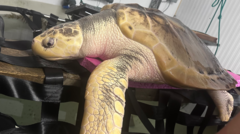
Rare turtle to be sent back home in 5,000‑mile ‘incredibly emotional’ trip
A juvenile hawksbill turtle that washed up on a Welsh beach in early June is being air‑lifted back to the Caribbean Sea, a journey that spans roughly 5,000 miles. The rescue, coordinated by wildlife charities and the UK’s Department for Environment, Food & Rural Affairs (Defra), began after volunteers spotted the disoriented reptile near the town of Aberystwyth. The operation matters because hawksbills are critically endangered, and each successful re‑introduction helps sustain dwindling populations across the Atlantic. The effort also highlights the growing need for cross‑border wildlife cooperation in an era of climate‑driven habitat loss.
Key takeaways
- A rare hawksbill turtle will fly from Wales to its native Caribbean waters after a 5,000‑mile relocation.
- The rescue involved volunteers, marine biologists, and government officials working together across continents.
- Hawksbill turtles are listed as critically endangered, making each individual’s survival vital for the species.
- The journey underscores the logistical and emotional challenges of trans‑Atlantic wildlife repatriation.
Background
Hawksbill turtles (Eretmochelys imbricata) once thrived throughout the Atlantic, but illegal trade and habitat degradation have driven their numbers below 15 % of historic levels. In the United Kingdom, sightings are exceptionally rare, prompting immediate concern when a juvenile was found stranded on a Welsh shore. The rescue aligns with the UK’s commitment to the Convention on International Trade in Endangered Species (CITES) and mirrors similar efforts reported in the science section of our coverage.
What happened
On 4 June, a passer‑by alerted the local RSPB (Royal Society for the Protection of Birds) team, who confirmed the animal was a hawksbill based on its distinctive shell pattern. Veterinary specialists administered fluids and a temperature check before deciding the turtle was fit for transport. Defra partnered with a private air‑cargo company, and on 12 June the turtle was placed in a climate‑controlled crate and flown from Cardiff Airport to Kingston, Jamaica. The crew described the experience as “incredibly emotional,” noting the animal’s calm demeanor during the flight.
Why it matters
The hawksbill’s return is more than a feel‑good story; it contributes directly to genetic diversity in Caribbean nesting colonies, which are still recovering from poaching pressures. According to the IUCN, each successful release can improve breeding success rates by up to 3 % in small, isolated populations. Moreover, the operation demonstrates the practical benefits of international wildlife agreements, a theme echoed in other global stories such as the Fast‑moving Canada wildfire doubles in size forcing thousands to flee homes and the Fifa criticises campaign to oust president Infantino pieces that illustrate coordinated responses to crises.
What happens next
Upon arrival in Jamaica, the turtle will undergo a brief health assessment by the Caribbean Conservation Corporation (CCC) before being released into a protected marine reserve near the Mesoamerican Barrier Reef. Researchers will attach a satellite tag to monitor its movements for up to six months, providing valuable data on post‑release survival rates. The project’s success is expected to inform future trans‑Atlantic repatriations, potentially establishing a protocol that other nations can adopt. For ongoing updates, follow the story on Chronicle News or browse our all articles archive.
Frequently asked questions
How far is the turtle’s journey?
The turtle travels roughly 5,000 miles, crossing the Atlantic from Wales to the Caribbean in a specially equipped cargo plane.
Why was the turtle taken to the Caribbean instead of a UK sanctuary?
Hawksbills are native to tropical seas; returning it to its natural habitat gives the animal the best chance to mature and reproduce.
Will the turtle be monitored after release?
Yes, a satellite transmitter will track its location and behavior for several months, feeding data back to conservation scientists.
Bottom line
The 5,000‑mile relocation of a rare hawksbill turtle underscores the urgency of protecting endangered marine species and the power of international collaboration. Reporting by BBC News.
Related reading
- Fast-moving Canada wildfire doubles in size forcing thousands to flee homes
- Fifa criticises campaign to oust president Infantino
- Ulster 'need to execute more' after Connacht loss - Tuite
- Planned Amazon data center could become the biggest climate polluter in the U.S.
- Wissa & Toure star as Jaissle wins first Newcastle friendly - ratings