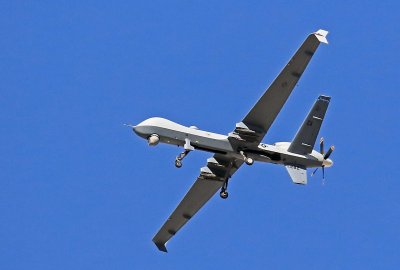
A year-old American drone startup linked to Donald Trump Jr. and Eric Trump wants to become the Pentagon's pipeline for battlefield technology developed in Ukraine — taking weapons forged in Europe's largest war since 1945 and building them on American soil. Powerus, the Florida-based company, is due to go public in early October by merging with Nasdaq-listed Aureus Greenway Holdings, a golf-course owner and operator in which the Trump brothers hold an indirect stake through the investment fund American Ventures.
The story, first reported by Reuters, lands at a moment when investors and contractors are racing to capitalise on surging Pentagon demand for autonomous systems — demand that the war in Ukraine has demonstrated in the most brutal terms.
Table of Contents
- The Deal: Golf Courses Meet Combat Drones
- The Mission: Ukrainian Tech with an "American Face"
- The Players: Velicovich, Kellogg and the Trump Network
- The Strategy: Acquisitions and Foreign Partnerships
- The Bigger Picture: The Pentagon's Drone Rush
- Key Takeaways
- Frequently Asked Questions
- Sources
- Read Next on Chronicle
The Deal: Golf Courses Meet Combat Drones
The vehicle for Powerus's market debut is an unusual one: a merger with Aureus Greenway Holdings, a Nasdaq-listed company whose business is owning and operating golf courses. The Trump brothers hold an indirect stake in Aureus through American Ventures, and regulatory filings show the fund is expected to own a 9.9% beneficial ownership stake in the combined company, according to Reuters.
It is not the first time this playbook has been used. Powerus is part of a growing portfolio of drone and military-technology companies backed by the brothers, including XTEND AI Robotics, which went public in early September after the Israeli drone maker merged with a listed construction company in which American Ventures also owned a stake.
Powerus executives — and spokespeople for Donald Trump Jr. and Eric Trump — say the brothers are passive investors in Aureus with no operational role in the drone company. Still, the association carries weight. "It never hurts to have their name on something," said Powerus advisory board member Keith Kellogg, the retired US Army lieutenant general and former Trump envoy to Ukraine.
The Mission: Ukrainian Tech with an "American Face"
The company's core proposition is straightforward: negotiate with Ukrainian defence firms and manufacture their technology in the United States. Powerus is in talks with Ukrainian companies and wants to build their products — potentially including long-range attack drones — domestically. Its Guardian interceptor systems, introduced in March, were jointly developed with Ukrainian partners.
Company president Brett Velicovich, a former US Army Special Operations intelligence analyst, told Reuters he wants Powerus to become a "one-stop solution" for the Pentagon: a US partner offering foreign technology with an "American face" — a phrase that captures both the commercial logic and the political sensitivity of importing weapons tech for American forces.
The Players: Velicovich, Kellogg and the Trump Network
The venture is advised by Keith Kellogg, whose background spans service as a three-star general, national security adviser roles, and a stint as President Trump's special envoy to Ukraine. His presence on the advisory board signals both defence-world credibility and a direct line into the administration's Ukraine policy circles.
The Trump connection runs through capital rather than command. American Ventures, the fund linked to the brothers, holds the indirect Aureus stake — a passive investment, the company says, rather than an operating position. Yet the pattern is unmistakable: the same fund's footprint across Powerus and XTEND AI Robotics points to a deliberate strategy of backing military-tech ventures positioned to ride Pentagon spending.
The Strategy: Acquisitions and Foreign Partnerships
In interviews with Reuters over recent months, Powerus executives outlined a growth plan built on three pillars: acquisitions, foreign partnerships, and domestic manufacturing. The goal is to assemble an American company that can absorb battle-tested military technology developed overseas — particularly in Ukraine — and build it at home.
That approach dovetails with a broader shift in defence procurement, where speed and demonstrated battlefield performance increasingly matter more than long development cycles. Ukrainian firms have spent the past years iterating drone designs under live combat conditions — experience that no laboratory can replicate.
The Bigger Picture: The Pentagon's Drone Rush
Companies and investors are scrambling to capitalise on surging Pentagon and overseas demand for drones, after the war in Ukraine underscored the battlefield importance of autonomous systems. From first-person-view attack drones to interceptors that hunt incoming missiles, the conflict has rewritten doctrines and procurement budgets alike.
Whether Powerus succeeds will depend on execution: converting negotiations with Ukrainian firms into manufacturing contracts, winning Pentagon business, and navigating the inevitable scrutiny that comes with the Trump name on the cap table. What is not in doubt is the direction of the market — defence departments worldwide want drones, and they want the ones that have already proven themselves in Ukraine.
Key Takeaways
- Powerus, a year-old Florida drone startup, is due in early October to merge with Nasdaq-listed Aureus Greenway Holdings, in which Donald Trump Jr. and Eric Trump hold an indirect stake via American Ventures, expected at 9.9%.
- The company is negotiating with Ukrainian defence firms to bring their technology — potentially including long-range attack drones — to the US and manufacture it domestically.
- Its Guardian interceptor systems, jointly developed with Ukrainian partners, launched in March.
- President Brett Velicovich, a former US Army Special Operations intelligence analyst, wants Powerus to be a Pentagon "one-stop solution" offering foreign tech with an "American face".
- Advisory board member Keith Kellogg, retired lieutenant general and former Trump Ukraine envoy, says "it never hurts to have their name on something."
- The brothers are described as passive investors with no operational role; the pattern mirrors the earlier XTEND AI Robotics listing.
Frequently Asked Questions
What does Powerus do? Powerus is a Florida-based drone startup formed in 2025 that aims to bring overseas — especially Ukrainian — military drone technology to the United States and manufacture it domestically for the Pentagon.
How are the Trump sons involved? Donald Trump Jr. and Eric Trump hold an indirect stake in Aureus Greenway Holdings through the investment fund American Ventures; the fund is expected to own 9.9% of the combined company. Executives say they are passive investors with no operational role.
Who is Brett Velicovich? The company president, a former US Army Special Operations intelligence analyst who leads Powerus's push to become a Pentagon partner.
Why Ukrainian technology? The war in Ukraine has made battlefield drone technology critically important, and Ukrainian firms have iterated their designs under live combat conditions — experience the company says it can pair with American manufacturing.