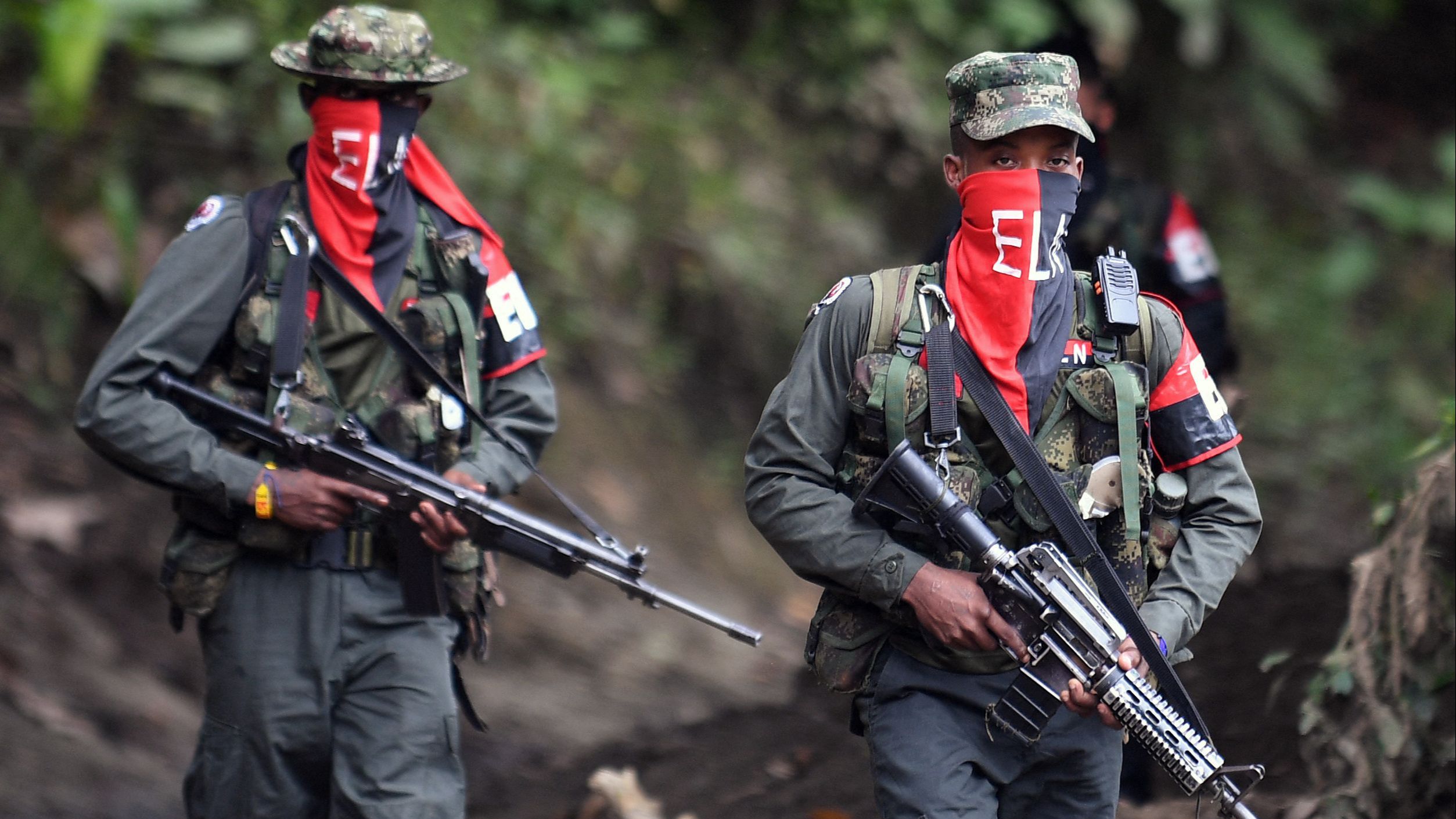
Yemen's frozen war has thawed with violent speed. Over a single 24-hour window this week, Yemen's internationally recognised government says it carried out 474 operations against Houthi targets across several fronts, claiming 1,540 Houthi fighters were killed or wounded — while the Saudi-led coalition reported intercepting ballistic missiles aimed at southern Saudi Arabia. The surge marks the most serious escalation between the two sides since a UN-brokered truce largely froze cross-border attacks in 2022, and it is unfolding as the wider region reels from the confrontation between the United States and Iran.
Table of Contents
- A Day of Unprecedented Intensity
- Taiz: The Province That Could Decide Yemen
- Missiles Over the Saudi Border
- The Backdrop: Mokha and the Broken Truce
- Civilians Bearing the Brunt
- What This Means for the Red Sea
- Key Takeaways
- Frequently Asked Questions
- Sources
- Read Next on Chronicle
A Day of Unprecedented Intensity
The tempo of the fighting has been extraordinary. Brigadier General Majid Abdullah Al-Nuzaili, spokesman for the Yemeni armed forces, said government warplanes alone flew 20 strikes within three hours on Friday, hitting Houthi movements, personnel, vehicles and military equipment in Taiz province, according to Reuters.
A broader tally released by the Yemeni army on the same day counted 474 separate operations against Houthi positions, reinforcements and command centres over the preceding 24 hours, with the reported toll of 1,540 Houthi fighters killed or wounded, per a live report carried by AnewZ. Such claims from the battlefield are impossible to verify independently, and both sides have historically inflated enemy losses — but even a fraction of those numbers would make this the bloodiest stretch of fighting in Yemen in years.
Taiz: The Province That Could Decide Yemen
Fighting has concentrated on Taiz, the strategic province straddling Yemen's southwest. Control there is the hinge on which the whole war turns: unchallenged Houthi occupation of Taiz would give the Iran-aligned movement full control over the country's north, a tighter grip on the Red Sea coastline, and easier access to the south — including the port city of Aden, seat of the internationally recognised government, as Reuters reported.
Authorities have ordered the closure of all roads leading into Taiz province, designating them military operational areas. Six military sources told Reuters that around 19 roads were affected, including the main route running from southern Sanaa to Taiz. A corridor that once carried commerce and civilians is now a battlefield cordon.
Missiles Over the Saudi Border
The war has spilled across borders, as it has always done at its most intense moments. The Saudi-led coalition said on Friday it had intercepted and destroyed three ballistic missiles launched toward the southern Saudi city of Khamis Mushait, per the AnewZ live report. Saudi authorities separately reported that debris from an intercepted ballistic missile fell in the southern Asir region, injuring a resident in the Ahad Rafidah governorate.
Riyadh also accused the Houthis on Thursday of striking a power distribution station in Medina that supplies electricity to the Prophet's Mosque — a charge the Houthi movement denied through its Saba news agency, calling it a cover for Saudi failures. Two weeks earlier, Saudi Arabia said it had intercepted and destroyed a Houthi drone south of Mecca before it entered restricted airspace over the holy city; the Houthis denied targeting Mecca or any other Islamic holy site, Reuters reported.
The Backdrop: Mokha and the Broken Truce
This flare-up did not emerge from nowhere. Last month, the Houthis captured the strategic port city of Mokha along with a string of Red Sea islands — their biggest land grab in years and a move that effectively ended the 2022 ceasefire that had largely stopped major fighting in Yemen's 12-year civil war. The seizure extended Houthi reach toward the Bab el-Mandeb Strait, the narrow chokepoint through which a significant share of global shipping passes.
The timing is geopolitically freighted. The fighting is intensifying against the backdrop of direct US-Iran confrontation, with Washington dispatching thousands of additional troops to the region and the Houthis — Iran's most consequential ally in the Arabian Peninsula — fighting harder than they have in years.
Civilians Bearing the Brunt
As always in Yemen, civilians are paying the price. UN High Commissioner for Human Rights Volker Türk said last month his office had documented the killing of 32 civilians — including 15 children and three women — since August, alongside 125 people killed or wounded in the broader flare-up, according to Reuters. The UN documented three Houthi attacks on sites housing internally displaced people.
The renewed violence has displaced well over 100,000 people, with some fleeing across the Red Sea to Africa — a striking inversion of the usual migration route, and a measure of how desperate the situation has become.
What This Means for the Red Sea
The strategic stakes extend far beyond Yemen's borders. Taiz and the adjacent Red Sea coast control access to the Bab el-Mandeb Strait, one of the world's most critical shipping lanes. A Houthi consolidation along the coast — combined with their proven willingness to strike merchant shipping during periods of escalation — could threaten global supply chains and energy flows already stressed by the Iran confrontation.
Diplomatically, the options are narrowing. The 2022 truce is dead in all but name. Neither the Yemeni government nor the Houthis currently appear willing to return to negotiations, and the regional powers backing each side — Saudi Arabia and Iran — are themselves locked in a far wider standoff. Yemen, once again, risks becoming the battlefield where a larger war is fought by proxy.
Key Takeaways
- Yemen's government says it carried out 474 operations against Houthi targets in 24 hours, claiming 1,540 Houthi fighters killed or wounded — the most intense fighting since the 2022 truce.
- The Saudi-led coalition intercepted three ballistic missiles aimed at Khamis Mushait; falling debris injured a resident in the Asir region.
- Fighting is concentrated in Taiz province, with 19 roads closed and designated as military operational areas.
- The Houthis' capture of Mokha and Red Sea islands last month was their biggest land grab in years, ending the 2022 ceasefire.
- The UN says 32 civilians, including 15 children, have been killed since August, and more than 100,000 people have been displaced.
Frequently Asked Questions
Why has fighting in Yemen escalated now?
The 2022 truce effectively collapsed last month when the Houthis captured the strategic port city of Mokha and Red Sea islands. Government forces and the Saudi-led coalition have responded with a major counteroffensive centred on Taiz province, while the wider US-Iran confrontation has raised the stakes on every front.
How reliable are the casualty figures?
Both sides routinely inflate enemy losses and minimise their own, and independent verification from Taiz is extremely difficult. The Yemeni army's claim of 1,540 Houthi fighters killed or wounded in 24 hours should be treated as a government assertion, not a confirmed toll. The UN's civilian casualty figures are the most independently credible numbers available.
Does the fighting threaten Red Sea shipping?
It could. The Bab el-Mandeb Strait, near Yemen's coast, is a vital chokepoint for global trade and energy. The Houthis have attacked merchant shipping during earlier escalations, and their strengthened position along the Red Sea coast increases the risk, though no major shipping attacks have been reported in the current flare-up.
What happened to the 2022 ceasefire?
A UN-brokered truce in 2022 largely halted major fighting and cross-border attacks for years. It unravelled over recent months and is now effectively dead, with the Houthis' capture of Mokha last month marking its definitive end.
Sources
- Reuters — October 2, 2026: "Yemen carried out 20 strikes on Houthi targets in Taiz province, spokesperson says."
- AnewZ — October 2026: "Iran war latest: U.S. dispatching 9,000 more troops" (live coverage of Yemen fighting).
- Reuters — September 24, 2026: "UN rights chief says civilians are bearing the brunt of fighting in Yemen."